


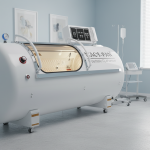
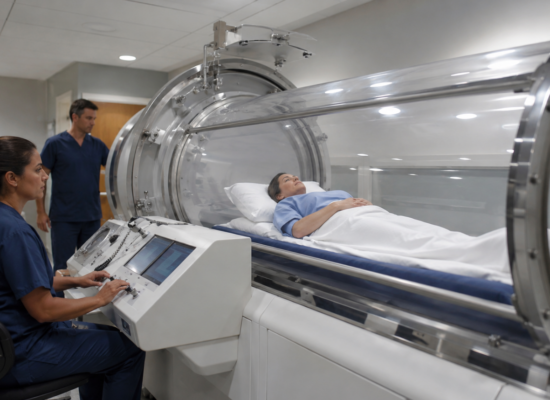
For soft-bodied hyperbaric oxygen chambers (1.3 ATA)—standard equipment typically used for post-operative recovery and relief of mild chronic inflammation—current market rental prices range from about $900 to $1,500 per month. As for the hard-shell capsules (1.5-2.0 ATA), these are often favored by professional athletes and “biohackers” because they can achieve deeper tissue oxygen saturation. But to be honest, these types of rental resources are very scarce and the prices are staggering, usually between $2,500 and $4,000 a month or more.
Most reputable companies will require a minimum lease for a month and charge a deposit. At first glance, the rental route is really cost-effective; after all, a month’s rent is equivalent to the cost of four to six treatments in a private clinic, while the rental allows you to use it unlimited times a day.
But the price tag is only half the story. According to my observation on the front line, many people who rent equipment for the first time do not realize that if they are not equipped with the correct medical-grade oxygen generator (which is often charged separately), or if they do not have a legal prescription, you may spend thousands of dollars, but finally rent back a decoration that is legally risky and even useless in treatment.
Next, I will disassemble in detail how to rent wisely, when to buy directly, and how to see through the “pits” hidden behind those exquisite brochures.
The rental cost of the hyperbaric chamber
Most people who search for rental services fall into the category of “medical needs”—you may be undergoing recovery from plastic surgery (such as an abdominoplasty or Brazilian butt lift BBL), or orthopedic surgery, or Lyme disease. In these cases, the persistence of the treatment is often more important than the intensity of the single dose.

The “5-Treatment” Break-Even Rule
Based on the actual data I saw in the clinic, the financial accounts here are actually very clear:
- Average clinic cost: About $200 to $250 for a 60-minute session.
- Average rental cost: A high-quality 1.3 ATA soft-shell chamber is about $1,000/month.
Do the math: If you plan to do more than five treatments a month, renting is mathematically cheaper. For post-operative recovery, standard rehabilitation protocols typically recommend “diving” (treatment) five times a week for the first month to accelerate angiogenesis (i.e., blood vessel repair) and reduce swelling.
- Cost of the clinic (20 treatments): $4,000 or more
- Rental costs (unlimited): Approximately $1,000
- Money saved: $3,000 in the first month.
My internal advice: Unless you have a chronic condition like Long COVID or Lyme disease, don’t pay 3 months of rent up front in one lump sum. For surgical recovery, it is enough to rent for one month. In my experience, the vast majority of patients see significant regression of swelling within the first 4 weeks.
Rent vs. Buy: ROI Analysis
This is a realistic comparison based on your current state:
| Factor | Rental (Suitable for short-term) | Purchase (Suitable for lifestyle integration) | The “Hidden” Third Option |
| User Profile | Post-operative recovery, acute injury, people who want to “try it first.” | Biohacking, autism/cerebral palsy management, anti-aging needs. | Undecided/skeptical users. |
| Commitment | Low (minimum 1 month). | High (long-term fixed asset). | Rent-to-own (hybrid mode). |
| Cost Structure | Low entry threshold ($1k/month). | High capital expenditure (5k−20k). | 50-100% of rent is deductible from purchase price. |
| Maintenance | None (company replaces if it breaks). | Owner’s responsibility (outside the warranty period). | All-inclusive during the lease term. |
| Resale Value | None. | Not high (big names like Summit to Sea or OxyHealth can hold their value by 60-70%). | No resale value before purchase. |
Regarding the “resale” factor: If you have cash on hand ($8,000 or more), it may actually be cheaper to buy a well-known brand of chamber directly than to rent it for six months, because you can sell the equipment later. However, the advantage of leasing is that it saves you the trouble of reselling used medical devices on eBay.
Hard-Shell Chambers and “Rent-to-Own”
Challenges of Renting Hard-Shell Chambers
It is really difficult to rent a hard-shell chamber, mainly because of logistics. These big guys weigh 200 to 400 pounds.
- High freight: Soft-shell chambers can be shipped by UPS/FedEx, but hard-shell chambers must be shipped via freight, and the one-way freight will cost $500 to $1,000.
- Installation problems: You can’t do the installation alone. It must be ensured that the rental offer includes “White Glove Service” (i.e., on-site installation is included).
The “Rent-to-Own” Strategy
This is the smartest play for the undecided. Look for suppliers who explicitly offer “rent-to-own” programs.
- Strategy: Rent a high-end soft-shell chamber (such as the 1.5 ATA vertical model) and try it out for 2 months.
- Benefits: If you use it every day, turn the lease into a purchase. If it ends up being your expensive “hanger” (trust me, 30% of buyers end up like that), then return it. You only lost the rent, not the $10,000 you had in your hand.

3 Key Points to Check Before You Sign
The Oxygen Concentrator “Flow Rate (LPM)” Trap
The hyperbaric chamber requires an external machine to pump oxygen into the chamber.
- The Scam: The rental company sends you a cheap 5 liter per minute (LPM) oxygen concentrator.
- The Standard: For a hyperbaric oxygen chamber to work effectively, you need a 10 LPM medical-grade oxygen concentrator. Below this standard, you will not get enough oxygen flow to effectively exhaust carbon dioxide.
- Be sure to ask: “Is your oxygen concentrator 5 LPM or 10 LPM?”
Prescription (Rx) Requirements
In the United States, hyperbaric oxygen chambers are Class II medical devices.
- The Truth: Legitimate rental companies are bound to ask you for a prescription.
- The Loophole: If a website allows you to rent without providing a prescription (or without providing a remote medical consultation to obtain one), they are likely operating in a “gray market.” This means their devices may not have been approved by the FDA or may lack formal inspection.
“Zipper” Integrity
For the soft-shell chamber, the zipper is the Achilles’ heel.
- Be sure to ask: “How long has this rental equipment been used?”
- The Reason: Zippers will age after 1-2 years of high-strength rental use. You need a relatively new piece of equipment to ensure that it is well-sealed and can reach the predetermined pressure value.
About the Author
I’m Alex Mercer, a Certified Hyperbaric Technologist (CHT) with over 10 years of experience operating commercial hard chambers in clinical settings. After witnessing patients struggle with high clinic fees, I dedicated my career to the home HBOT market. I don’t sell equipment—I test it. My mission is to help you navigate the confusion of hyperbaric chamber rentals, ensuring you get safe, clinical-grade oxygen specs without falling for overpriced “tents.” Whether you are recovering from surgery or biohacking, I’m here to help you dive safely.


No Comment! Be the first one.