


Numerous studies have shown that hyperbaric oxygen therapy (HBOT) is a highly effective adjunct to treatment for drowning victims—particularly those who have suffered a Hypoxic of brain injury. The principle is not complicated, but it is very critical: by “oversaturating” plasma with oxygen, oxygen is forced into hypoxic brain tissue that cannot be entered by normal blood flow. This process not only reduces brain edema (Edema) and inhibits inflammation, but most importantly, it reactivates those “dormant” neurons—brain cells that are alive but have been brought to a halt by metabolic starvation (Metabolic Starvation).
I would like to emphasize that it is important to manage expectations: hyperbaric oxygen does not “revive” necrotic brain tissue, but there are often a large number of “idling” neurons around the damaged area. Awakening them is often the hope of restoring cognitive and motor function in patients.
The necessity of hyperbaric oxygen chambers
When a drowning event occurs, the brain experiences global cerebral ischemia (global Ischemia) and hypoxia (Hypoxia). What is happening inside the patient’s brain at this moment? You need to understand a concept—“The Ischemic Penumbra.”
- Penumbra (sleeping cells): Around the area of permanent damage, there is a large area of cells that are not actually dead; they are just “stunned” or “asleep.” They actively shut down their functions in order to conserve energy.
- The vicious cycle: Without intervention, inflammation and swelling will continue to squeeze these dormant cells, eventually causing them to die.
- Why HBOT is necessary:
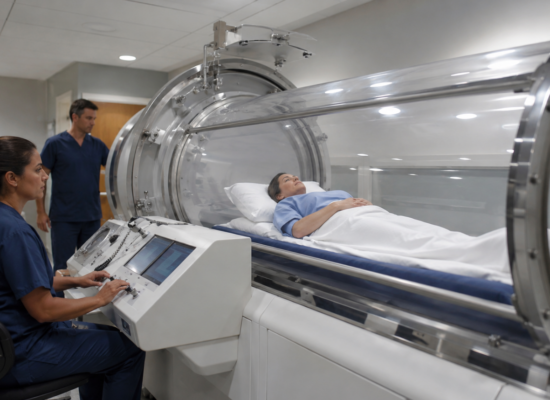
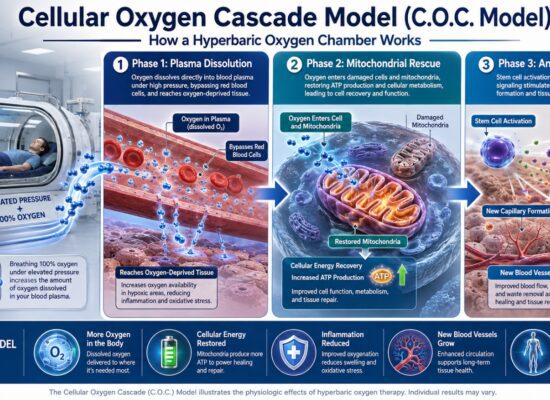
By placing the patient in a hyperbaric chamber and increasing the atmospheric pressure, we use Henry’s Law to dissolve oxygen directly into the plasma. This bypasses blocked or damaged blood vessels. This huge oxygen stream provides ATP energy, which is what those dormant cells desperately need to “turn on” again. For drowning patients, this may be the key to saving speech, motor, and conscious functions.

Recovery process of hyperbaric oxygen therapy
If you are a parent or guardian of a drowning victim and are looking for hyperbaric oxygen treatment, you need to adjust your mindset and be prepared to fight a “protracted war.” This is by no means a sprint: to be honest, after five treatments, there is a high probability that you will not see a full recovery.
- The process of “awakening”: Improvement is usually incremental. According to my clinical observations, the first improvement is usually an increase in muscle tone (a decrease in spasticity), followed by an improvement in the sleep cycle, then an increase in eye contact, and finally a purposeful movement.
- “Quantity” is very important: Clinical case studies have shown that drowning victims experience significant neurological changes, usually after 40 to 80 treatments.
Not All Hyperbaric Chambers Are Equal
For anoxic brain injury caused by drowning, specific medical parameters must be met. This is also the most easy place for parents to step on the pit:
Hardware vs. Software
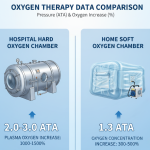
- Soft pods (micro-hyperbaric, about 1.3 ATA): These pods are good for exercise recovery or altitude sickness, but they are usually not strong enough for deep brain damage caused by drowning.
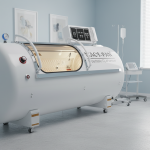
- Hardware Cabin (Medical Grade HBOT, 1.5 – 2.0 ATA): What you need is a hardware cabin. To push oxygen into the deep brain tissue and trigger the release of stem cells, a pressure of 1.5 ATA to 2.0 ATA is usually required, and 100 percent medical pure oxygen must be inhaled.
Standard treatment plan
Although each patient’s situation is unique, in terms of nerve repair, we usually use the following starting scheme:
- Pressure: 1.5 to 1.75 ATA (absolute atmospheric pressure).
- Duration: 60 to 90 minutes each time.
- Frequency: 5 days a week (Monday to Friday).
- Rest: It is usually recommended to rest for a period of time after every 40 treatments to avoid oxygen toxicity and allow the body to adapt to this metabolic change.

The Mechanism of Action
The efficacy of HBOT in hypoxic brain injury is not metaphysical, but is driven by several validated physiological mechanisms:
- Angiogenesis (Angiogenesis): HBOT upregulates vascular endothelial growth factor (VEGF) and promotes the formation of new microvessels in ischemic brain tissue.
- Neurogenesis and stem cell mobilization: Studies have shown that after exposure to a high-pressure environment (usually in the 2.0 ATA), there is a significant increase in circulating CD34 + stem cells, which can migrate to the site of injury.
- Mitochondrial recovery: It can restore mitochondrial function in the penumbra region and reverse metabolic starvation.
- Reduces neuroinflammation: It downregulates pro-inflammatory cytokines (eg, TNF-alpha, IL-1, IL-5) and reduces chronic brain edema that persists after an acute drowning event.
Clinical Suggestion:
Please don’t think of HBOT as the only life-saving straw, but rather as an “amplifier” for other neuro-rehabilitation therapies (e. g., physical therapy PT, occupational therapy OT, speech therapy ST). An oxygen-rich brain, with much greater neuroplasticity than a hypoxic brain, will also respond much more sensitively to physical rehabilitation.
About the Author: Dr. Andrew Bennett
“I am Dr. Andrew Bennett, a Board-Certified Specialist in Neuro-Rehabilitation with over 17 years of clinical experience. My practice focuses exclusively on restoring function in patients with Anoxic Brain Injury through integrative therapies, including Hyperbaric Oxygen Therapy (HBOT). I have witnessed firsthand the struggles families face after a drowning tragedy. I wrote this guide to bridge the gap between complex medical research and the practical, life-changing answers you are desperately searching for.”

No Comment! Be the first one.