



Written By:Dr. Renie Rafael Guilliod, M.D.
Dr. Renie Rafael Guilliod, M.D., is a Clinical Associate Professor at UT Southwestern Medical Center and Director of Hyperbaric and Diving Medicine at the Institute for Exercise and Environmental Medicine. Trained in Venezuela and the United States, he is among the few physicians with formal fellowship training in hyperbaric and diving medicine. His expertise spans hyperbaric oxygen therapy, wound healing, lymphatic disorders, and aerospace medicine, and he leads one of the UHMS-accredited hyperbaric programs in the United States.
Many patients and their families are confused by the complex pressure units within the hyperbaric chamber. This is normal, after all, this is not the knowledge that will be frequently contacted in daily life. One particularly common question is: “How many atmospheres (ATA) does my hyperbaric chamber show 13 PSI?” It’s a simple question, but it’s about the accuracy and safety of the treatment, so it’s important to understand it accurately.
In the following content, I will explain in detail the specific conversion relationship between PSI and atmospheric pressure (ATA), so that everyone has a more comprehensive understanding of hyperbaric oxygen therapy.

Core Question Answer: 13 Psi Converted To Atmospheric Pressure (AtA)
Definition and basic concepts of PSI and atmospheric pressure (ATA)
First, let’s clarify these two commonly used pressure units:
PSI (Pounds per Square Inch): This unit is very common in engineering and industry, and as the name suggests, it represents the pound force to withstand per square inch of area. For example, the tire pressure of a car tire is usually expressed in PSI. In some home or portable hyperbaric oxygen chambers, you may see a pressure gauge showing PSI.
ATA (Atmospheres Absolute): And ATA, absolute atmospheric pressure, is the unit of pressure that is commonly used in our hyperbaric oxygen therapy field. It is a unit of more medical relevance because it takes into account a standard atmospheric pressure at sea level as a benchmark. Simply put, 1 ATA is equivalent to the pressure we breathe normally at sea level. So, when we talk about hyperbaric oxygen therapy stress, ATA more intuitively reflects the total stress that the patient actually experiences.
Pressure conversion formula and example calculation
So, how much ATA is 13 PSI?
We know that one standard atmospheric pressure (1 ATA) is approximately equal to 14.7 PSI. This is a very practical conversion relationship in practice.
With this foundation, we can make simple calculations:
- 13 PSI ÷ 14.7 PSI/ATA ≈ 0.88 ATA
Yes, the calculations are clear: 13 PSI is slightly less than 1 atmosphere absolute.
It should be noted that the value we see on the pressure gauge is called gauge pressure, which is relative to an atmospheric pressure, so the absolute pressure in the hyperbaric oxygen chamber at this time should be 0.88 ATA 1 ATA = 1.88 ATA.
Why do we pay more attention to ATA in hyperbaric oxygen therapy?
You may ask, why do you prefer to use the ATA unit in hyperbaric oxygen therapy? The reasons are as follows:
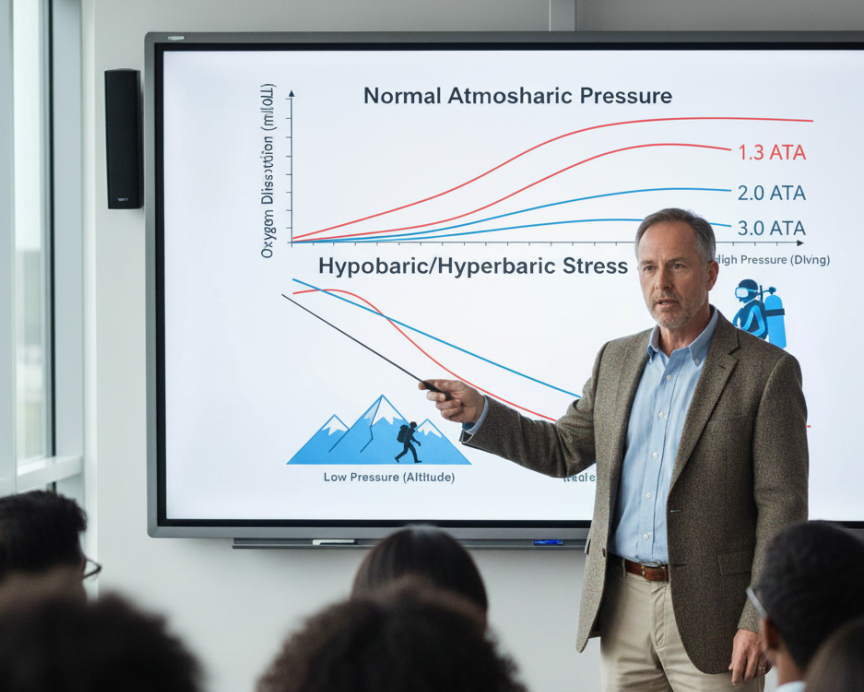
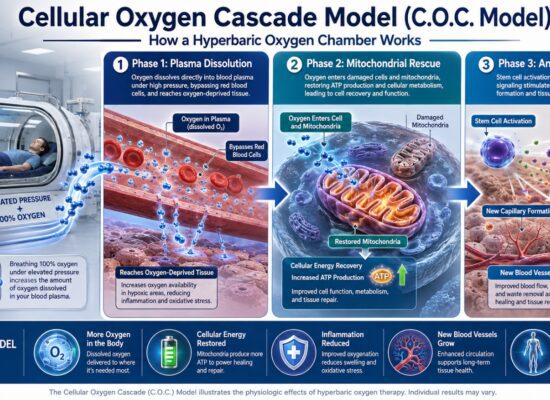
Reflects the total pressure, related to Henry’s law: ATA reflects the total absolute pressure of the patient’s environment, including the ambient atmospheric pressure we feel every day. This is directly related to the amount of oxygen dissolved in the blood, the famous Henry’s law-at a constant temperature, the solubility of a gas in a liquid is proportional to the partial pressure of that gas. In a hyperbaric oxygen environment, by increasing the total pressure (ATA), we can significantly increase the partial pressure of oxygen in the alveoli, thereby causing more oxygen to be physically dissolved into the plasma and increasing tissue oxygen supply.
International general standard, easy to evaluate and exchange: ATA is the universal standard unit of hyperbaric oxygen medicine in the world. This means that regardless of where hyperbaric oxygen therapy is performed, doctors can use the ATA to evaluate the strength of treatment options, compare the results of different studies, and ensure the safety and compliance of treatment. It’s like we measure body temperature in degrees Celsius, a global “language”.
Pressure levels and clinical significance in hyperbaric oxygen therapy
Different pressure ranges for hyperbaric oxygen therapy:
In the field of hyperbaric oxygen therapy, pressure level is the core parameter, which is directly related to the treatment effect and safety. We usually divide hyperbaric oxygen therapy into two main categories:
- Mild Hyperbaric Oxygen Therapy(mHBOT): This usually means that the cabin pressure is between 1.3 ATA and 1.5 ATA. If you measure it by gauge pressure, that’s about 4.4 PSI to 7.35 PSI. At this pressure range, the amount of dissolved oxygen in the blood is increased, although not as significantly as at higher pressures, but for some chronic conditions, such as chronic fatigue, fibromyalgia or certain inflammatory reactions, mHBOT has been found to have potential therapeutic benefits. I have personally observed that many patients will improve their symptoms under these mild pressures, and the safety is extremely high.
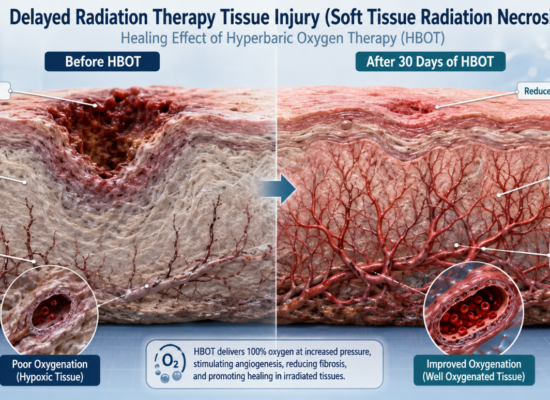
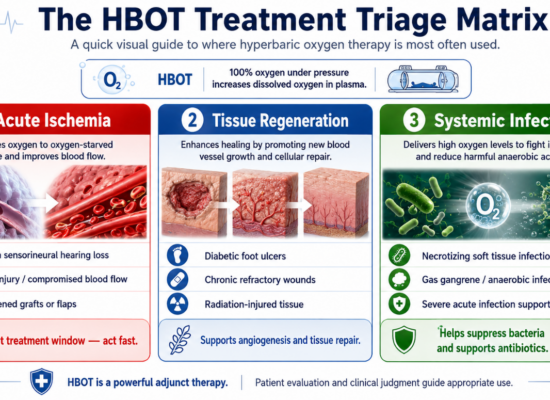
- Clinical HBOT: This is the most common hyperbaric oxygen treatment in our hospital. The pressure range is usually 1.5 ATA to 3.0 ATA, or even higher. converted to gauge pressure, which is approximately 7.35 PSI to 29.4 PSI. This is the standard pressure we use to treat diseases that really “need” hyperbaric oxygen, such as decompression sickness (what divers often call “stooping disease”), acute carbon monoxide poisoning, severe infections (such as gas gangrene), poor wound healing, and some radiation injuries. Under these pressures, the physical dissolution of oxygen can be greatly increased, so as to achieve the deep tissue oxygen supply, kill anaerobic bacteria, promote angiogenesis and other therapeutic purposes.
Interpretation of pressure level of 13 PSI (about 0.88 ATA) in hyperbaric oxygen therapy:
Regarding the pressure value of 13 PSI, we need to make it clear that it is gauge pressure. If converted to absolute pressure, it is about 1.88 ATA. this pressure value, um, is well within the usual range for our clinical hyperbaric oxygen therapy. This means that at this pressure, the effect of oxygen delivery and tissue repair will be very obvious.
Influence of different pressures on the efficacy and safety of treatment:
In hyperbaric oxygen therapy, pressure is not just a number, it is the “dose” we give to patients “. I often say that pressure is the drug concentration of hyperbaric oxygen therapy.
- A higher ATA generally means more oxygen dissolved into the bloodstream, leading to a stronger therapeutic effect. For example, under 3.0 ATA, the amount of oxygen dissolved in the blood can reach 10 to 15 times that of normal breathing air, which is crucial for the control of ischemic injury, serious infection, and the treatment of gas embolism.
- However, higher pressures are also associated with higher risks. The most common is ear pressure injury, patients may feel ear discomfort, we need to guide them to the ear pressure balance. More serious risks include oxygen toxicity, which may affect the central nervous system (causing convulsions) or the lungs (causing coughing, chest tightness). Because of this, we must accurately set and adjust the treatment pressure according to the patient’s specific condition, physical condition and treatment purpose.
The practice of precision medicine:
Because the effects and risks of hyperbaric oxygen therapy are closely related to pressure, we must regard pressure setting as a combination of art and science. This requires us to make precise individual adjustments based on the following factors:
- The specific condition of the patient: different diseases have their best treatment pressure window.
- The patient’s physical condition: age, underlying disease, cardiopulmonary function, tolerance to stress, etc.
- The purpose of treatment: to promote wound healing, anti-infection, eliminate air embolism, etc., the optimal pressure may be different.
- Dynamic adjustment of treatment plan: During the treatment process, dynamic adjustment of pressure, oxygen concentration and exposure time may be required according to patient response and monitoring indicators.
In hyperbaric oxygen therapy, stress is a key link between physiological effects and clinical outcomes. Understanding and mastering the biological effects and potential risks of different stress levels is the cornerstone for every 1 HBO medical practitioner to ensure that patients get the most benefit and minimize the risks. It is in this 1 complex balance that the pressure level of the 1.88 ATA provides a starting point for treatment that is both effective and relatively safe.
No Comment! Be the first one.