


Hyperbaric oxygen therapy (HBOT) does not always cause fatigue, but a strong sense of fatigue after treatment is indeed one of the most common temporary side effects reported by patients. Of course, not everyone is exhausted after every “dive”. In my view, this kind of fatigue is a normal physiological response to the body’s systemic detoxification, the “Herxheimer reaction”, and the huge energy consumed by the body for tissue repair. Based on my clinical experience, this kind of fatigue is often a positive signal, indicating that the body’s repair process has been initiated.
Reasons for feeling tired
Let’s delve into why this situation occurs and how to deal with it.
Why You Feel So Tired Right Now (The “Good” Fatigue)
If you are undergoing hyperbaric oxygen therapy, you are likely to be among the majority of patients who will experience what our clinic often refers to as an “HBOT hangover”. This feeling is usually most obvious in the first few sessions of the treatment plan. Now, let me briefly explain the scientific principles that are happening inside your body:
1. Your Body is “Working Out” While You Rest
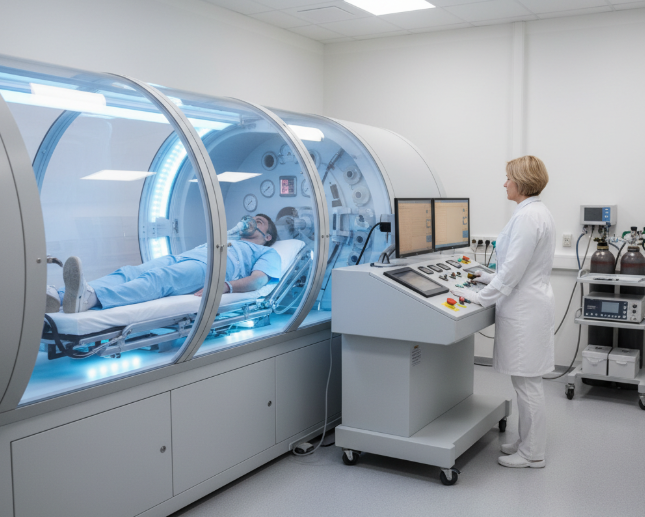
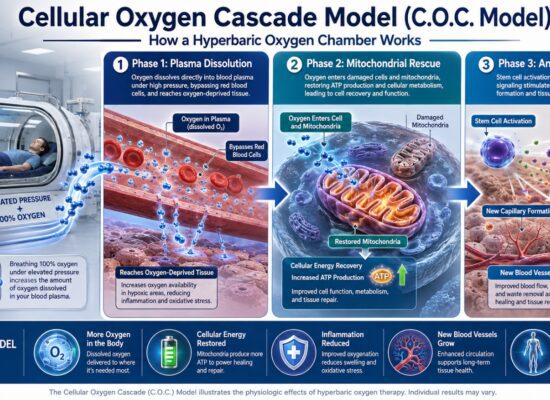
Although you are comfortably lying in the treatment cabin, your body is working “overtime” at the cellular level. The influx of pressurized oxygen will accelerate your metabolism. Your brain and body need to burn a large amount of carbohydrates to process this oxygen and use it to repair damaged tissues. For instance, it’s quite normal for you to feel tired after running 10 kilometers. Similarly, it is not at all surprising to feel exhausted after experiencing such a large-scale cell regeneration.
2. The Die-Off Effect (Herxheimer Reaction)
This is the most common cause of that kind of “flu-like” fatigue. When the oxygen level in your blood rises sharply, they clear out the bacteria, yeasts and other pathogens that are present in a low-oxygen environment thriving (which is particularly common in patients with lyme disease or chronic inflammation). As these bacteria die, they release endotoxins into your bloodstream. At this point, your liver and kidneys have to work hard to filter out these wastes. This process consumes energy and will naturally leave you feeling exhausted.
3. Oxidative Stress Reduction
Somewhat counterintuitively, the initial surge in oxygen will temporarily cause a change in the oxidation balance. Your body will respond by up-regulating its own antioxidant defense mechanisms. This is a powerful healing mechanism, but its immediate effect may make one feel as calm.
How to Manage the Fatigue
If you feel extremely sleepy now, please be sure to listen to your body’s signals. Usually, before patients leave the clinic, I will give the following suggestions:
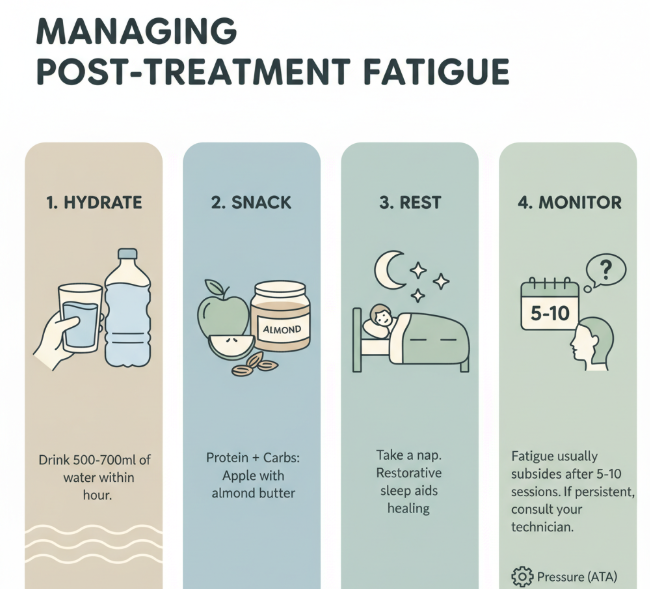
- Replenish water immediately: There’s no room for negotiation on this point. Your body is working hard to eliminate those metabolic wastes and toxins. Within the first hour after leaving the cabin, drink at least 500 to 700 milliliters of water.
- Have some snacks: Due to increased metabolic activity, the glucose level in your brain may drop. Eating some small snacks that combine protein and complex carbohydrates (such as an apple with almond paste) can help stabilize your energy.
- Rest, don’t force yourself: If you can take a nap, go ahead and sleep. This kind of sleep is restorative. Your body can perform its best repair work only when you are sleeping. Forcing oneself to fight against this fatigue may actually hinder the exertion of the therapeutic effect.
- Pay attention to the duration: This intense sense of fatigue usually subsides gradually as the body ADAPTS to the treatment and typically eases after the first 5 to 10 sessions. If fatigue persists for several weeks without improvement and you are very weak, please be sure to communicate with your technician to discuss whether it is necessary to adjust the pressure setting (ATA).
Tips about HBOT
It Affects Everyone Differently
Among my patients, approximately 40% to 50% report experiencing significant fatigue (especially in the early stage), but some also feel deeply calm, and some even experience the “HBOT climax” – feeling mentally clear and energetic immediately after treatment. This largely depends on your underlying health condition. For instance, when athletes use it to recover, they often feel energetic. Patients with chronic diseases usually feel tired first.
Scheduling Your Sessions
If you are a busy professional in the workplace, I strongly recommend that you schedule your first few sessions in the late afternoon or after work. Do not immediately arrange high-risk board meetings or long drives after your first “dive”. Give yourself 1 to 3 hours of buffer time and observe your body’s reaction.
The Long-Term Payoff
It is very important to remember that this kind of fatigue is an investment. Those patients who complained of fatigue in the first week often reported a significant improvement in energy levels, better sleep quality and a reduction in brain fog by the fourth week. It can be said that this kind of fatigue is the “cost” of the ongoing “renovation project” inside your cells.
About the Author: Alex, CHTClinic Director & Certified Hyperbaric Technologist
“I am Alex, a Certified Hyperbaric Technologist (CHT) and Clinic Director with over a decade of hands-on experience. Having personally supervised more than 5,000 hyperbaric sessions, I specialize in guiding patients through the complex physiological shifts of oxygen therapy. My goal is to bridge the gap between clinical science and patient comfort, helping you manage side effects like the ‘HBOT hangover’ with confidence and safety.”

No Comment! Be the first one.