


When it comes to the price of hyperbaric oxygen therapy (HBOT), it’s a difficult question to answer with a simple “buy it now” figure. Costs can fluctuate widely, depending on what kind of illness you’re treating, how many sessions you need, and whether you choose to treat it in a hospital or an independent clinic. Of course, the most critical variable is insurance coverage. To give you a clear idea of financial planning, let’s look at a few typical sets of numbers.
In the United States, for diabetic foot ulcers (DFU), the cost of 30 sessions is around $20,000 if you pay for it yourself—but the good news is that it is usually reimbursed for any FDA-approved indication. For severe radiation tissue damage, the cost of treatment can be as high as $96,000, but the money is well spent because the consequences of not treating are often more expensive, and this is usually covered by insurance. As for those treatments for non-medical purposes (such as health care, anti-aging), they are basically self-funded, and the single cost is usually between $75 and $300. Below I will disassemble the specific costs in different situations in detail.
Hyperbaric Oxygen Therapy Costs for Specific Medical Conditions
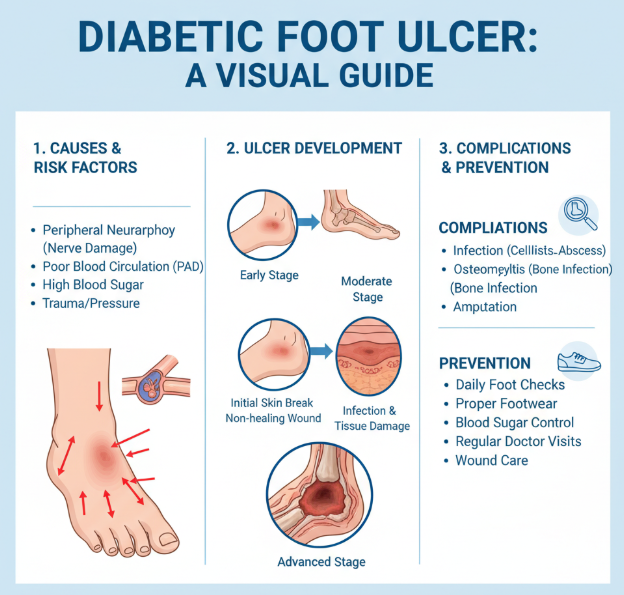
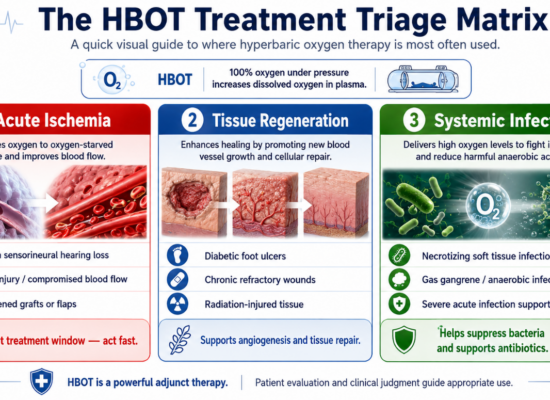
Diabetic Foot Ulcer (DFU)
Number of sessions: A typical DFU regimen consists of 20 to 40 sessions, with some complex regimens extending up to 60 sessions. Each treatment usually lasts 60 to 90 minutes.
Estimated total cost: Although the cost of a single treatment fluctuates between $100 and $650, in the United States, the out-of-pocket cost of 30 treatments can be around $20,000 without insurance. However, in my experience, insurance usually covers most of the costs for FDA-approved conditions. Research data also support this point: compared with standard care, assisted HBOT treatment is actually more “cost-effective” because it can effectively prevent amputation, which avoids huge medical expenses.
Insurance coverage: For eligible diabetic foot ulcers (e.g., Wagner grade 3 or higher and no improvement after 30 days of standard care), Medicare (red-blue card) and most commercial insurance will cover them. Of course, pre-authorization (Prior Authorization) is almost a must.
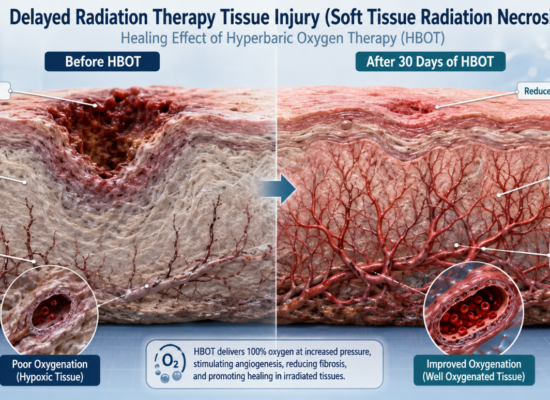
Late Radiation-Induced Tissue Injury (e.g., osteonecrosis)
This is a very difficult wound, and HBOT is excellent at promoting healing.
Number of sessions: The program usually recommends 30 to 60 sessions, mostly once a day for 60 to 120 minutes each time.
Estimated Total Cost: Single cost is similar to other conditions. But in severe cases, such as mandibular radionecrosis, the estimated cost of a full HBOT course is about $96,000. You may think this is an astronomical figure, but without HBOT treatment, the estimated cost of follow-up complex surgery and care is as high as $226,000. This is what I often say, look at the price and look at the long term—this is the way to prevent more expensive consequences.
Insurance coverage: This is a mature FDA-approved indication, so Medicare and most private insurance plans have extensive coverage.
Chronic Refractory Osteomyelitis (CROM)
In this case, HBOT is an indispensable adjuvant therapy.
Number of sessions: Patients usually need 20 to 60 sessions, with a common interval of 20 to 40 sessions of 60 to 90 minutes each, usually five days a week.
Success rate and cost considerations: This is a question of return on investment (ROI). When HBOT is combined with antibiotics and surgery, the cure rate of bone infection can be increased to more than 85%; while only surgery and antibiotics, the cure rate is only about 50%. This improved outcome makes HBOT a worthwhile health investment.
Insurance coverage: Similarly, as an FDA-approved condition, insurance, including Medicare, is usually covered.
Other FDA-Approved Conditions
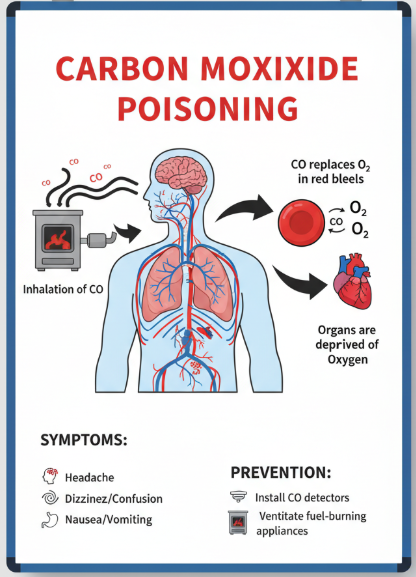
- Carbon monoxide poisoning: This belongs to the emergency category, the treatment time is usually about 90 minutes, the number of treatments required is far less than for chronic disease.
- Decompression sickness (common in divers): Requires immediate treatment, a single session may be as long as 5 hours, but the total number is usually less.
- Sudden onset of sensorineural hearing loss: Up to 20 treatments may be required.
General medical pricing rule: A single clinic fee is between $150 and $650. Hospital costs tend to be in the high-end range, ranging from $250 to $2,500, and can even reach more than $1,500 due to advanced equipment and high operating costs. In contrast, independent clinics typically charge less, about $150 to $400.
The key point of medical-grade treatment: Even for FDA-approved conditions, before starting treatment, be sure to verify your insurance coverage and figure out your specific out-of-pocket responsibilities (deductibles, registration fees, coinsurance).
HBOT Costs for Health, Wellness, and Performance Enhancement
Self-Paid Pricing:
- Single cost: In a health clinic or independent center, a single cost is usually between $75 and $300, and some high-end institutions may charge $650.
- Package offer: I strongly recommend buying a package. For example, a 10-time package might be $1,520, 20 times about $3,030, and 30 times $4,400. In this way, the single cost will be significantly reduced.
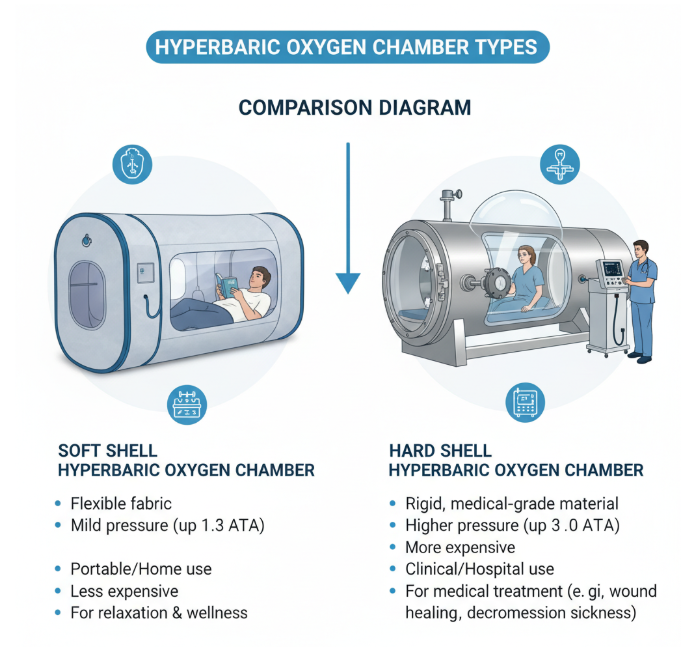
Software vs. Hardware:
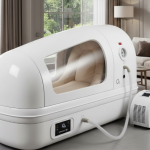
- Soft cabin (micro high pressure): The pressure is usually between 1.3 and 1.5 ATA, the price is more popular, and it is often used in daily health care.
- Hardware cabin: The pressure can reach 3.0 ATA, the technology is more advanced, usually found in medical institutions, the cost is naturally higher.
Purchase of private oxygen chamber:
If you plan to use it for a long time, it may be more cost-effective to buy a cabin.
- Soft Home Class: Prices range from $4,000 to $27,000.
- Hardware Personal Cabins: Prices range from $24,000 to over $150,000. Although the upfront investment is large, we calculate the bill: if the clinic charges $300 for a single charge, you can get back the cost after about 50 to 100 uses. In addition, the current lease or “rent to buy” project is also a good choice.
HSA/FSA Eligibility:
This is an often overlooked money-saving technique. You may be able to use a health savings account (HSA) or a flexible spending account (FSA) to pay for HBOT, or even to buy a home device. You need a “Letter of Medical Necessity” from your doctor and the device must be an FDA-approved Class II medical device.
Essential Financial Tips for HBOT
- Get a detailed quote: Don’t just listen to a rough idea. A clear, itemized list of all costs is required, including the single cost, any additional charges, and the estimated total for the complete course of treatment.
- Make clear what is included: Is the oxygen fee included in the quotation? Do you need to pay the technician fee? Do you need to collect additional money for the evaluation before and after treatment? These hidden expenses are often pitfalls.
- Ask for discounts: Prepay the full amount, purchase a multi-course package, or take advantage of special promotions, and you can usually negotiate a discount.
- Do due diligence on suppliers: Cheap is not necessarily good. Ensure facilities are reputable, staff are qualified, and equipment is properly maintained. If it is for medical use, be sure to see if they have the certification of the relevant medical institutions.
About the Author: Li Ming, Hyperbaric Oxygen Therapy Payment Planning Expert
I am a seasoned medical financial consultant and health payment planning expert with over 15 years of experience navigating the complexities of healthcare costs. Specializing in Hyperbaric Oxygen Therapy (HBOT), I offer invaluable insights into pricing structures, insurance coverage (including Medicare and private plans), and innovative financial solutions for both FDA-approved medical treatments and wellness applications. My mission is to empower individuals with clear, authoritative guidance to make informed decisions about their HBOT investment and maximize their financial well-being.
No Comment! Be the first one.