


After surgery, many people ask me the most questions: “Doctor, how long will I have to swell? Or can this scar recover better?”
In fact, in addition to routine care, hyperbaric oxygen therapy (HBOT) is the “secret weapon” I often recommend.” It is not metaphysics, but a scientifically validated complementary therapy. Simply put, by “pressurizing oxygen” to the body, it can significantly accelerate healing after plastic surgery, reduce scar formation, and relieve postoperative discomfort.
Whether you are desperate to meet someone just after surgery or preparing for major surgery in the future, HBOT may be the key to your “recovery faster and better looking.”
How HBOT Helps You Overcome Post-Surgical Woes
In clinical practice, I have found that hyperbaric oxygen optimizes the recovery process mainly through the following dimensions:
Optimizes Scar
- Promote uniform healing: Hypoxia is often a breeding ground for scar hyperplasia. Adequate oxygen supply ensures uniform healing throughout the wound and reduces abnormal growth due to local hypoxia.
- Guided Collagen Arrangement: According to my observations, patients who have received HBOT tend to have a more orderly arrangement of collagen fibers. This means that the final scar will be flatter, softer and less visually noticeable.
- Reduce the risk of hyperplasia: For those who are prone to scar or scar constitution tendency, improving the healing microenvironment can effectively reduce the incidence of hypertrophic scars and keloids.
Significantly Accelerates Tissue Repair and Healing
`

Plastic surgery—whether it is a skin lift, breast augmentation, liposuction or abdominal wall shaping—is essentially a kind of controlled trauma to body tissues. The traditional natural recovery process can be slow and associated with long-term discomfort.
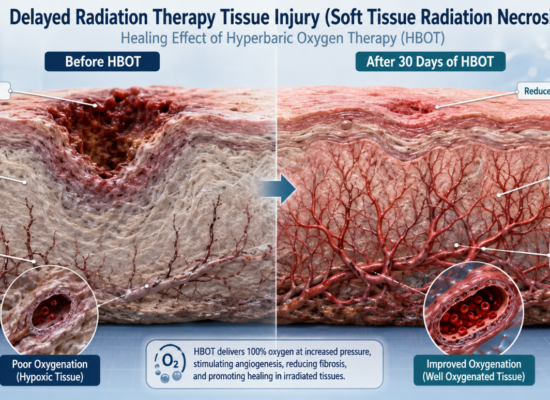
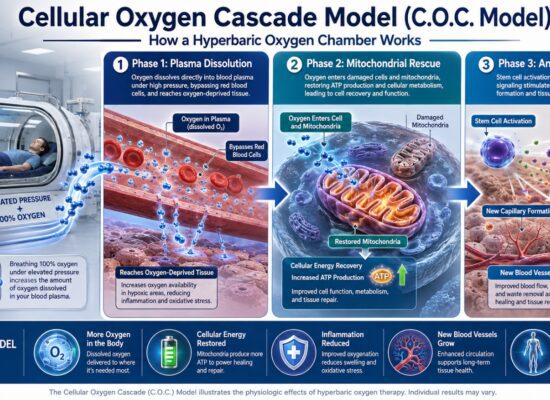
The principle of HBOT is to let you breathe 100 percent pure oxygen in a pressurized environment, which can physically greatly increase the dissolved oxygen content in blood and body fluids, and cause the oxygen concentration of damaged tissues to rise sharply. Oxygen is the “fuel” for cell repair and can:
- Stimulation of collagen synthesis: Fibroblasts need oxygen to produce collagen, which is the basis for wound closure and tissue remodeling.
- Promote angiogenesis: High oxygen environment can stimulate capillary neogenesis (Angiogenesis), improve blood circulation in the damaged area, and provide stronger logistical support for healing.
- Accelerated cell growth: Accelerates the repair of damaged cells and the generation of new cells.
The result: many patients reported a 25 to 75 percent reduction in their recovery time.
Effectively Reduces Swelling, Bruising and Pain
- Potent anti-inflammatory: HBOT reduces inflammation by inhibiting the release of pro-inflammatory cytokines. High concentrations of tissue oxygen also reduce edema formation and help fluid flow out of the body more quickly.
- Vasoconstriction: Oxygen has the effect of constricting blood vessels, which may sound paradoxical, but it actually reduces capillary leakage without affecting blood flow, which is very useful for reducing postoperative swelling and bruising.
- Pain relief: Inflammation and swelling are the two main driving forces of postoperative pain. When these two are solved, the pain will naturally be reduced. Many patients are less dependent on painkillers after treatment.
Lowers Infection Risk, Prevents Complications
- Enhance immunity: High oxygen environment can improve the bactericidal ability of white blood cells (phagocytes), so that the body against bacterial infection is more efficient.
- Suppression of anaerobic bacteria: Many postoperative infections are caused by anaerobic bacteria, which simply cannot survive in an oxygen-rich environment.
- Improved tissue survival: Especially for procedures involving flap or skin grafts, HBOT can significantly improve graft tissue survival and reduce necrosis, a nightmare neither doctors nor patients want to see.
Safe and Efficient
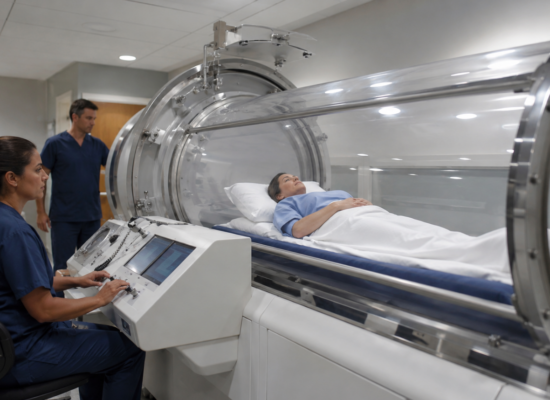
Treatment is usually performed in a specialized hyperbaric chamber. You just need to lie down comfortably and inhale pure oxygen through a mask or hood. Each treatment lasts about 60-90 minutes and the whole procedure is non-invasive. Most patients feel relaxed and even read or sleep in it. We will monitor the whole process to ensure safety.
Which Plastic Surgeries Benefit from HBOT?
`
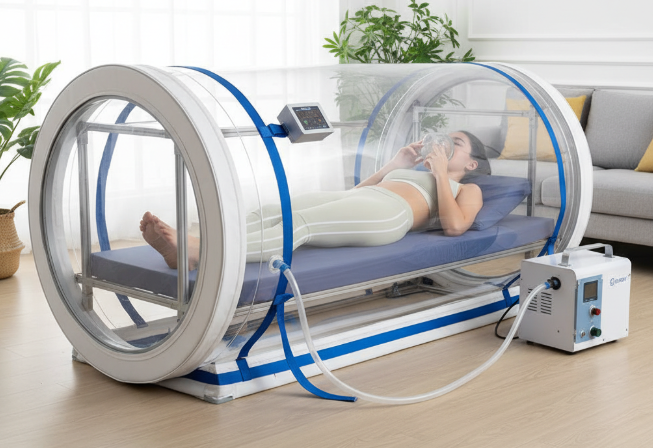
While nearly all postoperative recovery benefits, I saw the most significant improvement in the following types of surgery:
- Facial plastic surgery: Such as skin lift, eyelid surgery, rhinoplasty. It can accelerate the swelling and de-silting, so that the facial contour faster shaping.
- Breast surgery: Such as breast augmentation, breast reduction or breast reconstruction. In addition to reducing swelling and pain, prevention of capsular contracture is also an important consideration.
- Body shaping: Such as liposuction and tummy tuck. Accelerates the metabolism of adipose tissue and the regression of edema, promotes better skin retraction and fit.
- Skin grafting and flap transfer: This is a key application area that significantly reduces the risk of tissue necrosis.
- Skin rejuvenation treatment: Such as laser treatment and chemical peeling, can accelerate skin regeneration, rapid fading red.
When is HBOT Most Effective?
Although this is primarily a post-operative treatment, in some cases, we may also recommend a “lead time.”
- Preoperative pretreatment: It helps to improve the oxygen saturation and overall health of the tissue, lay a good foundation for the upcoming surgery, and reduce the risk of postoperative complications.
- Postoperative golden period: Usually, I recommend starting the first treatment within 24-72 hours after surgery. At this time, the inflammatory reaction is most intense, and timely high oxygen supply can intervene and optimize the healing process to the greatest extent. How many times to do it depends on your type of operation and the specific recovery.
Safety and Considerations
The vast majority of patients do not feel uncomfortable with hyperbaric oxygen, and a small number of people may feel distended in their ears, just like when taking off and landing by plane. This is usually a good solution, just swallow saliva or do an ear pressure balance (Valsalva maneuver).
Other side effects, such as temporary vision changes, usually return after treatment. As for serious complications such as pneumothorax or oxygen poisoning, as long as it is operated by an experienced team in a regular medical institution, the incidence rate is extremely low and can be basically avoided.
Of course, safety always comes first. HBOT is generally not recommended if you have an untreated pneumothorax, certain lung conditions, uncontrolled epilepsy, or are taking certain medications; special evaluation is also required during pregnancy. So before starting, a thorough medical evaluation by a doctor is necessary.
About the Author: Li Ming, Hyperbaric Oxygen Therapy Payment Planning Expert
I am a seasoned medical financial consultant and health payment planning expert with over 15 years of experience navigating the complexities of healthcare costs. Specializing in Hyperbaric Oxygen Therapy (HBOT), I offer invaluable insights into pricing structures, insurance coverage (including Medicare and private plans), and innovative financial solutions for both FDA-approved medical treatments and wellness applications. My mission is to empower individuals with clear, authoritative guidance to make informed decisions about their HBOT investment and maximize their financial well-being.


No Comment! Be the first one.