



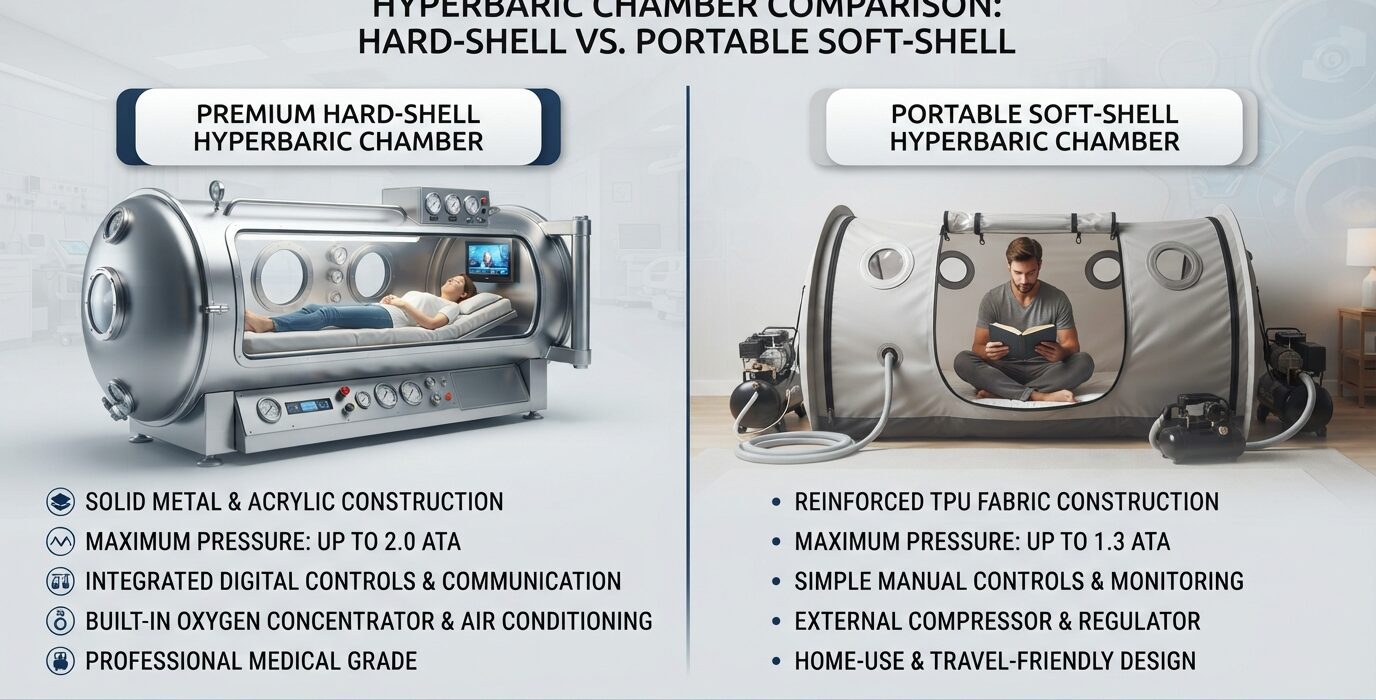
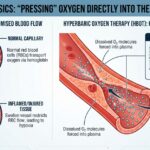
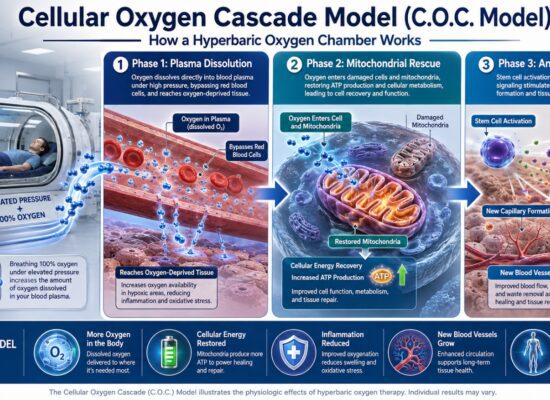
A hyperbaric chamber is a specialized, pressure-sealed medical vessel designed to increase the amount of oxygen your blood can carry by elevating atmospheric pressure. Unlike standard oxygen therapy that relies on red blood cells, hyperbaric oxygen therapy forces oxygen to dissolve directly into your blood plasma, cerebrospinal fluid, and lymph. This physiological shift allows oxygen to reach deep tissues where circulation is restricted. However, the effectiveness of this process depends entirely on a specific pressure threshold—typically between 1.5 and 2.5 ATA—which is a detail most consumer-grade “soft chambers” fail to meet.
Why Pressure Matters More Than Oxygen Percentage
Pressure is the primary lever that dictates biological change in a hyperbaric environment. While most people focus on “breathing 100% oxygen,” the real magic happens because of Henry’s Law, which states that a gas dissolves into a liquid in proportion to the pressure exerted upon it. Under normal conditions, your red blood cells are already 98% saturated; breathing more oxygen at sea level adds almost nothing to your system.
Hyperbaric chambers turn your entire body into an “Oxygen Sink.” By increasing the pressure to 2.0 ATA, the oxygen concentration in your plasma increases by nearly 1000%. This bypasses the need for red blood cells entirely, delivering life-saving oxygen to swollen tissues, crushed limbs, or areas with compromised blood flow that “cargo-carrying” red blood cells simply cannot enter.
A Critical Distinction For Biohackers
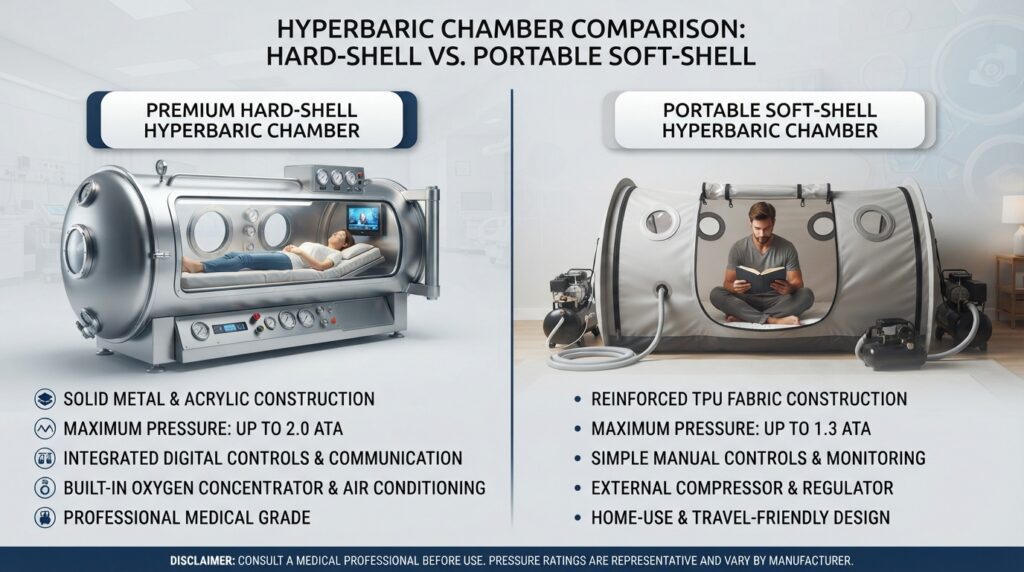
Portable “soft-shell” chambers, often marketed to biohackers, rarely provide the pressure necessary for clinical tissue regeneration. Most home units are capped at 1.3 ATA for safety and regulatory reasons. While 1.3 ATA can help with systemic inflammation and minor fatigue, it typically falls below the “activation threshold” required for the more profound medical benefits like bone healing or neurological repair.
Clinical-grade hard-shell chambers are the only devices capable of reaching 1.5 to 3.0 ATA. If your goal is to trigger the release of stem cells or treat complex conditions like TBI or Long COVID, the “mild” pressure of a soft chamber may offer diminishing returns. You must verify the ATA rating of a clinic’s equipment before committing to a protocol.
Hard-Shell (Clinical) vs. Soft-Shell (mHBOT) Comparison Table
| Feature | Hard-Shell (Clinical HBOT) | Soft-Shell (Portable / mHBOT) |
| Pressure (ATA) | 1.5 to 3.0 ATA | Capped at 1.3 ATA (Mild pressure) |
| Oxygen Purity* | Typically 100% medical-grade oxygen | Ambient air (~21%) or enriched air via concentrator |
| Best For | Clinical tissue regeneration, bone healing, neurological repair, triggering stem cell release, complex conditions (TBI, Long COVID) | Systemic inflammation, minor fatigue, general biohacking |
| Safety Risks & Regulations | Requires clinical oversight; higher pressures require strict safety protocols and professional verification | Lower risk; intentionally capped at 1.3 ATA for safety and regulatory compliance for home use |
4 Science-Backed Benefits For Recovery And Longevity
HBOT triggers a massive mobilization of stem cells from the bone marrow into the bloodstream. Studies have shown that a series of 20 hyperbaric sessions can increase circulating CD34+ stem cells by eight-fold. These cells act as a “natural repair crew,” migrating to areas of injury to regenerate damaged tissue and blood vessels.
Hyperbaric oxygen therapy is the only non-invasive treatment proven to reverse two key markers of biological aging: telomere shortening and senescent cell accumulation. Research from the Shamir Medical Center demonstrated that specific HBOT protocols could lengthen telomeres by more than 20%. This effectively “rewinds” the cellular clock, providing a level of systemic rejuvenation that diet and exercise alone cannot achieve.
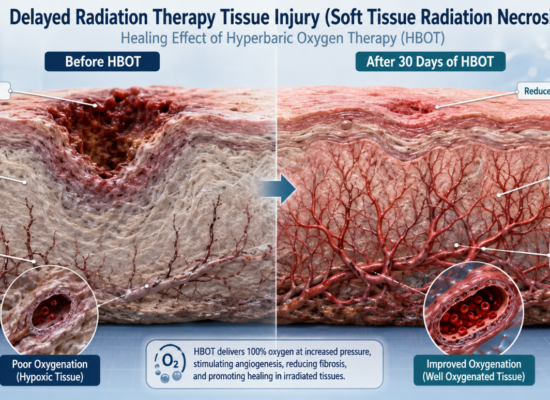
Hyperbaric environments stimulate angiogenesis—the growth of new capillary networks. By cycling between high oxygen levels and normal levels, the body is tricked into producing Hypoxia-Inducible Factors. This signal forces the body to build new “highways” for blood flow in areas where old vessels have withered or been damaged by radiation or trauma.
Neurological inflammation can be significantly reduced through pressurized oxygen delivery. For patients dealing with “brain fog” or post-concussion syndrome, HBOT forces oxygen into the cerebral fluid, reducing swelling in the brain and reactivating dormant neurons. This often results in immediate improvements in cognitive clarity and processing speed.
What Your Clinic Might Not Mention
Managing oxidative stress is the most overlooked aspect of long-term hyperbaric therapy. While high-pressure oxygen heals, it also creates reactive oxygen species. Veteran practitioners recommend pairing a 40-session “dive” protocol with lipid-based antioxidants like Glutathione or Vitamin C to prevent the cellular fatigue that can sometimes occur from over-oxygenation.
Cotton clothing is a non-negotiable safety requirement for all high-pressure oxygen environments. Static electricity is the greatest hazard in a 100% oxygen environment. Any synthetic materials, including yoga pants or polyester shirts, can create a spark. Always ensure you are wearing 100% medical-grade cotton and have removed all electronics and petroleum-based skin products before entering a hard-shell chamber.
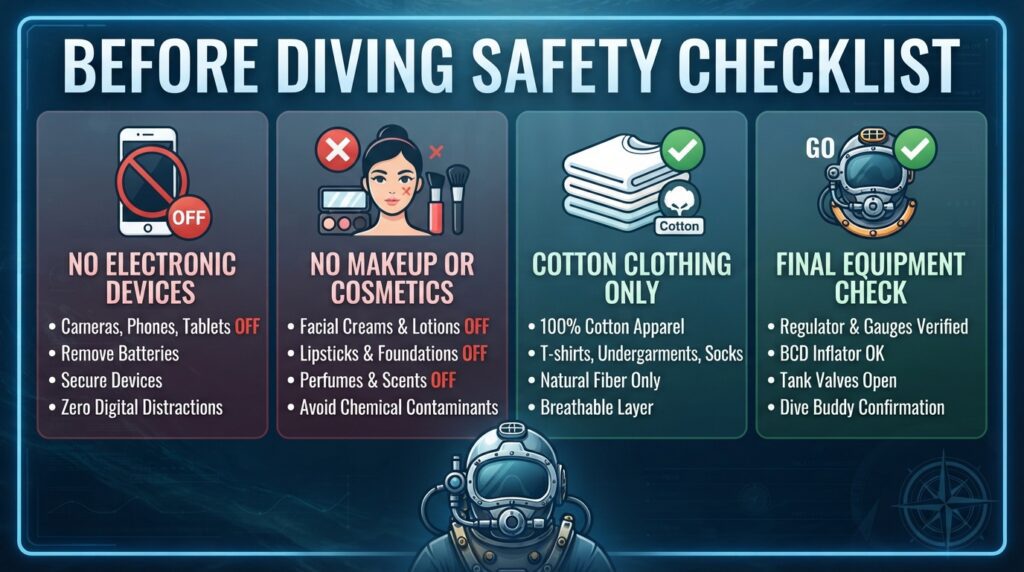
A Practical Preparation Checklist
Ear equalization is the only physical skill you need to master before your first session. As the pressure rises, you will feel a fullness in your ears, similar to landing in an airplane. Using the “Valsalva maneuver” or simply swallowing frequently will prevent discomfort and “ear squeeze.”
Consistency is the “hidden ingredient” that determines the success of the treatment. Hyperbaric therapy is cumulative. While a single session might boost your mood, the structural changes—like new blood vessel growth—require a “saturation” phase, typically 20 to 40 sessions performed 5 days per week.
자주 묻는 질문
Q: Is it scary or claustrophobic inside a hyperbaric chamber?
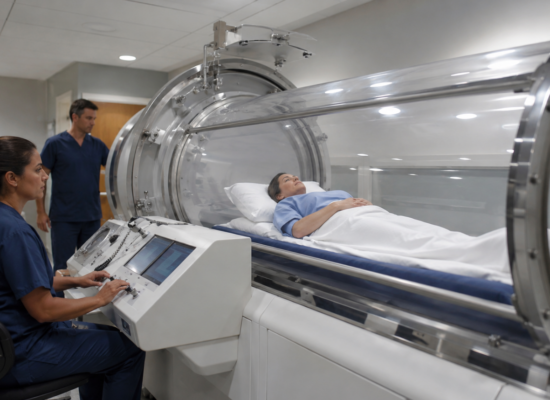
Most modern chambers are made of clear acrylic or have large windows. You can watch a movie, listen to music, or sleep. If you have severe claustrophobia, your doctor may provide a mild sedative, but most patients find the experience quite relaxing after the first 5 minutes of pressurization.
Q: How long does a typical hyperbaric session last?
A standard “dive” lasts between 60 and 90 minutes. This includes roughly 10-15 minutes of “descent” and 10-15 minutes of “ascent”.
Q: Can I use a hyperbaric chamber every day?
For medical recovery, a 5-day-on, 2-day-off schedule is standard. This allows your body to process the oxygen while preventing the buildup of excessive oxidative stress.
Q: What are the primary contraindications for HBOT?
The most critical contraindication is an untreated pneumothorax. Other concerns include active ear infections, certain types of chemotherapy drugs, and severe congestive heart failure.
Q: Why do my ears “pop” after the session is over?
Your ears may continue to equalize for an hour or two after you exit the chamber. This is normal as the tiny air pockets in your middle ear adjust back to sea-level pressure.
Q: Will I feel different immediately after my first session?
Many people report increased mental clarity and “vivid” vision immediately following a session. However, the deep tissue healing and stem cell benefits usually manifest after the 10th or 15th session.

댓글이 없습니다! 첫 번째 댓글이 되세요.