


Introduction
There is no single brand or product on the market that can be called the best home hyperbaric oxygen chamber. Everyone has different physical conditions, treatment needs, budgets, and preferences for device functionality and convenience, so what is called “best” must be the result of personalized selection based on their specific circumstances.
What is a Home Hyperbaric Oxygen Chamber
Principles of Hyperbaric Oxygen Chamber Treatment
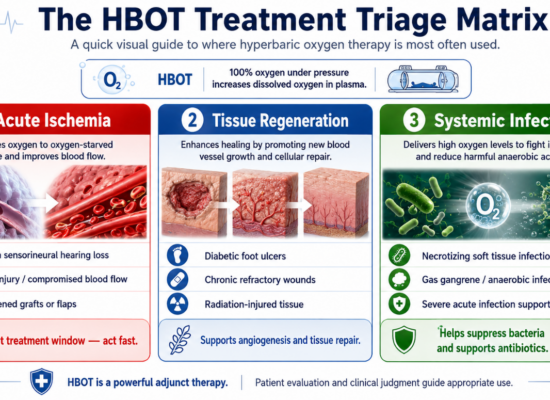
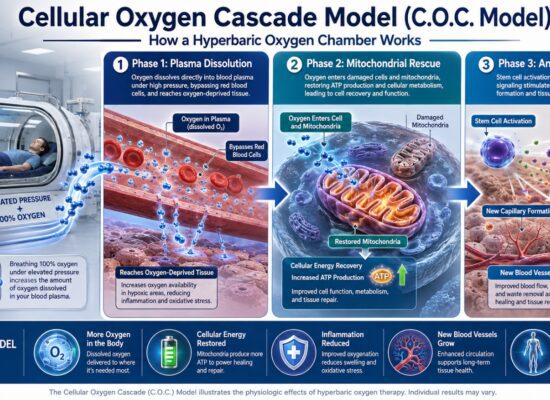
The core principle of hyperbaric oxygen therapy is to increase the amount of oxygen dissolved in our blood.
At normal pressure, oxygen is transported primarily through hemoglobin. But in a high-pressure environment, plasma can dissolve more oxygen. This extra dissolved oxygen can be delivered directly to every cell and tissue in the body, even those areas that are deprived of oxygen due to circulatory disorders. This has significant effects on accelerating wound healing, reducing inflammation, improving nerve function, etc.
Classification of hyperbaric oxygen chambers
Hard shell hyperbaric chamber:
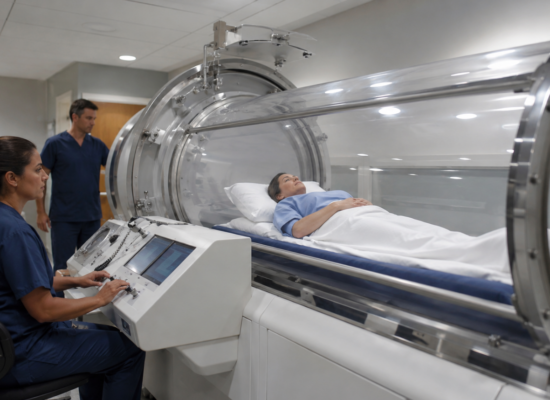
Such pods are usually made of strong metal materials and can withstand higher pressures (usually more than 2.0 ATA, or 2 atmospheres).
They are more commonly used in hospitals and professional clinics and are suitable for treating some serious diseases that require high stress, such as decompression sickness and carbon monoxide poisoning.
Soft shell hyperbaric chamber:
Also known as lightweight hyperbaric oxygen chambers, they are primarily made of flexible material and typically only achieve low pressures (approximately 1.3-1.5 ATA).
This type of cabin is lighter and easier to install, and is currently the mainstream choice for home hyperbaric oxygen cabins. Although the stress is low, the effectiveness of adjunctive treatment and health maintenance for some chronic diseases is also supported by many studies.
Advantages and limitations of home hyperbaric oxygen chamber
Advantages:
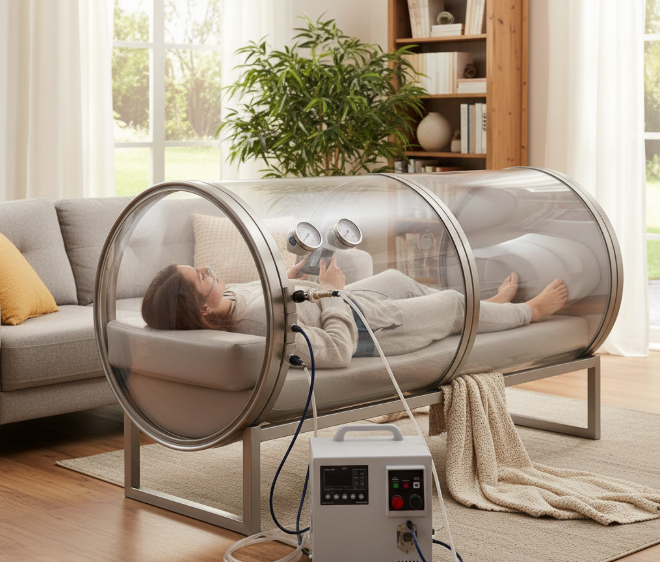
- Convenience: Hyperbaric oxygen therapy can be done at home, saving the trouble of frequent commuting to and from the hospital, especially for people with limited mobility or busy schedules.
- Long-term use is more economical: although the initial investment is not low, if the hyperbaric oxygen therapy session is relatively long, the price of hyperbaric oxygen therapy in the home cabin may be lower in the long run compared with each visit to the hospital.
- Privacy and comfort: in their own familiar environment for treatment, psychological will be more relaxed.
Limitations:
- Pressure limit: This is the biggest limitation of the soft home cabin, and its treatment pressure is much lower than that of the medical hard cabin. This means that for some diseases that require higher pressure to achieve treatment effect, patients should also choose to go to a professional hospital or treatment center for treatment.
- Professional guidance: hyperbaric oxygen therapy is not optional. Lack of professional doctors to evaluate and guide the treatment plan, may not achieve the ideal treatment effect, and even risk. Therefore, the use of hyperbaric oxygen chamber at home follows the personalized diagnosis and treatment plan of professional doctors.
- Safety concerns: While the safety of modern home hyperbaric chamber has greatly improved, potential hazards remain if not handled properly or if the equipment is not of high quality, such as fire risk (although extremely low) or ear compression. Therefore, professional operators are needed to provide guidance and teaching before using a home hyperbaric chamber.
How to choose the right hyperbaric oxygen chamber for home
First, and most importantly, be sure to communicate fully with your primary care physician first. Identify your health, treatment needs, and find the right hyperbaric oxygen treatment plan for you.
With the doctor’s professional advice as a basis, we can talk about specific equipment choices.
Pressure level
You’ll need to have an in-depth discussion with your doctor to choose the right stress range based on your specific condition, your body’s tolerance, and your intended treatment goals.
- 1.3 ATA: This is a common stress in many soft cabins and may be sufficient for some conditions such as chronic fatigue, motor recovery, and improved cognitive function. It has the advantage of being relatively gentle and easier for the average person to adapt to.
- 1.4 ATA – 1.5 ATA: These higher pressure levels theoretically provide stronger oxygen delivery and may have better effects on certain inflammatory conditions, tissue repair, mild nerve damage, etc. But at the same time, the increased pressure also means greater challenges to ear pressure balance and the need for a stronger cabin structure, which will also be more expensive.
Safety certification and industry standards
- EU CE certification (Conformité Européenne): CE certification indicates that the product meets EU health, safety and environmental standards.
- ISO international standards: ISO 13485 (Medical Device Quality Management System) certification, indicating that manufacturers follow strict quality control standards in the production process.
Products with these certifications mean that they have been rigorously tested and evaluated by independent agencies, and have met the basic safety and quality requirements in design, manufacturing and performance. Therefore, you should pay attention to whether the products are There are relevant international certifications.
Material structure
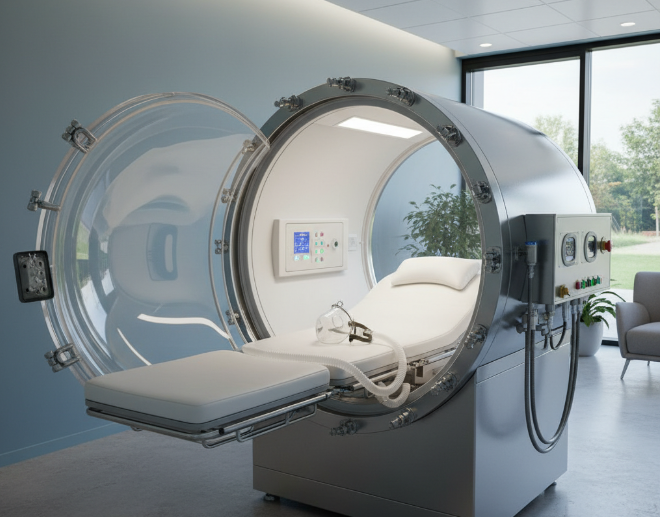
- Cabin material: High quality medical grade TPU or PU coated nylon is the mainstream choice of current hyperbaric chamber materials. These materials have good tear resistance, wear resistance, biocompatibility, can withstand the high-pressure environment in the cabin and are non-toxic and tasteless, and are the 1 safe materials for the human body.
- Sealing technology: Double-layer or even three-layer zipper design, usually can provide better sealing effect, to ensure the high pressure environment and safety in the cabin.
- Support structure: observe whether the support rod or frame of the cabin is firm and stable, which determines whether the shape of the cabin can be maintained after inflation and pressure, and ensure that the internal space is not easily deformed.
- Internal space: according to the individual’s height and body, choose a cabin with enough spacious internal space to ensure that you can sit comfortably, lie down or perform other light activities during treatment.
Ease of use and user interface
Control panel: The ideal control panel should have an intuitive user interface, including clear indicator lights and control buttons so that the patient can clearly understand the current pressure, time and other key information, and can easily adjust the relevant parameters.
Internal functions: Some hyperbaric oxygen chambers will be equipped with internal communication systems (walkie-talkies), lights, and some small accessories or interfaces so that users can read books or use some electronic equipment in the cabin.
Mobility and installation: If there is a need to move equipment frequently, the weight and ease of disassembly and assembly of the hyperbaric oxygen chamber should also be considered.
Precautions for Home Hyperbaric Oxygen Chamber
Follow the medical plan: treat in strict accordance with the doctor’s recommendations, including the treatment pressure, the length of each treatment and the frequency of treatment.
Environmental requirements: hyperbaric chamber at home need to be placed in a well-ventilated, dry, flat area, away from flammable and explosive materials.
Preparation before treatment: Avoid alcohol, smoking and strenuous exercise before treatment. Before entering the cabin, remove all items that may cause sparks, such as lighters, mobile phones, some electronic products, and cosmetics with oily or alcoholic ingredients.
Emergency treatment: understand the location and use of the emergency relief valve of the equipment to prevent emergencies.
Regular maintenance: Clean and inspect the equipment regularly to ensure its normal operation.


No Comment! Be the first one.