
The depressurization phase of the hyperbaric chamber usually takes 10 to 20 minutes.
If it is a standard 2.0 ATA (absolute atmospheric pressure) clinical treatment, the 15-minute boost/liter bin rate is the “gold standard” in the industry. This duration is by no means determined by the head, but an extremely rigorous controlled process. We manage the pressure drop through precise exhaust valves. In order to allow the gases dissolved in the blood (mainly oxygen and residual nitrogen) enough time to travel to the lungs and be safely exhaled. If this step is taken too quickly, nitrogen bubbles will form in the tissues, causing decompression sickness (commonly known as “diving man’s disease”) or severe pressure damage to the ears and sinuses. Only by slowing down and stabilizing can the patient’s ear pressure balance run ahead of the pressure change, making the process of returning to normal pressure comfortable and in line with medical safety.
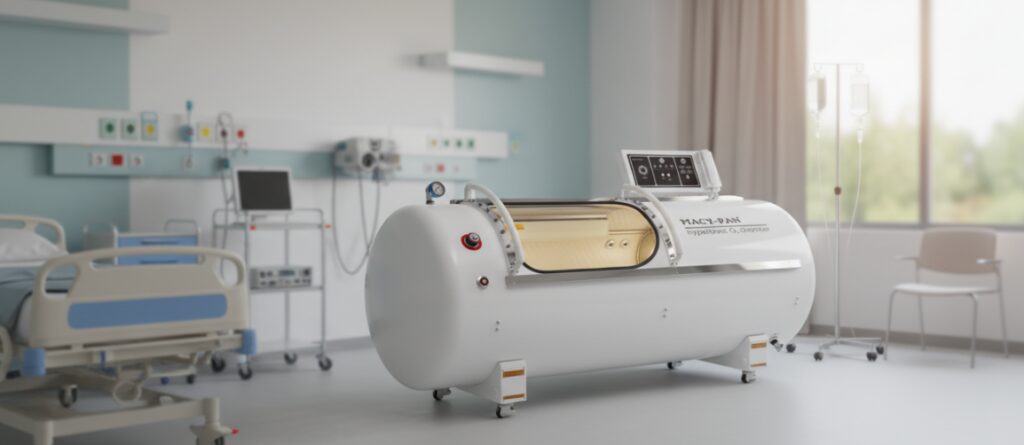
Why 15 Minutes?
Although 10 to 20 minutes can cover most clinical situations, the 15-minute decompression for 2.0 ATA therapy is widely regarded as a “sweet spot” for patient safety.
The decompression time is calculated strictly on the basis of the depth (pressure) reached during the treatment. We operate a precision exhaust valve to slowly release pressure. This is more than just “opening the door”, it is a linear pressure drop process that simulates the physical logic of the diver to the surface.
The Science Behind Decompression
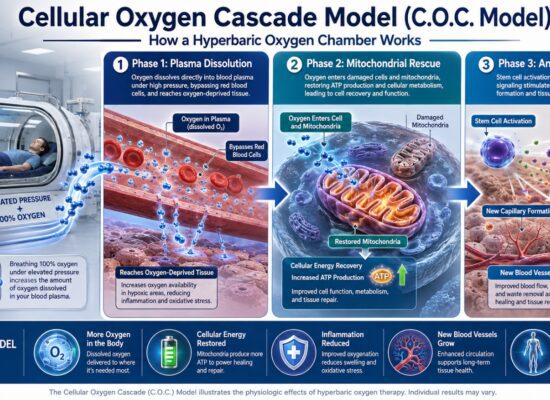
Decompression is time-consuming, the core reason is physiological. During hyperbaric oxygen therapy (HBOT), the body is at a higher than normal atmospheric pressure, which causes more oxygen (and some nitrogen, depending on the gas combination) to dissolve in the plasma and tissues.
Prevention of decompression sickness: If the pressure drops too quickly, these dissolved gases will quickly come out of solution and form bubbles. It’s exactly the same principle as jerking open a bottle of carbonated drink. In humans, these bubbles can cause decompression sickness, causing joint pain, neurological problems, and even more serious complications. A buffer of 10 to 20 minutes ensures that these gases are slowly transported to the lungs and exhaled naturally.
Protection of the middle ear and sinuses: The most common side effect of pressure changes is crush injury. During decompression (ascent), the air in the middle ear and sinuses expands. If the decompression speed is too fast, the air can not be discharged through the Eustachian tube, it will cause severe pain and even damage to the tympanic membrane. At a steady rate of 15 minutes, patients can usually easily complete the “pressure adjustment” to keep up with the rhythm of pressure changes.
HE5000
2.0ATA, Medical grade pressure is suitable to home health, Dimensions: 82 x 65 x 72 inch for 1-3 person using.
Get Quote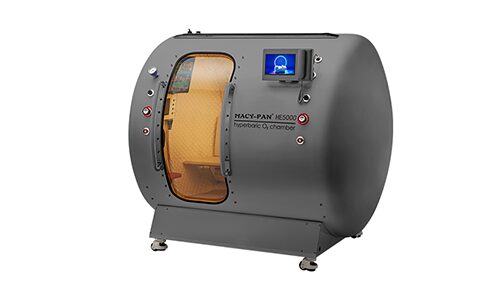
HE5000-Plus
2.0ATA, Medical grade pressure is suitable to home health, Dimensions: 102 x 65 x 72 inch for 1-4 person using.
Get Quote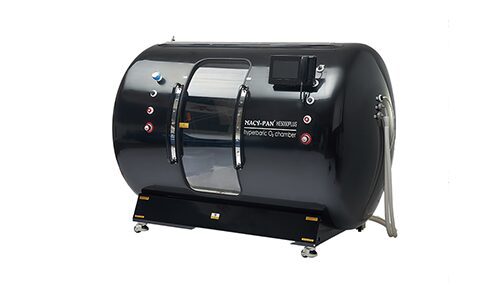
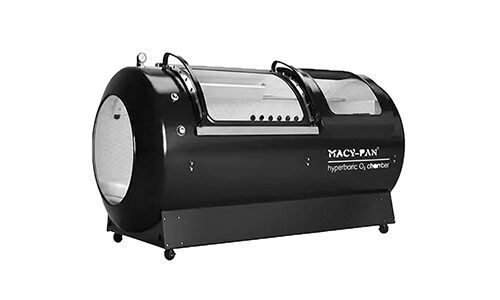
What Factors Affect Your Decompression Time?
Although 10 to 20 minutes is the norm, some variables may move the time slightly:
Treatment depth: Treatment of 2.4 ATA or 3.0 ATA (usually used for specific conditions such as carbon monoxide poisoning) requires a longer and slower decompression process than 1.5 or 2.0 ATA.
Patient comfort: If the patient feels ear discomfort during the ascent, we will immediately slow down the decompression or even pause it completely until the patient has completed the pressure adjustment. At this time, the time may be more than 20 minutes.
Cabin type: Whether it is a multi-person cabin or a single cabin, it follows a strict lifting scheme, but they will be slightly different in the mechanical exhaust system that manages the linear pressure drop.
What Do You Feel During The Decompression Phase?

As you enter the last 10 to 20 minutes, you will notice some physical changes:
Temperature changes: As the pressure decreases, the air in the cabin will naturally cool.
Exhaust sound: You will hear a continuous hissing sound when the exhaust valve exhausts.
Ears “bounce”: You will feel a similar feeling in your ears when you land on an airplane or drive down a mountain. This is a signal that the middle ear air expands and exits, which is normal.
Safety Is Always The First
The decompression phase is as critical as the treatment phase. Although I also understand the feelings of patients who want to get out of the cabin quickly, the 10 to 20-minute ascent process is a medical mandatory safety protocol. Give the body enough time to exhaust and balance to ensure that hyperbaric oxygen therapy not only cures the disease, but also is absolutely safe for the respiratory and auditory systems.
Author: Dr. Marcus Thorne
Hi, I’m a specialist in hyperbaric medicine with over 11 years of clinical experience. Throughout my career managing hyperbaric facilities, I have overseen thousands of treatment sessions, prioritizing rigorous safety protocols and patient comfort above all else.