


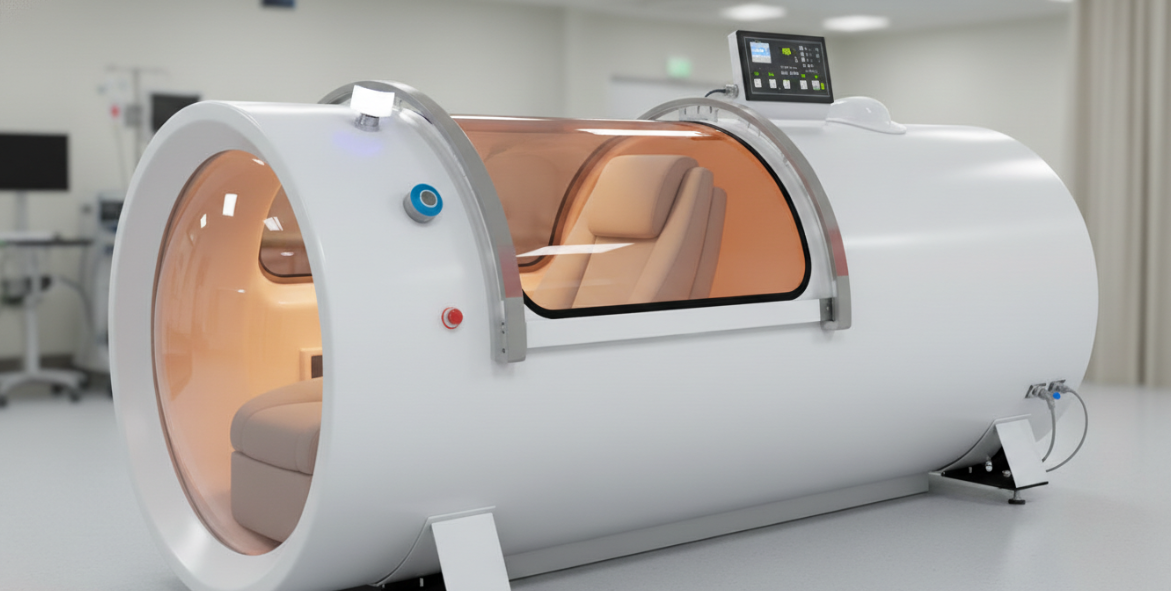
The 1.5 ATA (7.3 PSI) system is undoubtedly the absolute “gold standard” in the field of home oxygen therapy. From the data point of view, 1.5 ATA can provide about 40-50% higher tissue oxygenation level than those entry-level “health capsules” that only stay in 1.3 ATA. At the same time, compared with the 2.0 ATA hardware cabin used in hospitals, it is more secure in safety and more affordable.
If you are looking for this type of device in the market, there are 3 core configurations that can never be compromised in order to ensure efficacy and safety:
Double-layer TPU cabin material (don’t buy that cheap nylon material, it will leak over time), and the inside must be supported by a metal frame to prevent collapse.
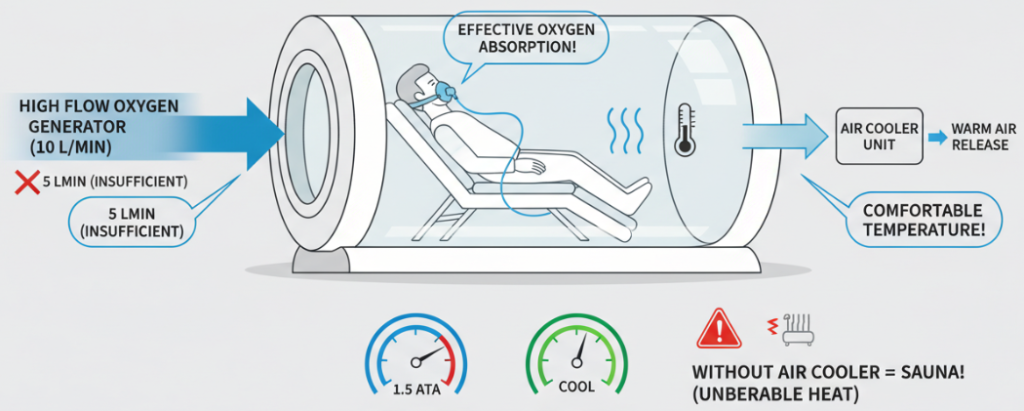
10 liters/minute high-flow oxygen generator (many 5L on the market can’t carry 1.5 ATA pressure at all), and at the same time, it must be equipped with a special air cooling system—the laws of physics tell us that pressure must generate heat, and you can’t stay without a cooling system.
Redundant emergency pressure relief valve, the most important thing is to allow you to manually depressurize in the cabin.
Generally speaking, a reasonable budget for a reliable and certified 1.5 ATA system should be between US $5,000 and US $9,500. This configuration perfectly solves the core pain point of home users: clinical-grade pressure required for deep tissue anti-inflammatory and neurocognitive recovery, without the need for on-site supervision by a doctor, and without the need to shell out $50,000 for commercial equipment.
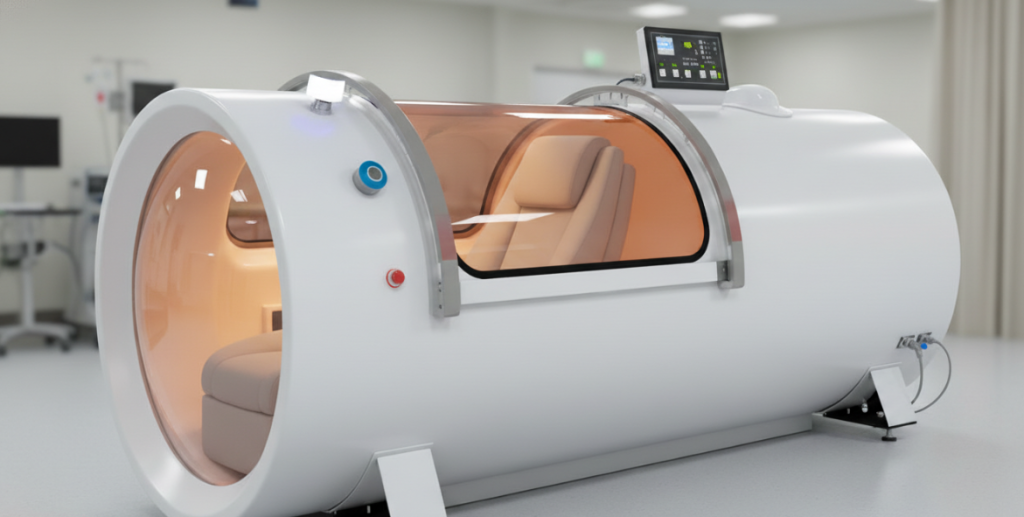
Why Is 1.5 ATA The “Gold Standard” For Home Oxygen Therapy?
There is a very critical indicator behind this: tissue oxygenation.
The market is full of software modules 1.3 ATA. It is enough for people who just want to relax. But, if you want real therapeutic benefits—not just for relaxation, but for deep tissue inflammation or neurocognitive recovery—the pressure to 1.3 the ATA is often overwhelming. The 40-50% increase in additional oxygenation level brought by the 1.5 ATA system is the watershed from “health care” to “rehabilitation.”
On the other hand, the hard shell cabin above 2.0 ATA, although the effect is stronger, is usually the configuration of the hospital. The risk is high, professional medical personnel must be on duty, and the price is discouraged. Therefore, the 1.5 ATA software module actually finds a perfect balance between clinical efficacy and household safety between low-pressure health capsules and commercial medical equipment.
Core Configuration 1: TPU Vs. Nylon
When evaluating equipment, durability is the first indicator I suggest you look. There are a lot of cheap devices on the market now that use nylon material, and I usually recommend skipping it. Nylon has a fatal weakness: it will age and degrade a long time, resulting in air leakage, and then the pressure in the cabin will not be stable at 1.5 ATA.
The true “gold standard” must be a double-layer TPU (thermoplastic polyurethane) cabin. TPU this material is environmentally friendly, wear-resistant, and most importantly, excellent sealing.
In addition, there is a detail that many novices easily overlook: the internal metal frame. Never buy a structure that relies solely on inflatable support. Once the pressure is lowered, the cabin will directly press on you like a deflated balloon, which is very uncomfortable. With internal frame support, the cabin can always maintain shape and access is much easier.
Core Configuration 2: Balance Of Oxygen And Cooling
To maintain the pressure of 1.5 ATA (7.3 PSI), the requirements for the air exchange system are very high, which is also the place where many low-end products with insufficient budget are “exposed.”
- Here is a hard indicator: it must be equipped with a high flow oxygen generator of 10 liters/minute (10L). Many sellers will give you a 5L machine in order to reduce costs. I can tell you responsibly that 5L flow is not enough for the body to effectively absorb oxygen under the pressure of 1.5 ATA, and the effect is greatly reduced.
In addition, physical common sense tells us: the pressure increases, the temperature will rise. Without intervention, the cabin of the 1.5 ATA will soon become like a sauna. Therefore, a high-quality system must include a dedicated air cooler. This is really not a luxury configuration, but a just need—if you stay inside and can’t stand the heat, you can’t stick to it no matter how good the treatment is.
Core Configuration 3: Redundant Valves
When purchasing, you must confirm whether the equipment has redundant emergency relief valves.
These valves serve two purposes:
- Automatic adjustment: prevent the pressure in the cabin from accidentally exceeding the safe upper limit of 1.5 ATA.
- User control: This is crucial—the system must allow you to manually depressurize in the cabin. This gives the user absolute control. In case you suddenly feel claustrophobic or have an emergency, you can come out immediately without waiting for someone outside to rescue you.
Investment And Value
Finally, talk about price. If you want to buy the complete standard configurations I mentioned above—double-layer TPU, 10L oxygen generation cooling system, redundant safety valve—$5,000 to $9,500 is a very reasonable market price range.
I know it sounds like a big investment, but we have to compare it. The starting price for a commercial hard-shell oxygen chamber is usually above $50,000. By choosing a high-quality 1.5 ATA system in this price range, you actually get a device that can truly assist deep tissue anti-inflammatory and neural recovery for a fraction of the cost. This is the most rational choice for home users: not only get professional-level results, but also avoid hospital-level budgets and cumbersome.
Author: Mark Stevens
As a dedicated Hyperbaric Oxygen Therapy (HBOT) technology researcher, I specialize in analyzing the technical specifications of home-use medical equipment. With over a decade of experience in the wellness industry, I focus on helping users distinguish between “wellness grade” toys and clinical-grade tools.


No Comment! Be the first one.