


What is a hyperbaric oxygen chamber? How does it promote healing after plastic surgery?
First of all, we need to find out what this “hyperbaric oxygen chamber” is.
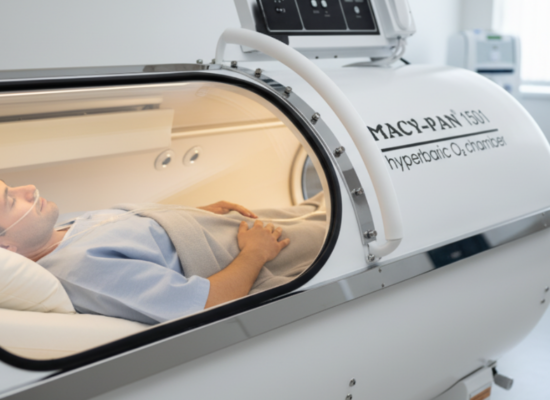
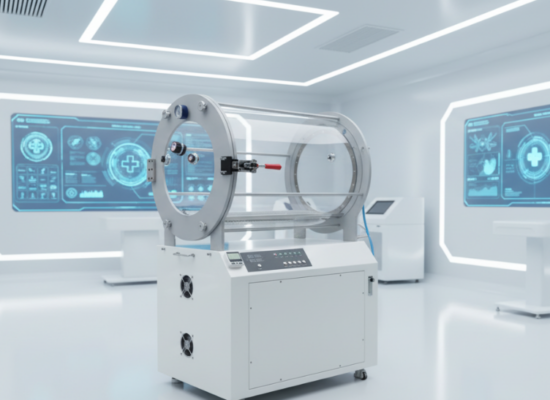
Definition: To put it simply, it is a special airtight chamber.
After we lie in, the air pressure in the cabin will be much higher than usual (usually higher than one atmosphere), and the purity of the oxygen we inhale will be close to 100 percent. This kind of treatment in the “hyperbaric hyperoxia” environment is what we often call hyperbaric oxygen therapy (HBOT).
So, how did it become a “secret weapon” to accelerate healing after plastic surgery? Mainly through the following key mechanisms:
- Increasing blood oxygen concentration and improving tissue hypoxia: the core mechanism of HBOT. After plastic surgery, some damaged or reconstructed tissues may be “hypoxic” due to poor blood circulation “. Inhale pure oxygen under high pressure, a large amount of oxygen will be dissolved in plasma, and then efficiently transported to those areas where oxygen supply is usually insufficient, just like sending “energy drinks” to “hungry” cells in time, which is the basis of tissue repair and healing.
- Promotes angiogenesis and increases blood supply: HBOT stimulates the body to grow new tiny blood vessels. This means that the surgical area can get more adequate blood supply, fresh blood will take away metabolic waste, and bring the necessary nutrients and more oxygen for healing, naturally accelerating the recovery of tissue.
- Reduces edema and inflammation: Swelling and inflammation, which are common after surgery, are major contributors to discomfort and slow recovery. Hyperbaric oxygen therapy can effectively alleviate these symptoms. It reduces inflammation in a variety of ways and helps the body recover more quickly from the stress caused by surgical trauma.
- Accelerate collagen synthesis and promote wound healing: Collagen is the key “building material” of our skin and connective tissue, and is essential for wound healing. Hyperbaric oxygen can significantly stimulate the production of collagen, so that the wound can be closed faster, and the quality of the healed tissue may also be better.
- Enhance immunity and inhibit bacterial growth: the risk of infection after surgery is always a concern. The hyperbaric oxygen environment has a direct inhibitory effect on certain anaerobic bacteria, and at the same time can also improve the bactericidal ability of our own immune cells (such as white blood cells), which undoubtedly adds an extra layer of protection to the postoperative wound and reduces the possibility of complications.

Which plastic surgeries can benefit from hyperbaric oxygen chambers?
To be honest, when I first encountered the application of hyperbaric oxygen (HBOT) in the field of plastic surgery, my intuition was that this thing sounded a bit “black technology.
But after in-depth understanding, I found that it does for a lot of plastic surgery postoperative recovery, opened a 1 of new doors. We are always looking for faster recovery and better results, and HBOT just provides that possibility.
The common scope of application:
So, which plastic surgery is particularly suitable for hyperbaric oxygen chamber “add a speed? My experience tells me that it is mainly those operations that involve greater tissue trauma, possible blood supply damage, or high requirements for recovery speed and quality.
- Liposuction (Liposuction): This is common. After liposuction, cavities and injuries will be formed inside the tissues. Hyperbaric oxygen can effectively reduce postoperative swelling and bruising and accelerate the repair of deep tissues.
- Abdominal plastic surgery (Tummy Tuck / Abdominoplasty): a large area of skin and fat peeling, hyperbaric oxygen can significantly improve postoperative wound healing, reduce the risk of skin necrosis.
- Breast Reconstruction/Augmentation: Hyperbaric oxygen promotes blood flow, reduces the probability of capsular contracture, and improves overall success, whether it is an implant or an autologous tissue transplant.
- Facial lift (Facelift): postoperative swelling, bruising is a common problem, hyperbaric oxygen can accelerate the regression of these symptoms, so that patients more quickly “see people”.
- Skin grafting (Skin Graft) is one of the classic applications of hyperbaric oxygen. The key to the success of skin grafting lies in the establishment of new blood vessels. Hyperbaric oxygen can significantly improve the survival rate of skin grafting and reduce necrosis.
- Flap grafting (Flap Surgery): Similar to skin grafting, the vascular condition of the flap is critical. Hyperbaric oxygen can provide sufficient oxygen for the flap, greatly increasing the chance of survival.
- Burn Repair (Burn Repair): especially deep II, III degree burn, hyperbaric oxygen can reduce inflammation, promote wound healing, reduce scar hyperplasia.
- Severe Trauma and Infection (Severe Trauma and Infection): Although it is not all “plastic”, in complex wounds that require plastic repair, hyperbaric oxygen is a powerful aid in preventing and treating infection.
Specific Benefits:
Why do so many surgeries benefit from hyperbaric oxygen? The core reason is actually those points, but each point is very critical:
- Shorten the recovery period: this is the most important concern. Hyperbaric oxygen accelerates cell metabolism and tissue repair, allowing the body to recover more quickly from surgical trauma.
- Reduce postoperative swelling, pain and bruising: hyperbaric oxygen can promote lymphatic reflux, reduce tissue edema; at the same time, improve local circulation can also take away inflammatory mediators, thereby reducing pain and bruising.
- Improve scar quality and reduce scar formation: Adequate oxygen helps the wound heal in a healthier pattern, reducing the disordered arrangement of collagen fibers, resulting in a smoother, less obvious scar. For me, this is simply the “icing on the cake” effect.
- Reduce infection and skin necrosis and other complications risk: high oxygen environment has inhibitory effect on anaerobic bacteria, at the same time can enhance the bactericidal ability of white blood cells. Good blood supply also directly reduces the possibility of skin necrosis.
- Improve skin grafts, skin flap transplantation success rate, there is no doubt that oxygen is essential for cell survival. In the hyperbaric oxygen environment, the newly transplanted tissue can obtain more sufficient oxygen supply, greatly improving its integration and survival opportunities.
Is Hyperbaric Oxygen Treatment Safe? Potential Risks And Contraindications
To be honest, when I first heard that hyperbaric oxygen chambers can accelerate recovery after plastic surgery, I also had a small question mark in my heart: This thing sounds “high-tech”, is it safe? After all, it is to shut yourself in a confined space to inhale pure oxygen, always feel a little mysterious.
But after some understanding and observation, my conclusion is: under professional guidance, it is safe as a whole, and it is not a “casual play” device.
Security, I think the key lies in the word “professional” 2. You can’t expect to achieve the same effect with a simple device at home, let alone use it without full monitoring by medical staff. There will be a set of strict operation specifications and emergency plans for hyperbaric oxygen treatment in regular medical institutions.
Of course, safety does not mean zero risk, and some minor side effects are indeed more common. For example, you may feel a little pain in your ears during pressurization or decompression, just like ear pressure discomfort when taking off and landing on an airplane, or feel a little uncomfortable in your sinuses. This is usually temporary and can be relieved by swallowing, yawning, or pinching your nose for air.
If it is really unfortunate to encounter, or very rare to have more serious complications, such as barotrauma (yes, the eardrum or lungs may be injured), or even oxygen poisoning, it must be an extremely special situation during the treatment process, and the risk of this situation is negligible in a medical environment with professional operation and monitoring. I mean, you can get an infection when you go to the dentist, but you don’t stop going to the dentist because of that, do you?
So, don’t 1 hyperbaric oxygen therapy with a stick just because it sounds a little scary. It is more important to understand what it has “threshold”, that is, contraindications. Not everyone is suitable for a hyperbaric oxygen chamber, which is like riding a roller coaster with a height limit.
First of all, if you have an untreated pneumothorax, you absolutely cannot go in. Think about it, there’s gas leaking out of the lungs, and re-pressurization is simply adding fuel to the fire. Secondly, patients with severe chronic cardiopulmonary disease also need to be very cautious, because hyperbaric oxygen may put an additional burden on their cardiopulmonary system.
Pregnant women are usually considered to be relatively contraindicated. After all, any unnecessary medical intervention is best avoided during pregnancy. Finally, there is another interesting, but also practical: claustrophobia. You can imagine that if you put a claustrophobic person in a closed small space, even if it is safe, he will probably not be able to stand it.

Hyperbaric Oxygen Chamber Therapy: Everything You Need To Know, From Procedure To Cost
Hyperbaric oxygen chamber, the word does sound with a hint of future technology, which makes people feel both mysterious and hopeful. However, as the 1 medical science popularization person, I am more inclined to peel off its “science fiction” coat and analyze the rigorous process and practical considerations behind it from a professional perspective.
1.Preparation before treatment: safety is the first premise
You might be thinking, can you just lie down in a hyperbaric chamber? The answer is obviously: absolutely! Yes! No! Yes! In my clinical practice, pre-treatment evaluation is a crucial part, which is directly related to the safety and effectiveness of treatment.
First of all, we will have an in-depth and detailed communication with patients. This is not only to understand what kind of surgery you have undergone, but more importantly, to have a comprehensive grasp of your physical condition.
Like a detective, I will ask you about your past medical history in detail: Do you have lung diseases such as COPD and asthma? Is there an ear, nose and throat problem such as sinusitis and otitis media? Even, I’ll keep an eye out for claustrophobic tendencies. These seemingly minor information may be amplified in a high-pressure environment and become a potential risk.
For example, an untreated pneumothorax patient enters a hyperbaric oxygen chamber, and pressure changes may cause aggravation of the pneumothorax, which we must absolutely avoid. Similarly, severe sinus or middle ear problems can cause damage to the tympanic membrane. Therefore, this 1 stage of physical assessment is like setting up a “safety door” for treatment. Only through this door can we ensure that you will not go astray in the pursuit of “accelerated healing”, but will bring unnecessary trouble.
Therefore, please be sure to cooperate with the doctor and tell all health conditions frankly. This is responsible for yourself and trust in the medical team.
2.Step into the oxygen chamber and experience the calm under “high pressure”
If everything goes well with the preliminary assessment, congratulations, you can prepare to enter the hyperbaric oxygen chamber. The first experience, a little nervous is human nature. But when you really enter the cabin, you will find that it is not as narrow and depressed as you imagined, but rather unexpectedly spacious and bright, and it can even be said that it is a very “modern” treatment space.
The hatch closes slowly, followed by the pressurization process. At this time, you may feel a little stuffy in your ears, which is very similar to what we feel when taking off and landing in an airplane, due to the pressure difference between the inside and outside of the cabin.
Don’t worry, this is a normal physiological reaction. I usually advise patients to relieve it with simple actions, such as repeatedly swallowing saliva, yawning, or trying to do the “Valsalva maneuver” (pinching the nose, closing the mouth tightly, and then gently inflating, as if trying to “push” the gas out of the ear).
These tips can help balance ear pressure and make you feel more comfortable.
After the pressure reaches the preset value and stabilizes, you will inhale pure oxygen through a transparent mask. The whole treatment process is usually very calm. You can lie down relaxed, listen to soothing music, read a book, or just close your eyes for a while, so that your body can be fully repaired in an oxygen-rich environment.
The therapeutic mechanism of hyperbaric oxygen, in short, is to increase the content of dissolved oxygen in the blood, so that it can reach hypoxic tissues more effectively, promote wound healing, reduce edema, and inhibit bacterial growth.
As treatment nears completion, the cabin will begin to gradually decompress. At this time, the feeling of tightness in the ears may appear again, and you can repeat the previous relief action. The whole process of hyperbaric oxygen therapy is painless, and the only thing that may need to be adapted is the feeling of the ear when the pressure changes.
3.Course setting: individualized and customized healing program
Regarding the setting of the course of treatment, this is not a “one size fits all” question, it is full of “personalized” considerations. The length of a single treatment is usually 60 to 90 minutes, but the total number of treatments depends on your specific situation, the type of surgery, and the progress of your postoperative recovery.
As a doctor, we will dynamically adjust and formulate the most appropriate treatment plan based on your diagnosis, wound healing rate, edema resolution, and your response to treatment.
For example, for some acute wounds, more intensive short-term treatment may be required, while for chronic, difficult-to-heal wounds, a relatively longer course of treatment may be required.
I often compare hyperbaric oxygen therapy to “charging” the body. We need to closely observe the supplement of “electricity” and the efficiency of energy absorption by the body to judge when it is “full” and when the treatment can be ended. Therefore, please believe that your doctor will tailor the most reasonable “charging plan” for you “.
4.Keywords: hyperbaric chamber therapy cost Search Volume
Talking about the cost, this is undoubtedly a common concern, and even some “sensitive” topic. To be honest, the cost of hyperbaric oxygen therapy does vary significantly depending on the regional economic level, the pricing strategy of different medical institutions, and the number of courses you receive.
A more realistic situation is that at present, in China, hyperbaric oxygen therapy may not be fully included in the scope of medical insurance reimbursement in many places. This means that you will most likely have to pay for it at your own expense. For many patients, this is no doubt a small financial burden.
Therefore, before you decide to start hyperbaric oxygen therapy, I strongly and strongly suggest that you must take the initiative to consult with the doctor or financial department of your hospital in detail.
You need to know clearly: how much is the specific cost of a single treatment? Does the hospital have a package discount for hyperbaric oxygen therapy? What is the estimated cost of the total treatment? Ask these questions clearly and have a clear idea, so that you can better plan your treatment plan and economic budget.
After all, clear consumption is responsible for oneself.

Scientific Evidence And Expert Advice
To tell you the truth, when I first came into contact with the application of hyperbaric oxygen chamber (HBOT) in the recovery after plastic surgery, I also muttered in my heart: is this thing really so divine? After all, in the medical field, any “quick-acting secret recipe” has to stand up to scrutiny.
After a period of data sorting and clinical observation, I have to say that the hyperbaric oxygen chamber has indeed shown its value in some aspects, but it is by no means an artifact of “curing all diseases. Existing research does give some positive signals about hyperbaric oxygen in accelerating wound healing and reducing edema and inflammation.
For example, some literature indicates that HBOT can significantly improve tissue oxygenation levels and promote collagen synthesis, which is essential for the repair of damaged tissues after surgery. Moreover, it can also inhibit anaerobic infections, which is an additional line of defense for some operations with higher infection risks.
However, everything has a “degree” and “scope of application”. Many of the plastic surgeons I came into contact with have a very consistent view: hyperbaric oxygen is an auxiliary treatment, the icing on the cake, and must not be used to replace those basic and vital post-operative care. For example, postoperative drainage, wound dressing, proper pressure dressing, and antibiotic use are the cornerstones.
If you put the cart before the horse and expect the hyperbaric oxygen chamber to solve all the problems, it is undoubtedly a pipe dream. Therefore, my suggestion is that before considering HBOT, be sure to fully communicate with your surgeon to assess whether your personal situation is suitable and the practical benefits it can bring. This is like refueling a precision machine. You have to make sure that the machine itself is OK before you can talk about adding “advanced fuel”.
How To Choose A Regular Hyperbaric Oxygen Therapy Institution?
Since you have decided to try hyperbaric oxygen therapy, it is particularly important to choose a reliable institution. It can even be said that this is directly related to your safety and treatment effect. I ‘ve seen too many cases of problems caused by poor choices, so I’m usually more “long-winded” at this point “.
First of all, and most important, is the qualification. A formal hyperbaric oxygen treatment institution must have a legal medical practice license, and the use and management of hyperbaric oxygen chambers have strict regulations, which cannot be carried out by a random beauty salon.
You can directly check their business license and relevant medical qualification certificates. If the other party is vague or can’t take it out, turn your head and leave. Don’t hesitate.
Professional teams are key. Hyperbaric oxygen therapy seems simple, that is, lying in and inhaling oxygen, but in fact, professional doctors and technicians are needed from the assessment of the disease, the formulation of treatment plans, to the monitoring of the treatment process and the handling of emergencies.
Your doctor should have a deep understanding of hyperbaric oxygen medicine and be able to give personalized advice based on your type of plastic surgery and recovery. The technician is responsible for operating the oxygen chamber equipment to ensure that the treatment is safe and smooth. If you go to a place and feel that the doctor can’t tell why, or the technician is stumbling when operating, then there will be a question mark.
Again, the equipment condition cannot be ignored. Hyperbaric oxygen chambers are divided into single-person and multi-person chambers, and different types of chambers have different characteristics. More importantly, is the daily maintenance and maintenance of the equipment in place? Is the oxygen supply system safe? Is the cabin environment clean and hygienic?
These details directly affect the safety and comfort of the treatment. You have every right to ask for a tour of the equipment before treatment to see the condition inside the oxygen chamber.
Finally, although not the most important, environmental comfort can also enhance your treatment experience. After all, each treatment usually takes 1 to two hours. A clean, quiet and comfortable environment can make you relax better and cooperate with the treatment. I think that if you treat it in a noisy or outdated place, it will be psychologically compromised, not to mention the actual effect.


No Comment! Be the first one.