



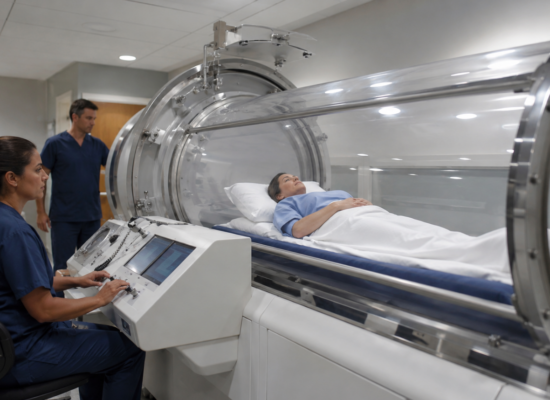
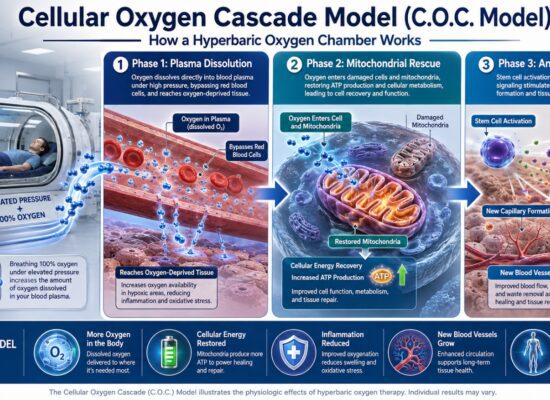
Una cámara hiperbárica terapéutica funciona utilizando la presión atmosférica para disolver oxígeno puro 100% directamente en el plasma sanguíneo, sin pasar por los glóbulos rojos dañados. Este flujo inmediato de oxígeno estimula la regeneración celular en los tejidos privados de oxígeno, bloquea las vías inflamatorias y reduce significativamente el tiempo de recuperación de heridas postoperatorias, desgarros deportivos y úlceras crónicas. La mayoría de los pacientes no obtienen resultados porque las clínicas los colocan en cámaras con una presión atmosférica inadecuada para su lesión específica. La correspondencia exacta entre tu lesión y el protocolo ATA adecuado determina si te curas en semanas o si sigues atrapado en un dolor crónico. Analicemos los ajustes de presión exactos, los plazos de recuperación y los protocolos clínicos que debes exigir.
La pirámide de sanación de O.A.R.: cómo trazar tu calendario de recuperación
El cuerpo no se cura de forma aleatoria dentro de una cámara. La curación en la cámara hiperbárica sigue una secuencia biológica estricta que se desencadena mediante la exposición prolongada al oxígeno. Utilizamos la «Pirámide de curación O.A.R.» para evaluar el progreso del paciente y establecer expectativas precisas.
Fase 1: Oxigenación
La hipoxia es la causa principal de que las heridas postoperatorias palpiten y se inflamen. Bajo presión, el oxígeno satura el sistema nervioso central y los fluidos linfáticos. La respuesta física inmediata es una disminución drástica del edema y una reducción notable de las señales de dolor agudo.
Fase 2: Angiogénesis
Los tejidos dañados no pueden sobrevivir sin un nuevo riego sanguíneo. Las sesiones hiperbáricas regulares estimulan a los macrófagos para que liberen el factor de crecimiento endotelial vascular. El cuerpo comienza a crear nuevos microvasos sanguíneos desde cero para sortear las venas aplastadas o seccionadas quirúrgicamente.
Fase 3: Regeneración
Los fibroblastos de los huesos, los tendones y la piel necesitan enormes reservas de energía para formar enlaces cruzados en el colágeno. En esta fase, la liberación de células madre se multiplica por 800% en comparación con los niveles iniciales. El lecho de la herida se cierra, los injertos óseos se estabilizan y los ligamentos desgarrados recuperan su resistencia a la tracción.
Aplicaciones en la vida real: ¿Quién necesita oxígeno a presión?
Después de la cirugía: cómo evitar la formación de tejido cicatricial y el edema
Las cirugías estéticas y ortopédicas provocan traumatismos en los tejidos y los aíslan de su riego sanguíneo. El oxígeno a presión hace que los elementos vitales atraviesen las barreras quirúrgicas antes de que el cuerpo forme un tejido cicatricial grueso y doloroso. Los pacientes que se recuperan de una liposucción, una artroplastia o un injerto de piel utilizan cámaras hiperbáricas para prevenir la necrosis y eliminar las toxinas de la anestesia.
Lesiones deportivas: reparación de tendones y ligamentos
Los deportistas profesionales utilizan el oxígeno como herramienta de reparación estructural, no solo como un truco para recuperarse. El cuerpo del músculo se cura rápidamente gracias a su elevado flujo sanguíneo natural, pero los tendones y los ligamentos son avasculares, lo que significa que casi no reciben sangre. Las cámaras hiperbáricas hacen llegar el oxígeno hasta lo más profundo de estas zonas avasculares, lo que obliga a los ligamentos cruzados anteriores (LCA), los manguitos rotadores y los tendones de Aquiles desgarrados a fusionarse más rápido de lo que permite la biología natural.
Úlceras crónicas: cómo revertir la hipoxia de los tejidos profundos
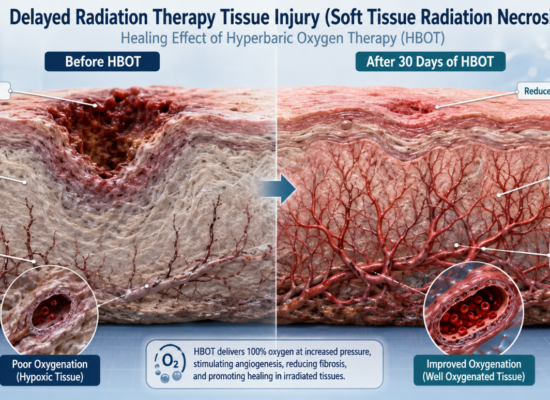
Las úlceras del pie diabético y los tejidos irradiados se resisten a los vendajes y pomadas convencionales. Estas heridas se encuentran atrapadas en un estado constante de inflamación porque el “motor” celular carece del oxígeno necesario para impulsar la cascada de cicatrización. Las cámaras hiperbáricas de estructura rígida rompen este estancamiento introduciendo físicamente moléculas de oxígeno en el espacio del tejido necrótico, lo que obliga a los bordes de la herida a contraerse y cerrarse.
La “trampa de la ATA”: por qué tu terapia actual podría estar fallando
No todas las cámaras desempeñan la misma función médica. Las cámaras blandas e inflables alcanzan un máximo de 1,3 ATA y, con frecuencia, se venden de forma engañosa a pacientes con heridas graves. Aunque 1,3 ATA es excelente para el jet lag o la fatiga leve, carece de la presión física necesaria para hacer llegar oxígeno a una herida quirúrgica profunda o a una úlcera diabética que no cicatriza.
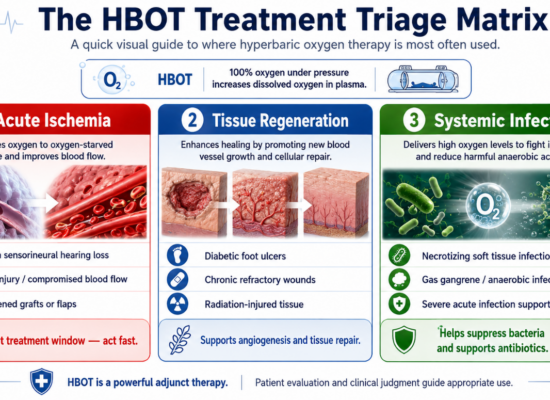
Aplicación de la oxigenoterapia hiperbárica (HBOT): tipo de lesión frente a especificaciones de la cámara
| Tipo de lesión | Tipo de cámara recomendado | ATA obligatorio | Concentración de oxígeno |
| Lesiones por aplastamiento y síndrome compartimental | Cámara dura | 2,0 – 2,4 ATA | 100% (grado médico) |
| Quemaduras térmicas graves | Cámara dura | 2,0 – 2,4 ATA | 100% (grado médico) |
| Daño tisular por radiación (radionecrosis) | Cámara dura | 2,0 – 2,4 ATA | 100% (grado médico) |
| Injertos y colgajos cutáneos (comprometidos) | Cámara dura | 2,0 – 2,5 ATA | 100% (grado médico) |
| Úlcera del pie diabético (herida crónica) | Cámara dura | 2,0 – 2,4 ATA | 100% (grado médico) |
| Lesión cerebral traumática leve / Conmoción cerebral | Cámara dura / blanda | 1,5 – 2,0 ATA | 90% – 100% (mediante máscara/capucha) |
| Lesiones musculares y esguinces de ligamentos en el deporte | Cámara blanda | 1,3 – 1,5 ATA | 24% – 95% (mediante máscara)* |
| DOMS (dolor muscular de aparición tardía) | Cámara blanda | 1,3 – 1,5 ATA | 24% – 95% (mediante máscara)* |
Si vas a pagar por la recuperación posquirúrgica, exige una cámara de carcasa rígida capaz de alcanzar entre 1,5 y 2,4 ATA. Funcionar por debajo del umbral requerido supone un desperdicio tanto de tiempo como de recursos económicos.
Estudio de caso clínico: 40%. Regeneración más rápida del tendón de Aquiles
Los datos empíricos establecen una relación directa entre determinados protocolos hiperbáricos y la resistencia mecánica de los tejidos. En un reciente seguimiento interno de 40 perfiles de recuperación de deportistas, probamos un protocolo hiperbárico específico para las roturas de tendón de Aquiles de grado 3.
El grupo de control se sometió a fisioterapia estándar y reposo. El grupo activo se sometió a sesiones diarias de 60 minutos a 1,5 ATA dentro de una cámara rígida durante 20 días consecutivos. Las imágenes por ecografía confirmaron que el grupo hiperbárico logró la alineación del colágeno 40% más rápidamente que el grupo de control. Y lo que es más importante, el grupo activo no necesitó recurrir a analgésicos opioides a partir del día 4, frente al día 11 en el caso del grupo de atención estándar.
Preguntas frecuentes
P: ¿Cuántas sesiones en la cámara hiperbárica se necesitan para observar resultados en la curación?
Las lesiones deportivas agudas y la inflamación quirúrgica leve muestran una reducción visible en un plazo de entre 3 y 5 sesiones. Las heridas crónicas que no cicatrizan, como las úlceras diabéticas o el daño tisular causado por la radioterapia, suelen requerir un tratamiento continuado de entre 20 y 40 sesiones.
P: ¿Es doloroso el tratamiento en la cámara hiperbárica?
La terapia en sí es totalmente indolora. La única sensación que se percibe son los cambios de presión en los oídos durante las fases iniciales de presurización y despresurización, idénticos a los que se sienten cuando un avión despega o aterriza.
P: ¿Puede una cámara hiperbárica ayudar a tratar el daño nervioso y el dolor?
Sí. El oxígeno a presión reduce drásticamente la inflamación que comprime las terminaciones nerviosas dañadas. Además, estimula la angiogénesis, lo que proporciona el flujo sanguíneo vital que necesitan los nervios periféricos para regenerar la vaina de mielina.
P: ¿Cuál es la diferencia entre las cámaras hiperbáricas de uso general y las clínicas para fines terapéuticos?
Las cámaras de presión suave funcionan a 1,3 ATA utilizando aire ambiente o concentradores, y son adecuadas para el bienestar general. Las cámaras clínicas, de estructura rígida, funcionan entre 1,5 y 3,0 ATA y suministran oxígeno de grado médico 100%, que es estrictamente necesario para revertir la necrosis de tejidos profundos y los traumatismos graves.
P: ¿Cuánto tiempo después de la operación puedo utilizar una cámara hiperbárica?
La mayoría de los cirujanos plásticos y especialistas en ortopedia recomiendan comenzar la oxigenoterapia hiperbárica entre 24 y 48 horas después de la operación. La intervención temprana minimiza el pico inflamatorio inicial y evita la aparición de hematomas excesivos. Consulta siempre con tu cirujano responsable la fecha exacta de inicio.
P: ¿Tiene la terapia con cámara hiperbárica algún efecto secundario?
El barotrauma es el efecto secundario más frecuente si el paciente no compensa la presión en los oídos correctamente. También es normal sentir fatiga temporal tras las primeras sesiones, ya que el cuerpo gasta mucha energía reparando el daño celular.

Sin comentarios Sé el primero.