



Pressure caliber determines everything
In the parameter table of the hyperbaric oxygen chamber, atm, ATA and psi are the three most common pressure expressions, but their meanings are not the same. A standard atmospheric pressure is represented by the symbol atm, which is exactly equal to 101.325 kPa, or approximately 14.6959 psi. ATA is an abbreviation for atmosphere absolute, which refers to the absolute pressure calculated from the absolute vacuum point. 1. ATA represents the absolute pressure of a standard atmosphere; it does not mean an additional atmosphere above the ambient atmosphere. The daily environment at sea level is already under pressure conditions of approximately 1 ATA.
2 atm What is the pressure
To understand the expression 2 atm hyperbaric chamber, you must first distinguish between gauge pressure and absolute pressure. Gauge pressure is the difference between the measured pressure and the local ambient atmospheric pressure. The absolute pressure is equal to gauge pressure plus local ambient atmospheric pressure. If the same device is written in two different calibers, the values will differ by a full atmosphere. The absolute pressure converted from 2.0 ATA is 202.65 kPa, which is approximately equal to 29.3918 psia; under standard sea level conditions, it corresponds to a gauge pressure of 101.325 kPa, or 14.6959 psig. Therefore, when you see a writing like 2 atm or 2 atmosphere hyperbaric chamber, you need to first confirm whether the other party is referring to 2.0 ATA absolute pressure or 2 atm gauge pressure. The two differ by one atmosphere of pressure, and the exposure conditions for falling on the user are completely different.
Conversion comparison of common specifications
The importance of caliber becomes clearer when looking at several common specifications side by side. 1.3 ata hyperbaric chamber corresponds to an absolute pressure of 131.7225 kPa, approximately 19.1047 psia, and a gauge pressure of approximately 30.3975 kPa and 4.4088 psig at standard sea level. 1.4 ata hyperbaric chamber corresponds to an absolute pressure of 141.855 kPa, approximately 20.5743 psia, corresponding to a gauge pressure of 40.53 kPa and 5.8784 psig. 1.5 ata hyperbaric chamber corresponds to an absolute pressure of 151.9875 kPa, approximately 22.0439 psia, corresponding to a gauge pressure of 50.6625 kPa and 7.3480 psig. Further up, the 2 ata hyperbaric chamber and the 2.0 ata hyperbaric chamber point to the same 2.0 ATA gear, corresponding to an absolute pressure of 202.65 kPa, approximately 29.3918 psia. Specifications such as 2.4 ata hyperbaric chamber and 2.5 ata hyperbaric chamber have fallen into the commonly used clinical pressure range of 2.0 to 3.0 ATA.
psi also needs to be distinguished by caliber
The pit of psi is the same as atm, and writing only psi cannot indicate the reference zero point. When you encounter a description like hyperbaric chamber 12 psi, you also need to ask whether it is psia or psig. The psia uses absolute vacuum as the zero point, and the psig is the gauge pressure relative to the local ambient atmospheric pressure. If a chamber labeled 12 psi refers to the psig, the absolute pressure is one atmosphere higher than that of the 12 psia. The specification sheet should indicate the maximum permissible working pressure, normal working pressure, and pressure relief device setting pressure separately, and should not leave only an isolated number.
Higher pressure does not necessarily mean more appropriate
When purchasing a hyperbaric oxygen chamber, higher pressure does not automatically mean that the equipment is more suitable, more effective, or safer. 2.0 ATA is a threshold in the current clinical definition of hyperbaric oxygen, which usually requires breathing medical-grade oxygen at a pressure of not less than 2.0 ATA in the hardware compartment. The commonly used clinical pressure range falls between 2.0 and 3.0 ATA. 1.3, 1.4, 1.5 Low-pressure devices such as ATA cannot be selected as clinical hyperbaric oxygen therapy devices based solely on their pressure name. The target pressure must be assessed together with the equipment’s intended use, structural design, oxygen supply method, operating instructions, and professional supervision requirements.
Correspond 2 atm to the specific product
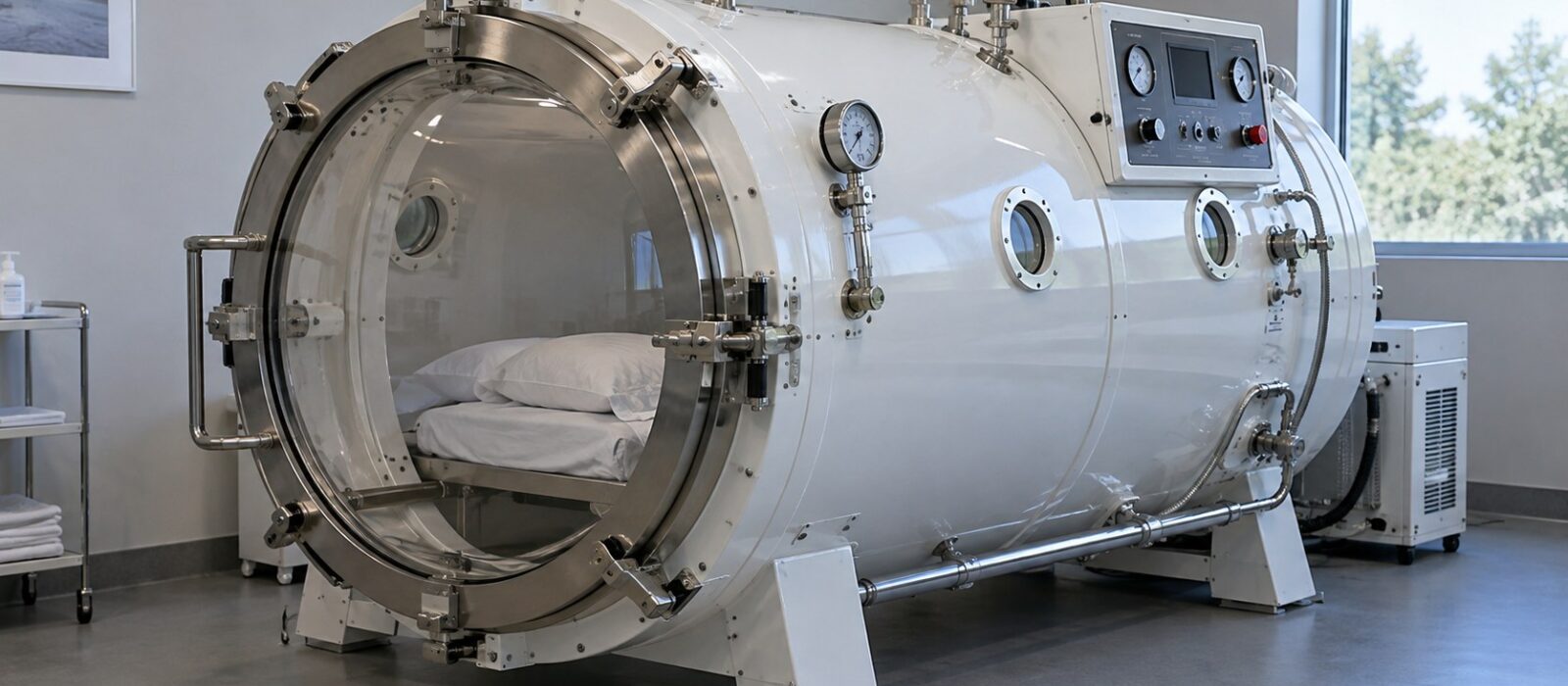
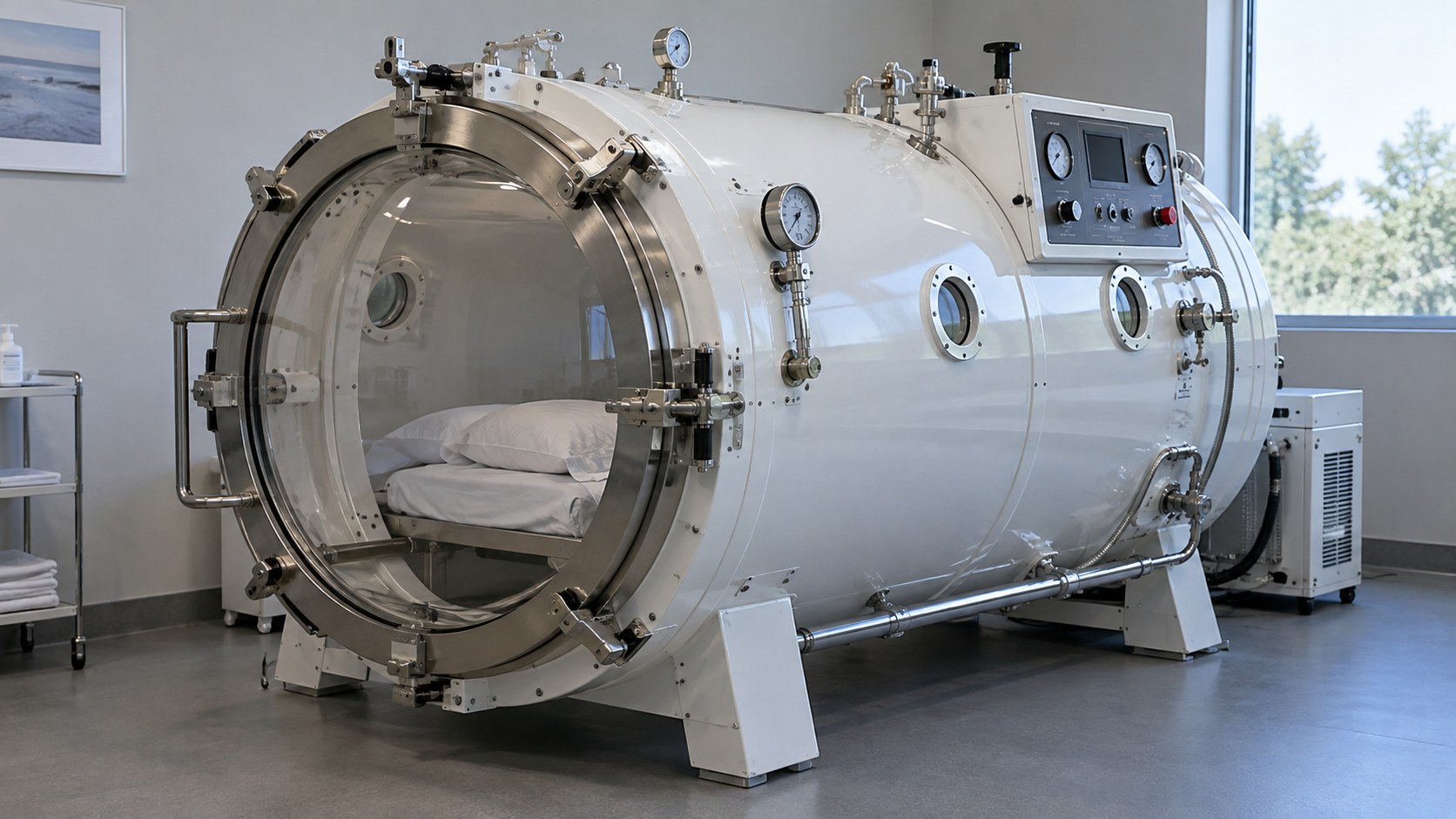
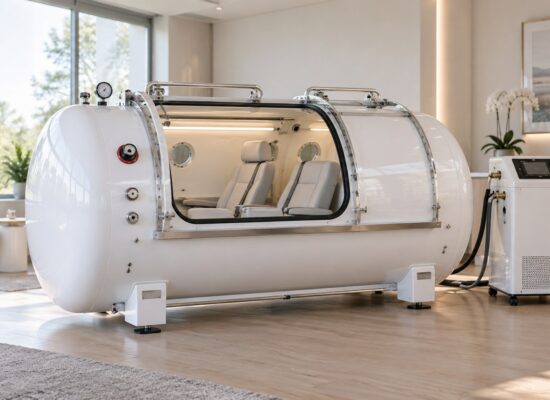
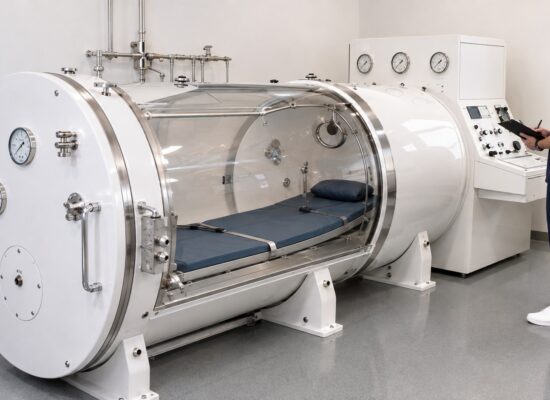
From the actual product perspective, requirements such as hyperbaric chamber 2 atm or hyperbaric chamber 2 atmospheres often ultimately correspond to a hardware compartment rated at 2.0 ATA. Common specifications for soft pods are concentrated in 1.3 to 1.5 ATA, while 2.0 ATA models generally use steel or stainless steel hardware structures. When selecting a model, if you hear the terms hyperbaric chamber 2 ata, hyperbaric chamber 2.0 ata, or hyperbaric chamber 2.0 atmospheres, you need to verify them all against the caliber of 2.0 ATA absolute pressure and further confirm the three data: normal operating pressure, maximum allowable operating pressure, and pressure relief device setting pressure.
Oxygen in name does not change the verification method
At the terminology level, hyperbaric oxygen chamber is written with oxygen. Compared with hyperbaric chamber, it only emphasizes the oxygen supply in the cabin, and the pressure caliber is checked in the same way. For example, the difference between hyperbaric oxygen chamber 1.5 ata and 2.0 ata hyperbaric oxygen chamber lies in the two absolute pressure values of 1.5 and 2.0. Conversely, 2.0 hyperbaric chamber, which lacks a stress unit, is only comparable if it is clearly 2.0 ATA and states whether it is work stress, treatment stress, or an upper limit. There is an absolute pressure difference of 0.5 ATA between the hyperbaric chamber 1.5 ata and the hyperbaric oxygen chamber 2.0 ata, corresponding to a gauge pressure difference of approximately 50.66 kPa. This difference cannot be ignored.

Kein Kommentar! Sei der Erste.