



Every day, many patients who are tortured by diabetic foot, radiotherapy tissue damage or skin grafting failure waste months of time on various ointments and gauze, watching the wound tissue slowly die. In fact, hyperbaric oxygen therapy (HBOT) can directly solve this problem. It through the high-pressure environment, the 100 of pure oxygen directly “pressure” into the anoxic plasma, instantly bypass those damaged blood vessels, restart tissue regeneration. Stop having illusions about those stubborn wounds caused by lack of oxygen, relying on traditional dressing changes is not good. Next, I will teach you how to judge whether you are suitable for this kind of treatment, what the pressure standard must be met by a regular clinic, and the IQ tax trap of “soft oxygen chamber” that you should definitely avoid.
The underlying logic of wound healing: how does a hyperbaric chamber work?
Ordinary gauze bandage why always palliative? Because the wound is anoxic necrosis from the inside. When you have diabetes, or have had radiation, the microvasculature is damaged. At this time, the capillaries are swollen and inflamed, the red blood cells are too big to squeeze, and the wound is naturally “out of food.
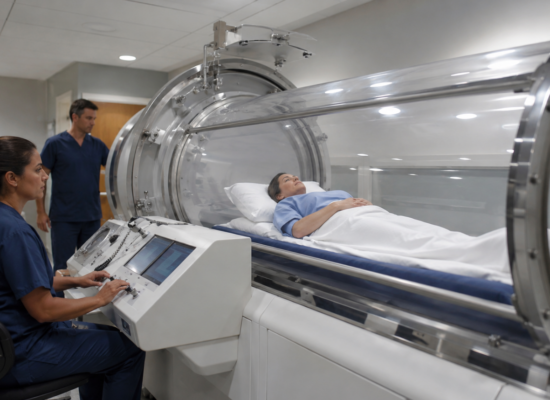
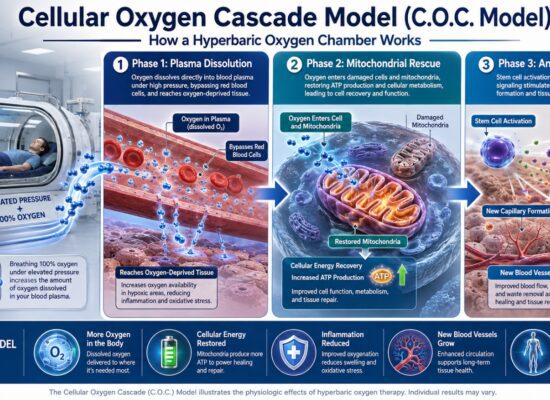
The hyperbaric oxygen chamber directly changes the physical state of oxygen delivery. In a closed chamber 2.0 to 2.4 absolute atmospheric pressure (ATA), oxygen is abruptly dissolved into your plasma, cerebrospinal fluid and lymph nodes. You know, plasma is liquid! Even if the red blood cells are blocked outside the blood vessel, the plasma can still pass through the blockage area smoothly. This, directly to the wound “dead” perfusion of the usual 15 times the amount of oxygen, thus triggering the “angiogenesis” (Angiogenesis)-that is, let the body grow a new capillary network.
Who really needs a hyperbaric oxygen chamber?
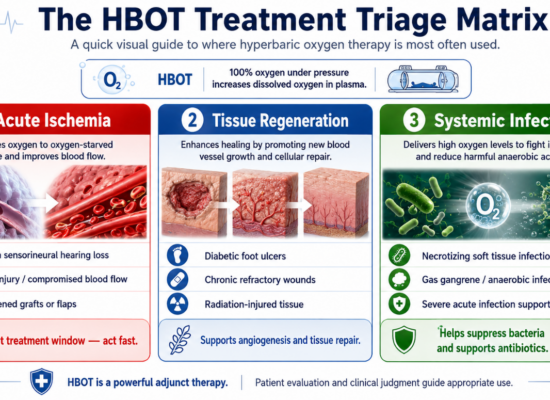
This is not to say that all skin breaks at ordinary times have to be put into the oxygen chamber. Clinical data show that this technique is designed to deal with severe wounds that are stuck in the inflammatory stage and do not heal.
Diabetic foot ulcer (Wagner grade 3 and above)
High blood sugar destroys the peripheral nerves and tiny blood vessels in the lower extremities. Patients with diabetic feet often face the tragedy of amputation because there is no blood flow and antibiotics simply cannot be delivered to the infected bone. The hyperbaric chamber forces oxygen into the ischemic tissue, awakens dormant white blood cells, and allows them to kill those anaerobic bacteria in the most natural way.
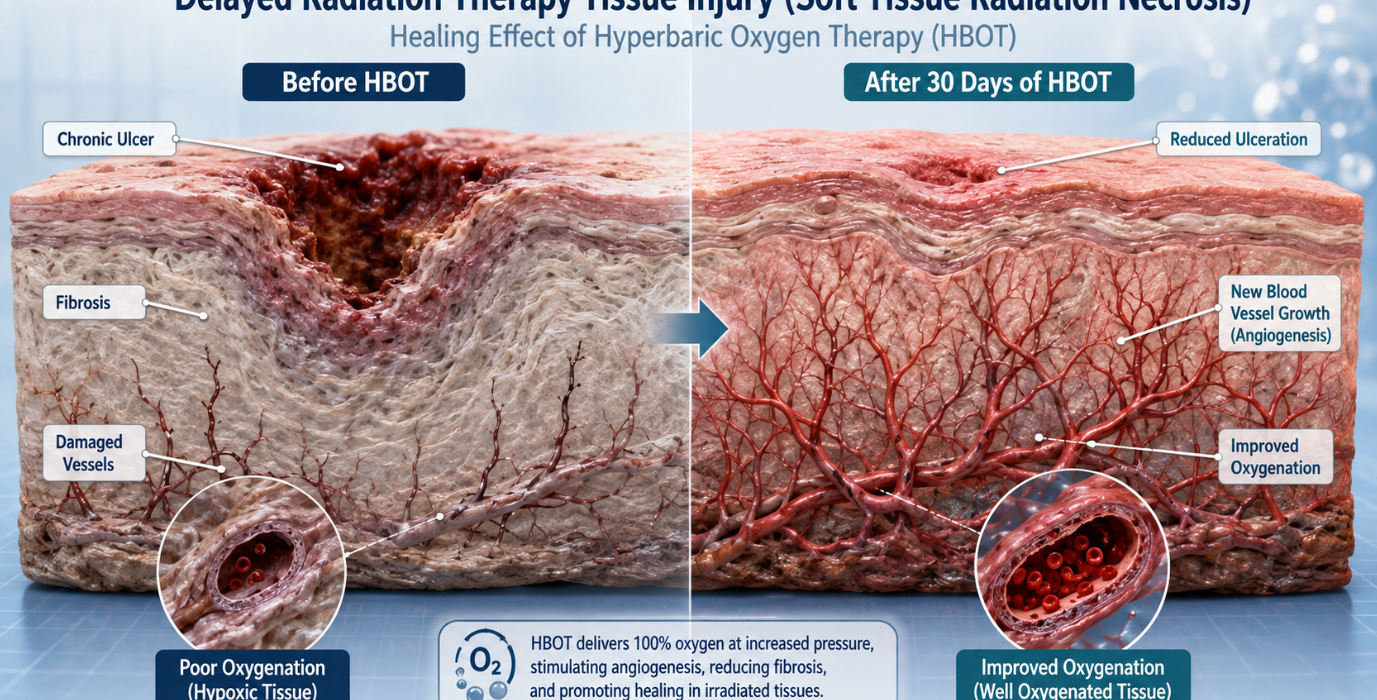
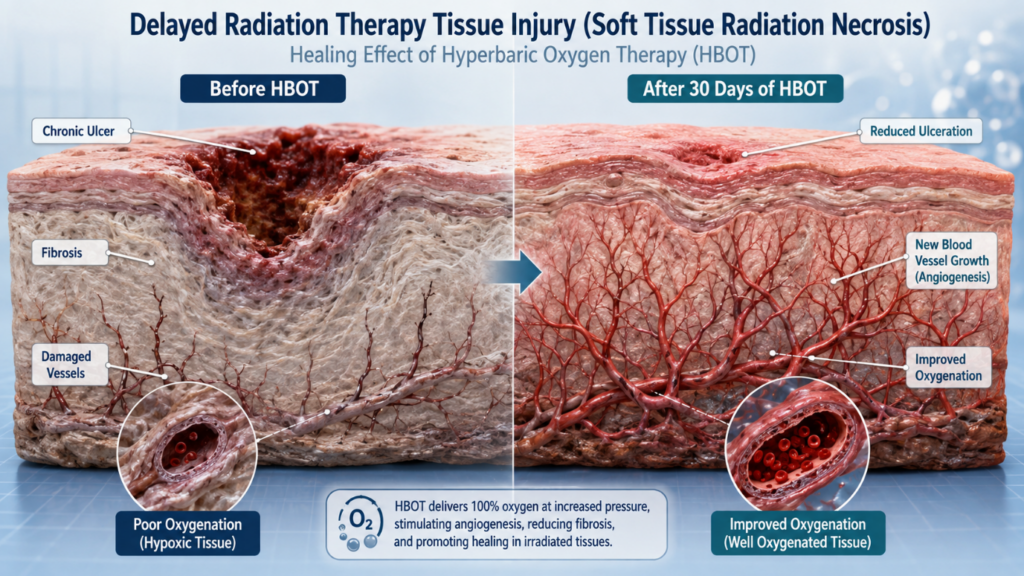
Delayed Radiation Therapy Tissue Injury (Soft Tissue Radiation Necrosis)
Many cancer survivors suddenly develop chronic ulcers several years after radiotherapy, because the radiotherapy left permanent scars on the blood vessels. In an ordinary air environment, such wounds have no conditions at all to heal. The hyperbaric oxygen chamber is like a “time machine” at the cellular level, which rebuilds the vascular bed destroyed by radiotherapy through continuous high-pressure oxygen infusion.
The O.P.T.I.C. Rule: How do experts track healing progress?
The top wound care centers don’t rely on guesses; they use a hardcore set of indicators called O.P.T.I.C. This is the framework I use when I evaluate every patient on hyperbaric oxygen therapy.
- O-oxygenation mapping (Oxygenation Mapping, TCOM): Before entering the capsule, we will use a transcutaneous oxygen pressure tester to attach a probe near the wound. If your tissue oxygen partial pressure is less than 30 mmHg under normal pressure, and it can soar to more than 200 mmHg after entering the cabin and pressurizing, then this therapy is absolutely effective for you.
- P-Pressure compliance (Pressure Optimization): The treatment specification requires that the pressure must be strictly controlled between 2.0 and 2.4 ATA. Without enough pressure, oxygen cannot be fully dissolved into the plasma.
- T-tissue granulation (Tissue Granulation): about the 15th time, we can see a layer of bright red, fleshy “granulation tissue” growing at the bottom of the wound, which is the new capillary ring.
- I-Complete sterilization (Infection Eradication): Hyperoxic environments are simply highly toxic to anaerobic bacteria such as Clostridium (the culprit that causes gangrene) and can quickly cut off the spread of infection.
- C- Maintain closure (Closure Maintenance): After 30 to 40 treatments, the newly grown vascular network is completely stable, and even after a few months, the ulcer will not open again.
Industry warning: Never fall into the “soft‑tissue trap” with chronic wounds!
Take my advice: absolutely don’t go to any beauty salons or wellness centers and waste your money lying in those inflatable “low-pressure soft chambers.” This is the most fatal mistake that many desperate patients are all too prone to make.
This soft‑wall hyperbaric chamber (mHBOT) tops out at only about 1.3 ATA of pressure, and it’s pressurized with ordinary room air—containing just 21% oxygen. Medical physics has long demonstrated that, to promote angiogenesis and the healing of severe ulcers, the threshold is at least 2.0 ATA combined with 100% medical-grade pure oxygen. Soft chambers may help alleviate altitude sickness or aid athletes in post‑game recovery, but expecting them to treat necrotic diabetic foot ulcers or radiation‑induced wounds? That’s simply out of the question. You must go to a reputable medical institution and seek out a hard-shell, medical-grade hyperbaric oxygen chamber.
| Comparison Point | Medical Hard Chambers | Commercial Soft Chambers |
|---|---|---|
| Typical Pressure Range | Common clinical HBOT protocols operate around 2.0–3.0 ATA, depending on the indication and prescribed protocol | Common “mild hyperbaric” systems generally operate around 1.3–1.4 ATA or lower |
| Oxygen Delivery | Patient breathes near-100% medical oxygen while under increased pressure | Many systems are pressurized with room air (~21% oxygen); oxygen-delivery configurations vary |
| Use for Chronic Wound Care | Used in medically supervised HBOT programs as an adjunctive treatment for selected qualifying wounds and conditions | Not considered equivalent to standard clinical HBOT for treating serious chronic wounds |
| FDA Status | HBOT chambers are Class II medical devices cleared through the FDA 510(k) process; treatment should use appropriately cleared equipment and follow its labeled use | Do not assume a soft chamber is FDA-cleared for wound-treatment claims; device clearance and intended use must be verified individually |
| Angiogenesis / Neovascularization | Clinical HBOT can produce physiological responses associated with wound repair, including promotion of new blood-vessel formation under appropriate treatment protocols | Evidence is insufficient to treat low-pressure, room-air exposure as equivalent to established medical HBOT for therapeutic angiogenesis |
| Suitable Setting | Hospital, wound-care center, or qualified hyperbaric medical facility with trained clinical supervision | Typically wellness, recovery, or other non-hospital settings; should not substitute for prescribed medical wound care |
| Best Fit | Selected non-healing wounds, radiation tissue injury, and other recognized HBOT indications after medical evaluation | Should not be relied upon as a replacement for medical HBOT for necrotic or otherwise serious chronic wounds |
Real Case: Successful Reversal of Wagner Grade 3 Diabetic Foot
Case context: Summary data based on standardized successful intervention programmes
Patient condition: A 62-year-old male with a diabetic foot ulcer (Wagner grade 3, deep ulcer with osteomyelitis) on his right heel for 4 months. I have tried conventional debruises and silver ion alginate dressings before. The wound is not only not small, but it is getting worse and worse.
Intervention Programme:
- Prescription: 40 times hyperbaric oxygen chamber wound treatment.
- Parameters: 90 minutes each time, pressure 2.4 ATA,100% pure oxygen.
- Initial value of TCOM: 18 mmHg (severe hypoxia).
- TCOM entry value: 310 mmHg (excellent response).
Treatment outcome:
- The 10th time: the suppuration stopped and the anaerobic infection was completely eliminated.
- 20: The size of the wound has decreased by 40%; the tendon that was previously exposed is covered with a healthy layer of bright red granulation tissue.
- 40th time: complete formation of epithelium (complete closure of the skin). Successfully saved both feet from amputation.
People Also Ask (Interactive FAQ)
How many times does hyperbaric oxygen chamber cure wound probably do?
Most chronic wounds need to be done 30 to 40 times, five days a week, to build a permanent network of new blood vessels.
Does it hurt to do hyperbaric oxygen?
The whole treatment is completely painless, but you will feel the pressure in your ears, just like when you are on a plane descent. The nurse will teach you some simple methods, such as swallowing or yawning, to balance the ear pressure comfortably.
Is this thing covered by health insurance?
Reimbursement. For certain FDA-approved indications, such as diabetic foot (Wagner grade 3 or higher), failed skin grafts, chronic bone infections (osteomyelitis), and tissue damage caused by radiotherapy, Medicare (Medicare) and most major commercial insurance are reimbursed.
Why didn’t my attending tell me about the hyperbaric chamber?
Many GPs have no special training in advanced wound care physics. They still routinely refer you to surgery or give you endless antibiotics, not realizing that addressing the lack of oxygen at the cellular level is the only way to restart the healing machinery.
Can you wrap gauze when entering the cabin?
Can be wrapped, but all dressings must be carefully reviewed by medical staff. Because the cabin is high-pressure pure oxygen, extremely flammable, it is absolutely forbidden to bring in any ointment containing petroleum base and synthetic gauze of specific materials.
How can I tell if the treatment is working?
You can see it with the naked eye! The color of the bottom of the wound will slowly change from that pale or sallow to a healthy bright red. In addition, your wound doctor will measure it every week, and you will intuitively see that the depth and width of the wound are actually shrinking.

Kein Kommentar! Sei der Erste.