


No, not everyone can use a hyperbaric chamber safely. While Hyperbaric Oxygen Therapy (HBOT) is widely beneficial, strictly defined medical exclusions exist. You cannot use a hyperbaric chamber if you have an untreated pneumothorax (collapsed lung) or are taking certain chemotherapy drugs (such as Doxorubicin or Cisplatin), as these can lead to fatal complications. Additionally, conditions like recent ear surgery, severe colds, or fever require postponing treatment to avoid barotrauma. Therefore, a professional medical clearance is mandatory to confirm you do not have these contraindications before starting therapy.
Absolute Contraindications
To answer the question “whether anyone can use a hyperbaric chamber”, we must first talk about the absolute contraindications. These are specific medical conditions or medications that make treatment extremely unsafe and even life-threatening.
Untreated Pneumothorax
This is the most critical exclusion in hyperbaric oxygen therapy. The working principle of a hyperbaric oxygen chamber is to increase atmospheric pressure. Clinically, if the patient already has a collapsed lung, air is trapped in the pleural cavity outside the lung tissue, and changes in pressure in the cabin can cause these trapped gases to expand or behave unpredictably. This can exacerbate lung collapse, leading to severe, even fatal, respiratory distress. Therefore, for this type of patient, unless the pneumothorax problem is completely solved by surgery, it is absolutely impossible to step into the oxygen chamber.
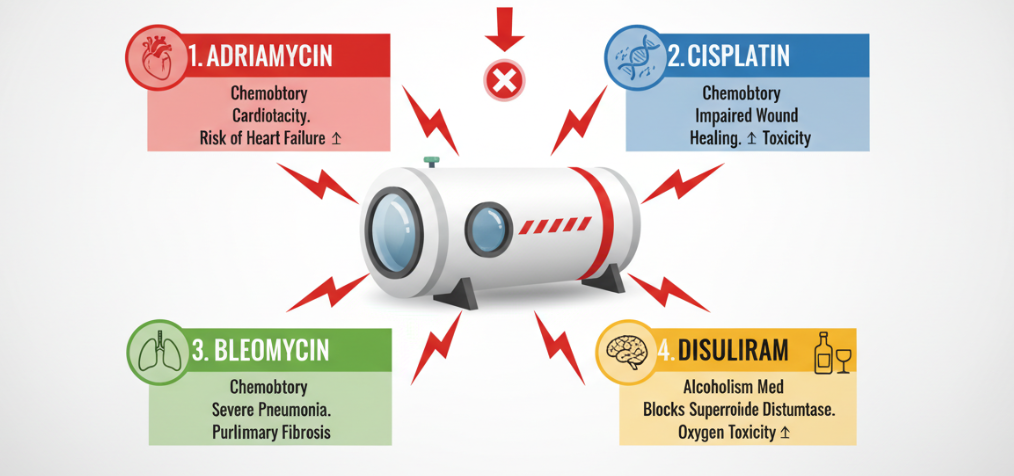
Specific Chemotherapy Drugs
Patients undergoing cancer treatment need to be extra cautious. Not all chemotherapy drugs “fight” with hyperbaric oxygen, but there are several agents that have serious consequences when combined with high concentrations of oxygen:
- Doxorubicin: The use of hyperbaric oxygen during the administration of this drug significantly increases the risk of cardiotoxicity (heart damage).
- Cisplatin: This drug, when combined with HBOT, may hinder wound healing and increase toxicity to the lungs.
If you are taking these drugs, I will never approve you in the cabin because the risk of complications is too high.
Temporary Conditions
Even if you don’t have the above life-threatening conditions, whether you can use a hyperbaric oxygen chamber still depends on your current physiological state. Although some problems are temporary, they also require you to delay treatment, mainly to prevent barotrauma.
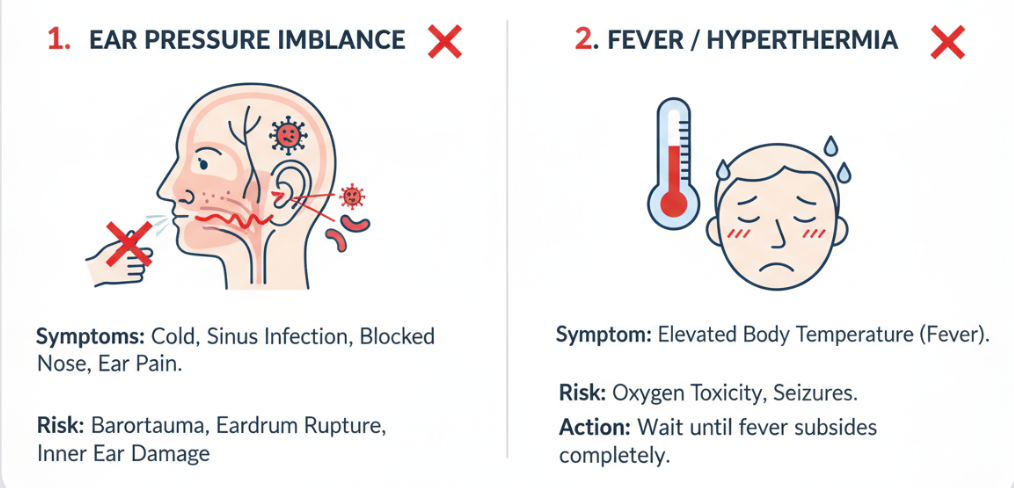
Ear Surgery And Ear Diseases
People who have done hyperbaric oxygen know that being able to balance the pressure in the ear is the basic threshold for entering the cabin. If you have recently had ear surgery, the structures in the ear are often too fragile to withstand repeated changes in pressure. Forced entry into the capsule before complete healing may disrupt the effect of surgical repair or even cause permanent damage.
Severe Cold And Congestion
A severe cold can clog the Eustachian tube, which means you can’t do the “pop your ears.” When you enter a pressurized environment in a congested state, that pressure difference can cause severe pain, fluid accumulation, and even rupture of the eardrum in severe cases.
High Fever
Fever itself is a signal that the body is fighting an active infection. More specifically, high fever can lower the seizure threshold in some individuals. Because hyperbaric oxygen itself has a certain effect on the central nervous system, if the variable “high fever” is added, the risk of oxygen poisoning convulsion (Seizures) will increase. Therefore, we will make it mandatory to postpone treatment until the fever subsides.
Medical Evaluation Required (Medical Clearance)
It is precisely because of the risk of pneumothorax, specific drug interactions and these common temporary conditions that it is not enough for patients to “self-diagnose.” Obtaining a professional medical clearance (Medical Clearance) is a mandatory step before entering the hyperbaric chamber. A qualified healthcare provider will carefully review your medical history to ensure that you are not taking contraindicated drugs such as doxorubicin or cisplatin, and conduct an examination to rule out a potential lung hazard or active ear infection.
Author:Scott
I am a certified hyperbaric safety specialist dedicated to making HBOT accessible and safe. With years of experience in patient screening, I focus on educating users about critical contraindications—such as pneumothorax and medication interactions—to ensure every therapy session is effective and risk-free.


No Comment! Be the first one.