



The most direct answer: the real changes in the body and physiology
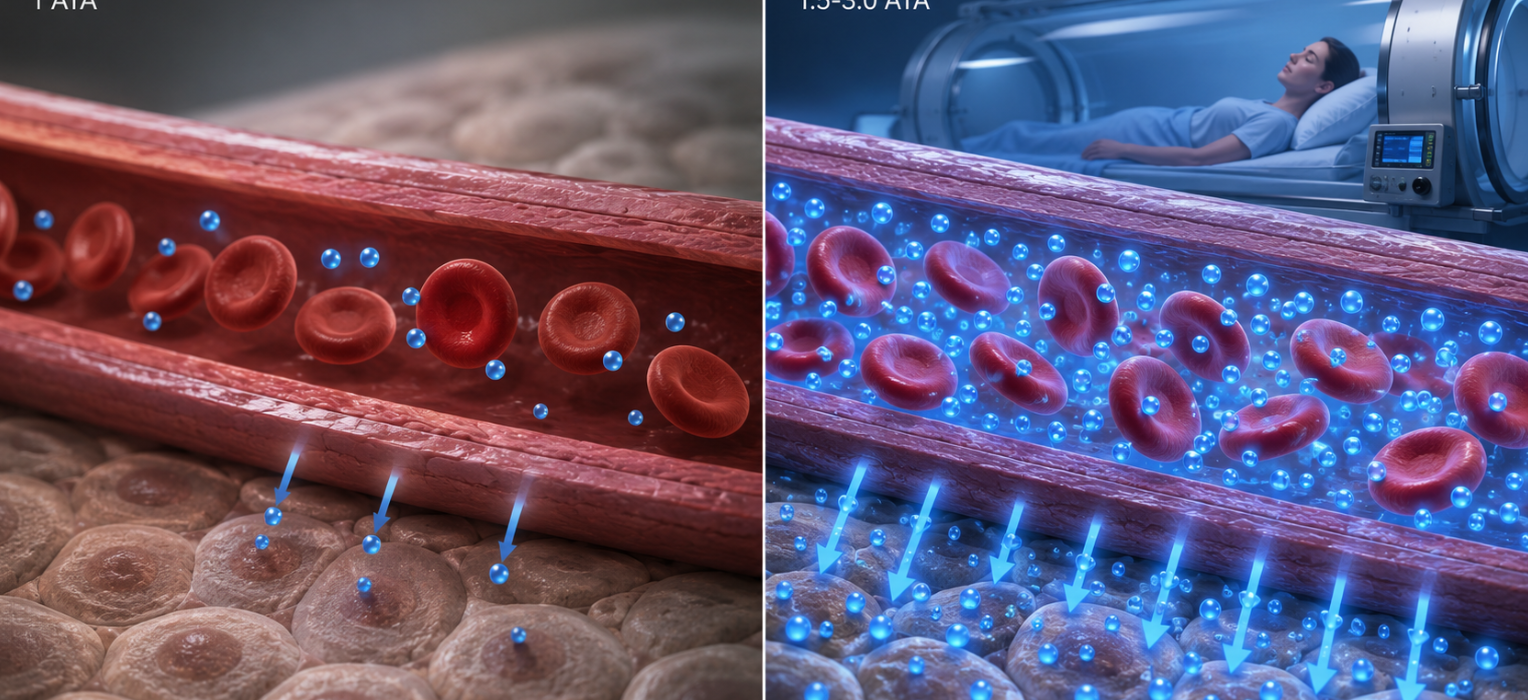
Many people are curious about what kind of experience it is in the hyperbaric oxygen chamber. Simply put, when you step into the chamber, the surrounding atmospheric pressure will be pulled up to 1.5 to 3.0 times the normal sea level. Under this strong pressure, 100 percent of pure oxygen will be “hard pressed” into your plasma, directly bypassing the red blood cells that are usually responsible for transporting oxygen. During this process, your eardrums will feel as oppressive as when an airplane is landing, the cabin will heat up a little bit, and the oxygen concentration in your tissues will instantly soar as high as 1200 percent! This not only awakens the stem cells that sleep in the body, but also steps on the “throttle” of deep tissue repair .
Patients who do hyperbaric oxygen for the first time tend to be nervous about this closed space and a bunch of dead rules. Don’t be afraid, today we’re going to break it apart and talk about how changes in air pressure can reshape your cell function? What can you do in the cabin? And what are the “business IQ taxes” on the market that you must avoid .
“The Oxygen-Plasma Cascade Effect”: Radical Changes Within the Body
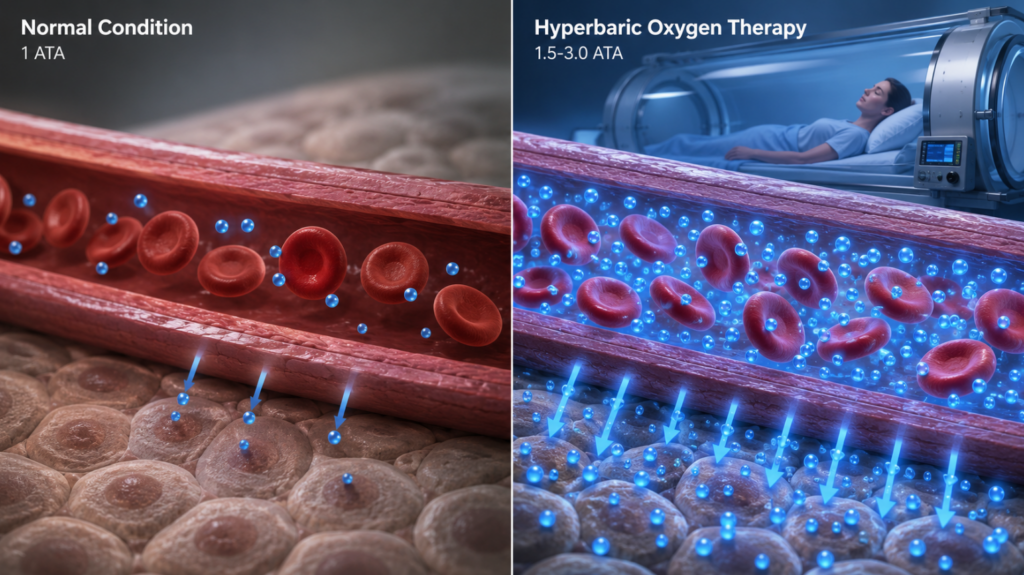
I often use the “oxygen–plasma cascade effect” to explain to patients the biological cascade triggered by hyperbaric oxygen therapy (HBOT). In humans, the lungs typically rely on hemoglobin in red blood cells to transport oxygen. However, high-pressure conditions completely overturn this physical law—according to Henry’s Law, the amount of gas dissolved in a liquid is directly proportional to the pressure exerted on it.
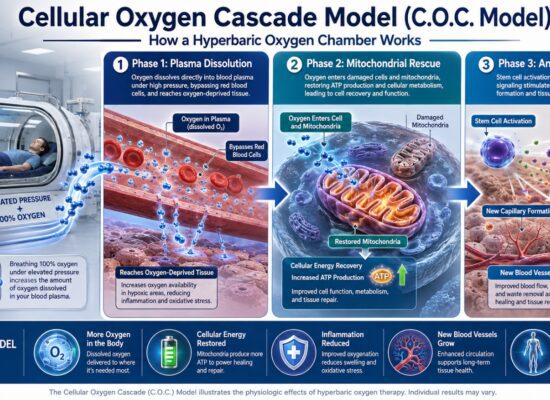
Phase 1: Physical Pressurization (Minutes 1–15)
As soon as the heavy hatch was sealed, pressurization inside the cabin began. You will hear the hissing sound of gas rushing in. At this moment, the most immediate physical sensation you’ll experience is your eardrums starting to cave inward, with a slight feeling of fullness. Due to the physical properties of gas compression, the temperature inside the cabin will rise by a few degrees. At the same time, your vagus nerve, sensing the high‑pressure environment, will cause your heart rate to decrease slightly.
Phase 2: Plasma Supersaturation (Minutes 15–60)
When the pressure reaches the target level—typically 2.0 to 2.4 absolute atmospheres, or ATA—your body enters a state of “super‑oxygenation.” Oxygen completely bypasses the red blood cells, dissolving directly in large quantities into your plasma, cerebrospinal fluid, and lymph nodes. Those tissues that were previously starved of oxygen and on the verge of starvation suddenly experience a nutritional “boom.” After white blood cells absorb this oxygen, they generate free radicals that completely annihilate the anaerobic bacteria responsible for chronic infections.
Phase III: Angiogenesis at the Cellular Level (Post-EVA)
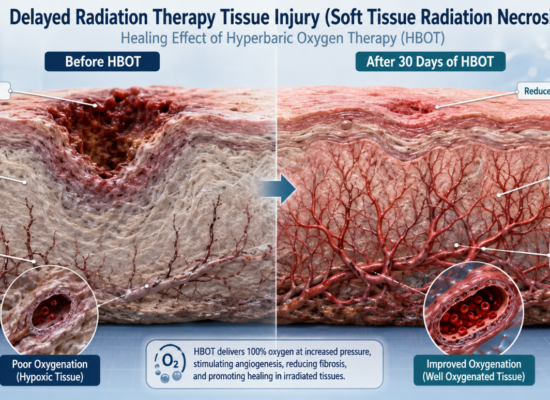
The real miracle, in fact, unfolds after you’ve completed your treatment and the chamber has been depressurized. Returning suddenly from an environment with extremely high oxygen concentration to normal indoor air can trigger a physiological “rebound” effect in the body. Your body perceives this sudden drop in oxygen concentration as an emergency signal that “new blood vessels must be formed”—a process known as angiogenesis. By the time you reach approximately the 20th treatment session, stem cell mobilization will increase eightfold, thereby permanently regenerating the damaged tissues.
What Can You Actually Do in a Hyperbaric Oxygen Chamber? (A Practical Guide)
Many patients often ask, “If I have to stay in there for 90 minutes, what can I do?” That depends entirely on whether you’re in a single‑person chamber or a multi‑person one.
Rules for Single Cabins vs. Multi-Person Cabins
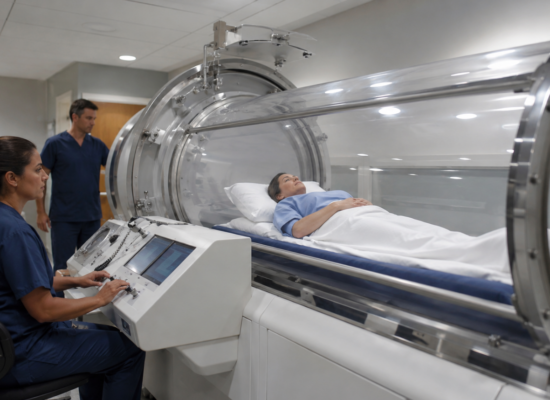
As its name suggests, a single-person chamber is a large, transparent acrylic tube filled with 100% pure oxygen. You have to lie flat inside. Hospitals typically place a flat-screen TV outside the clear‑wall cubicle, allowing you to watch movies or listen to podcasts through dedicated pneumatic headphones. However, the vast majority of patients simply choose to take a comfortable nap inside or practice deep-breath meditation.
The multi-person cabin feels more like the interior of a small submarine, with enough room for over a dozen people to sit. Because the cabin is pressurized with ordinary air, you breathe pure oxygen through a specialized hood or mask, so the safety regulations are relatively more relaxed. You can sit upright in your chair, bring a physical book to read, chat with fellow patients, and even play a game of real‑life poker.
Extremely strict “contraband” list
In an environment of 100 percent pure oxygen, the slightest bit of friction and static electricity can cause an extremely terrible fire. So in the single cabin, the hospital will prohibit all electronic equipment, including smart phones, smart watches, and even hearing aids. You must also remove makeup, wash off hair gel, do not apply nail polish, and do not apply any skin lotion containing petroleum, as these are highly flammable under pressure. You can only wear the 100 percent cotton hospital gown provided by the hospital, and chemical fiber clothing such as polyester or nylon, which is prone to static electricity, is absolutely prohibited.
| Allowed Items | Banned Items |
|---|---|
| 100% cotton clothing | Phones |
| Pneumatic headphones | Synthetic clothing |
| Paper books in multiplace chambers | Makeup |
| Battery-powered devices | |
| Hand warmers |
Intriders Warning: Avoid 3 Pits of Hyperbaric Oxygen Therapy
I ‘ve seen too many patients spend thousands of dollars on useless treatments because they don’t understand the physical knowledge of oxygen therapy. Outside commercial health centers like to use this kind of information difference to cheat people most.
Trap 1:1.3 ATA’s ‘soft cabin’ scam
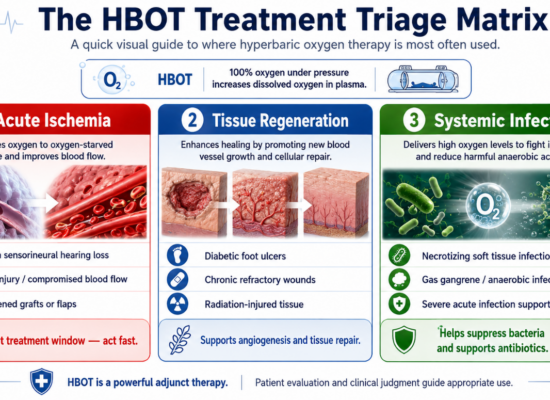
The kind of zipper “micro-pressure soft cabin” you see in beauty salons or gyms does not meet the pressure standards of clinical treatment at all. These inflatable nylon bags can only be pressurized to 1.3 ATA at most, and they use indoor air concentrators, which are not 100 percent medical grade pure oxygen at all. The consensus in the medical community is that a pressure of 2.0 to 2.4 ATA with 100 percent pure oxygen must be used to force oxygen into the plasma. It’s okay to use the soft cabin to relieve altitude sickness or a slight hangover. If you want to treat deep tissue wounds, bone infections or serious radiation injuries, it’s pure bullshit.
Trap 2: Balance ear pressure, don’t knock “pinch nose and inflate”
The average person will teach you to hold your nose and cheer up when your ears hurt (Valsalva action). But if this move is too hard, it is easy to get middle ear barotrauma. Commercial divers have a safer trick: Jaw-Shift. It’s about stretching your chin forward and twisting it back and forth while you’re swallowing hard. This opens your Eustachian tube in a physical and mechanical way without putting dangerous back pressure on the eardrum.
Real Clinical Data: True and False Measured by Transcutaneous Oxygen Pressure
In hospitals, we use the “transcutaneous partial pressure of oxygen (TcPO2)” to accurately measure the physiological effects of treatment. is to attach a sensor directly to the skin of the damaged tissue.
When a healthy person breathes indoor air, the partial pressure of skin oxygen is about 40 mmHg. And a diabetic with extremely poor blood circulation may have a foot ulcer value of only 15 mmHg, which means that the piece of meat is dying. But as long as the patient reaches 2.4 ATA in the cabin, his TcPO2 reading will instantly exceed 1000 mmHg! This broken thousand figure is ironclad proof that oxygen is actively infiltrating into those dead zones where blood vessels have been depleted. As long as the treatment is adhered to, with the growth of the new capillary bed, the basic oxygen partial pressure of the patient after leaving the cabin will also be steadily increased step by step.
People Also Ask (FAQ)
How long does it usually take to do hyperbaric oxygen?
The standard clinical treatment is between 90 and 120 minutes at a time. This includes the first 10-15 minutes of slow compression, the middle 60-90 minutes of target pressure, and the last 10-15 minutes of slow decompression (to prevent decompression sickness).
Can I bring my cell phone into the hyperbaric chamber?
Absolutely not! Electronic devices have batteries. In an oxygen-rich high-pressure environment, even a tiny spark can cause an instant and devastating fire.
Do you feel tired after hyperbaric oxygen?
Yes, many patients say they will feel tired or “hollowed out” for a few hours after treatment “. This is because your body is expending vast amounts of energy to repair cells, fight bacteria and grow new tissue.
What if you fart in a hyperbaric chamber?
Gas inherently expands and shrinks with pressure changes. In the cabin, the air pressure changes in the stomach and intestines leading to exhaust, which is a normal physiological reaction. If it is a multi-person cabin, the ventilation system will quickly draw the air away; and in the single-person cabin, 100 percent pure oxygen is a continuous flow of circulation, and will soon be able to wash away any peculiar smell. Don’t feel embarrassed.
How long can hyperbaric oxygen therapy work?
For emergencies like carbon monoxide poisoning, you can see the effect immediately after doing it once. But if it is a chronic problem, such as a long-lasting wound or radioactive tissue damage, it usually needs to be done 20 to 40 times a day before you can see visible cellular and structural healing.
Is it claustrophobic to be in a hyperbaric chamber?
A single cabin can indeed trigger a mild claustrophobia. However, the cabins used in the hospital are all made of transparent acrylic. You can have a 360-degree view of the whole room without dead corners, and the technicians will be beside you all the way. If you are really scared, the doctor can prescribe a slight sedative in advance.


No Comment! Be the first one.