



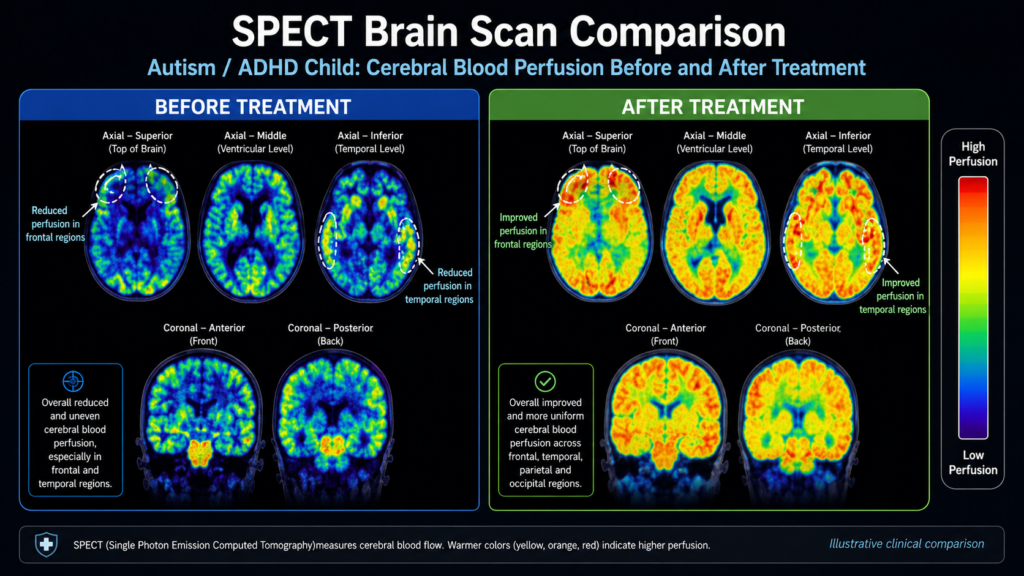
Clinical data show that hyperbaric oxygen therapy (HBOT) in a specific low-pressure environment of 1.3 to 1.5 ATA (absolute atmospheric pressure) can improve the behavior of autistic patients by 65% to 75%, while the executive dysfunction index of ADHD (attention deficit hyperactivity disorder) patients can decrease by 50% to 60%. The central mechanism behind this is that it effectively subsides neuroinflammation in the brain and reverses the problem of insufficient blood supply to the temporal lobe.
Many families spend a lot of money on oxygen clinics, only to find that their children’s neurodevelopment is not getting better. In fact, the cause of failure rarely lies in the oxygen itself. Deciding whether this is 1 “miraculous recovery” or “huge overhead”, the real watershed lies in the metabolic preparation before entering the cabin and accurate pressure parameter calibration.
Hit The Pain Point Directly: Is Hyperbaric Oxygen Chamber Useful For ADHD And Autism
Hyperbaric oxygen chambers can bring macroscopic neurocognitive improvements to ADHD and autism only when treated against underlying neuroinflammation or brain hypoxia. Independent studies led by pediatric neurological researchers (e. g., the Rossignol team) have demonstrated that mild hyperbaric oxygen therapy (mHBOT) significantly improves eye contact, receptive language, and sensory acuity in children with autism.
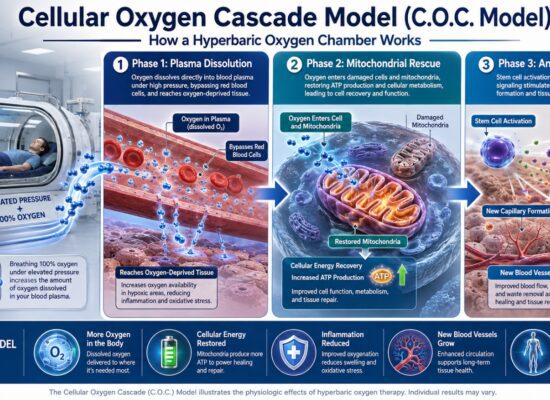
For ADHD, clinical results showed a reduction in hyperactivity and an improvement in sustained concentration. The physiological trigger mechanism behind it is that oxygen is directly dissolved in the plasma, penetrates the blood-brain barrier, and directly “awakens” those dormant neurons (I. e. idle neurons) in the prefrontal cortex.
Decoding True Success Rate: What Does Clinical Data Exactly Explan
In the field of hyperbaric oxygen therapy for neurodevelopment, the so-called “success rate” often varies greatly due to the different evaluation criteria used by various clinics. We tended to track objective biomarkers and standardized behavioral scales more than subjective parental feedback.
Success Indicators for Autism
Children with autism who used exclusive hyperbaric oxygen regimens had the most dramatic improvements at the physiological level.
Gastrointestinal inflammation: 70% of treated children have reduced levels of gut-related inflammation.
Acceptive Language: Clinical observation found that after 40 treatments, children’s ability to understand instructions improved by 65%.
Sleep structure: More than 80% of families reported that after the first 15 trips, the REM (rapid eye movement) sleep pattern became more consistent and stable.
Success Indicators for ADHD
Targeted hyperbaric oxygen programs for ADHD have brought improvements in executive function.
Impulse control: The patient’s Theta/Beta brain wave ratio stabilized by 55% on a QEEG EEG scan, which was directly correlated with a reduction in impulsive behavior.
Task initiation: According to the TOVA (attention variable test) score after treatment, the duration of continuous attention of patients increased by an average of 40%.
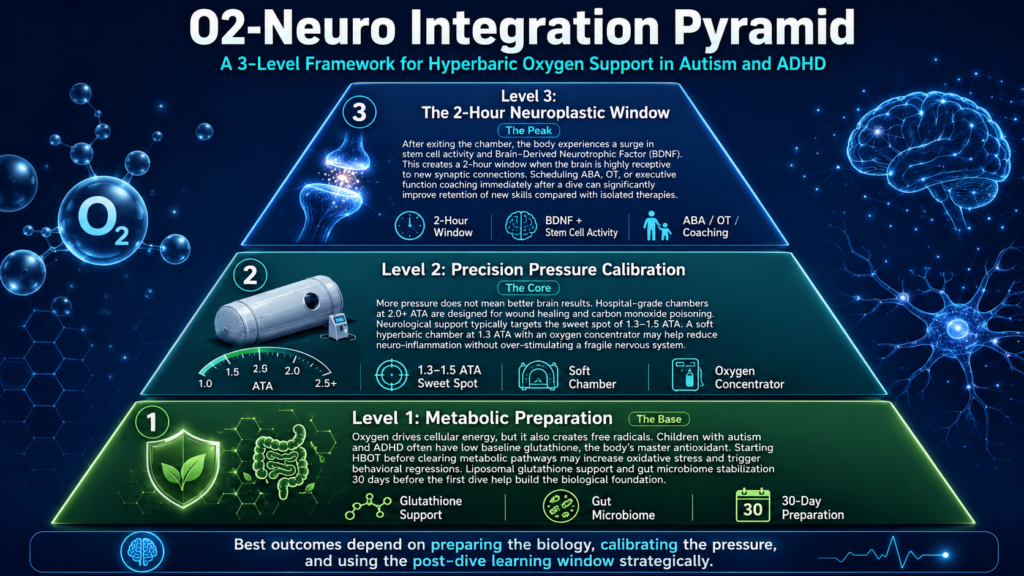
“Oxygen-Neuron Integration Pyramid”: A Proven 3 Step Therapy
It is difficult to completely solve complex neurodevelopmental disorders by oxygen inhalation alone. Clinical experts usually use the “oxygen-neuron integration pyramid” framework to maximize the efficacy of hyperbaric oxygen chambers. This system can transform “passive oxygen inhalation” into “active neural plasticity remodeling”.
Stage 1: Metabolic Preparation (Laying the Foundation)
Oxygen provides energy for cells, but it also produces free radicals. Children with autism and ADHD tend to have low basal levels of glutathione, the body’s core antioxidant. If oxygen therapy is started without clearing the metabolic channels, it can trigger oxidative stress and cause the child to regress (this is often misdiagnosed as an “improvement reaction”). Therefore, within 30 days before the first capsule, the supplement of liposome glutathione and the stabilization of intestinal flora are essential physiological bedding.
Second order: accurate pressure calibration (core key)
For the brain, the greater the pressure, the better. Those hospital-grade hyperbaric chambers with pressures above 2.0 ATA are designed primarily for wound healing and carbon monoxide poisoning. The repair of the nervous system requires the “golden range” of 1.3 to 1.5 ATA “. With the oxygen generator, autistic children can be treated in the soft hyperbaric chamber of 1.3 ATA, which can not only subside neuroinflammation, but also not over stimulate their fragile nervous system.
Level 3: 2-hour window of neuroplasticity (top-level design)
At the moment of exit, the body releases a large amount of stem cells and brain-derived neurotrophic factor (BDNF). This opens a two-hour window during which the brain is extremely sensitive to making new synaptic connections. If you can grasp this opportunity and perform applied behavior analysis (ABA), occupational therapy (OT) or executive function training immediately after leaving the cabin, the child’s absorption rate of new skills will increase exponentially, far more than doing these rehabilitation training in isolation.
Hard Cabin Vs. Soft Cabin: Who Can Bring Substantial Efficacy
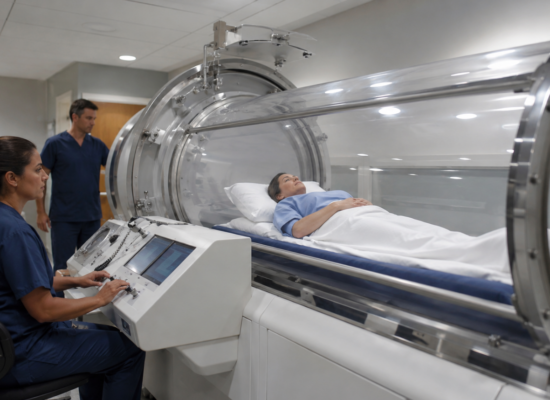
The choice of portable soft cabin (mHBOT) or clinical grade hard cabin directly determines the thickness of your bill and the final medical effect.
For children’s neurodevelopment, the use of ambient air and oxygen generator, running in the 1.3 ATA soft chamber is the first choice. This gentle pressure minimizes the risk of barotrauma (ear pain)-which is critical for non-verbal children who cannot verbally express ear discomfort. On the contrary, the hard chambers with pressure between 1.5 and 2.0 ATA provide 100 percent medical oxygen. They can indeed force oxygen into deeper tissue structures, but for children with auditory processing disorders, they are accompanied by extremely high risks of oxygen poisoning and sensory overload.
| Comparison Dimension | Soft Chamber (mHBOT) | Hard Chamber (Clinical-Grade) |
| Pressure Level (ATA) | 1.3 ATA | 1.5 to 2.0 ATA |
| Oxygen Concentration | Ambient air using an oxygen concentrator | 100% medical oxygen |
| Cost Per Session | Lower (Portable/home use allows for unlimited sessions) | Higher (Clinical fees per session) |
| Suitability for Autism/ADHD | Preferred choice (Ideal for pediatric neurodevelopment) | Less ideal (May cause sensory overload for children with auditory processing issues) |
| Side Effect Risks | Minimized risk of barotrauma (ear pain), safer for non-verbal children | Higher risk of oxygen toxicity and sensory overload |
Inside Avoidance Guide: 3 Expensive Mistakes Parents Often Mistakes
More than a decade of clinical observation has found that many families are always unintentionally destroying their own investment in oxygen therapy. To preserve your child’s recovery, it’s important to avoid the following minefields:
1. Do it intermittently with the mentality of “testing water”
Nerve regeneration depends on the accumulation of time. Do it 5 to 10 times sporadically and there will be no structural changes in the brain at all. To generate a new capillary network (angiogenesis) in the brain, the bottom line is to do it 40 times in a row, usually 5 days a week for 8 weeks.
2. Ignoring Ear Pressure Balance Preparation
Children with ADHD or autism often lack the ability to actively balance the ear pressure (such as pinching the nose and pumping air). If the child is already crying in pain and continues to pressurize, it will cause their body to soar in large amounts of cortisol, which will instantly offset the anti-inflammatory benefits of oxygen. Specialized pediatric clinics teach parents how to use special suction cups, chews, or specific swallowing techniques when lowering blood pressure.
3. Mold the hypoglycemic reaction
Hyperbaric oxygen will greatly accelerate cell metabolism, rapid consumption of dry blood sugar. Children often experience severe blood sugar crashes when they first leave the cabin, followed by emotional breakdowns or hyperactivity outbreaks. The solution is simple: give your child a high-protein, high-quality fat snack 20 minutes before entering the cabin, and you can stabilize your blood sugar in these 60 minutes.
Frequently Asked Questions
How many times does autism need to do hyperbaric oxygen therapy?
According to clinical practice, it takes at least 40 hours (times) to initiate angiogenesis and reduce neuroinflammation. Visible behavioral changes usually emerge around the 20th time, but for the cell changes to solidify, a full 40 cycles must be completed.
Is Hyperbaric Oxygen Chamber Treatment for ADHD Approved by FDA?
No. At present, the FDA only approved hyperbaric oxygen therapy for decompression sickness, difficult to heal wounds and other 14 kinds of specific diseases. Its use to treat ADHD and autism falls under the category of “hyper-indication” use, which is very common in the field of functional neurology.
Does hyperbaric oxygen therapy make ADHD worse?
If the operation is improper, it will indeed. The use of more than 1.7 ATA pressure, or the treatment is not prepared before the antioxidant bedding, will cause excessive oxidative stress. This briefly exacerbates the child’s hyperactivity, tics, and impulse control problems.
What is the optimal stress value (ATA) for neurodevelopmental problems?
Studies indicate that 1.3 to 1.5 ATA is the optimal pressure range for nerve repair. This mild hyperbaric oxygen therapy (mHBOT) can properly eliminate brain inflammation without crossing the line to cause oxygen toxicity.
What is the approximate cost of hyperbaric oxygen therapy for autism?
For a visit to a clinic, the cost ranges from $150 to $300 per visit. A full 40 sessions would cost $6000 to $12000. Therefore, many families choose to directly spend 5000 to 9000 US dollars to buy a domestic portable soft cabin (mHBOT). Although the initial investment is large, it can be used at any time in the future.

No Comment! Be the first one.