If you are going through a post-operative recovery period, or are caring for a family member of a chronically ill patient, the cost of renting a home hyperbaric oxygen chamber is usually between US $600 and US $1,500 per month.
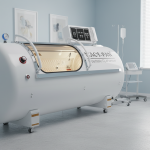
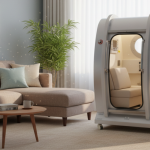
This price fluctuation mainly depends on whether you choose the portable “soft cabin” (mild HBOT, usually zippered) or the more stable “semi-hard” model.
In most rehabilitation scenarios-such as wound healing, post-stroke rehabilitation, or reducing inflammation in the body-I usually advise clients to focus on portable oxygen chambers 1.3 ATA (absolute atmospheric pressure). This is almost the “gold standard” for household devices in the industry because it finds the best balance between safety and clinical effectiveness.
It is worth noting that lease agreements are now usually well-established. In addition to the equipment itself, the cost generally includes nationwide logistics transportation, strict disinfection certification, 24/7 remote installation guidance, and the most critical supporting hardware, such as oxygen generator and internal support frame.
While it has to be acknowledged that Medicare and private insurance rarely reimburse the cost of such “off-label” home rentals, the “rent-to-own” plans offered by many providers are a very smart financial cushion. You can convert 50% or even 100 of the down rent into purchase funds, which is indeed a more cost-effective long-term solution than paying more than $200 each time you go to a professional clinic.
Rental Costs For Dismantling Hyperbaric Oxygen Chambers
Clearing the bill is crucial for patients considering home remedies. As mentioned earlier, the difference in monthly rent of $600 to $1,500 is mainly reflected in the grade of equipment.
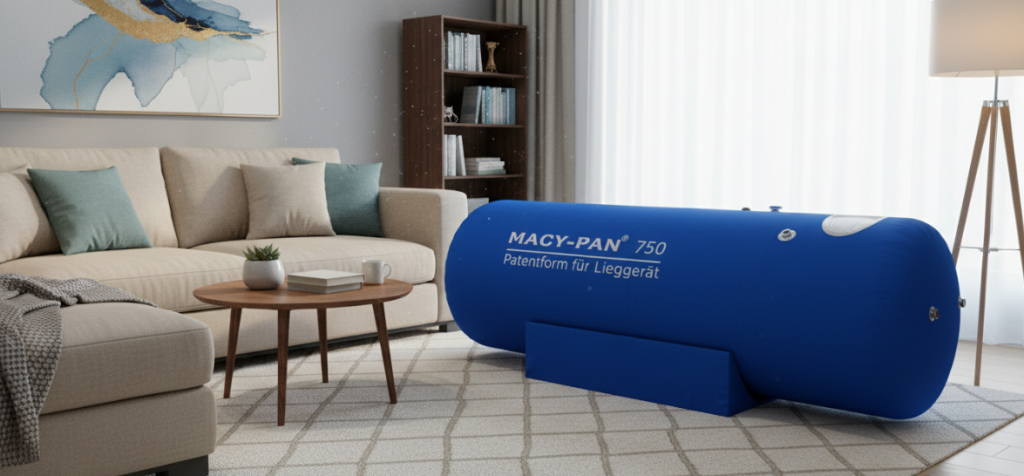
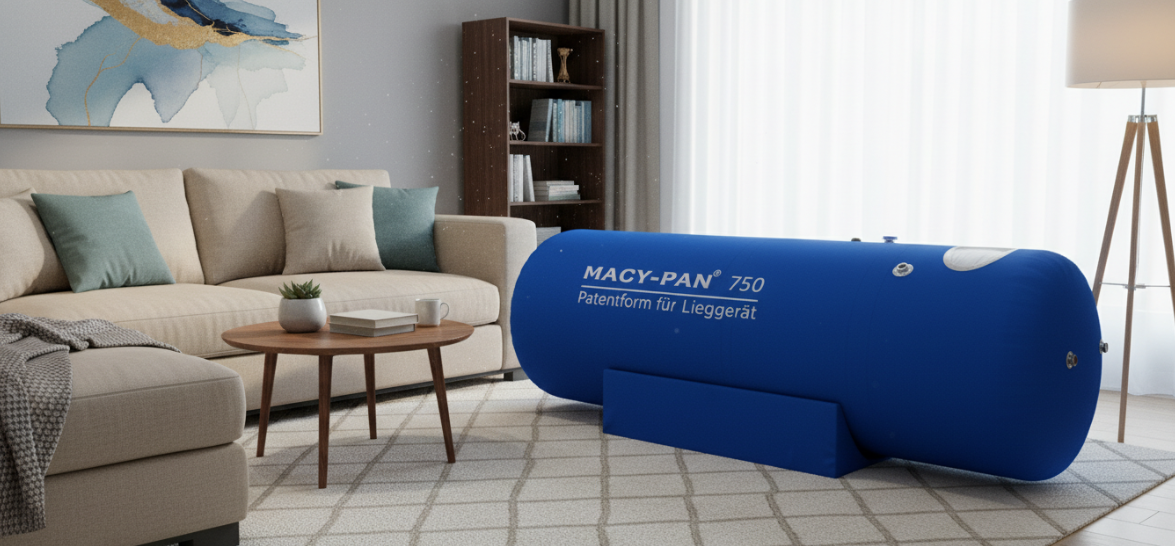
Soft Portable Oxygen Chamber ($600-$900/month):
This is the most affordable option and I recommend it for most patients who only need mild HBOT. They are lightweight, have a low installation threshold, and are completely adequate for general health conditioning and anti-inflammatory needs.
Semi-Hard Models ($1,000-$1,500/month):
The structure of this type of equipment is stronger and the interior space is usually more spacious. If the patient has limited mobility or mild claustrophobia, it is definitely worth the extra money because it can greatly improve the comfort of the treatment.
Cost-Effectiveness Ratio: Home Rentals Vs. Clinic Visits
This account is actually very good. When you compare the cost of a home lease with the bill for a visit to the clinic, the savings are significant. In professional medical institutions, the cost of a single hyperbaric oxygen treatment is often more than $200.
- Clinic scenario: 20 sessions per month *200=4,000/month .
- Rental scenario: Unlimited use per month = $600 to $1,500/month.
For situations like stroke rehabilitation or chronic wounds that require frequent daily treatment, home rentals not only save money, but more importantly, ensure continuity of treatment.
1.3 ATA Portable Compartment: Safety Benchmark For Home Use
In a home healthcare environment, safety always comes first. This is why the industry has set the pressure standard for home rental equipment at 1.3 ATA.
Why 1.3 ATA?
Safety: In my opinion, 1.3 ATA is the safe threshold for “mild hyperbaric oxygen therapy. Under this pressure, you don’t need professional medical staff to keep an eye on the whole process, and it is safe for patients to operate at home.
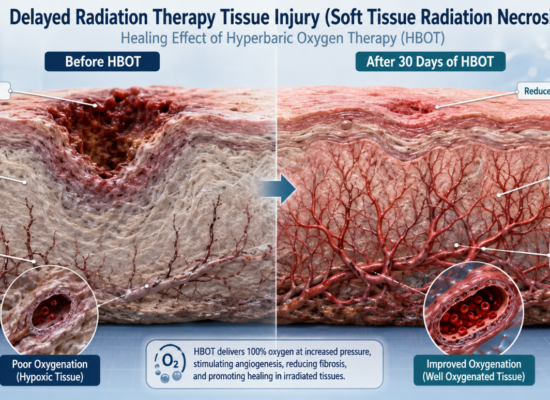
Effectiveness: Research data show that 1.3 ATA is sufficient to effectively increase plasma oxygen saturation, which is a key mechanism for anti-inflammatory and accelerated wound healing.
While clinical equipment in hospitals is more stressful (usually above 2.0 ATA), those hard-shelled cabins require extremely strict medical regulation. For home users, ATA -1.3 software or semi-rigid cabins provide an optimal solution between therapeutic benefits and safety risks.
What Exactly Is Included In The Rental Package?
Many family members are most worried about logistics and installation problems: “What if I don’t pack this thing when it arrives home?”
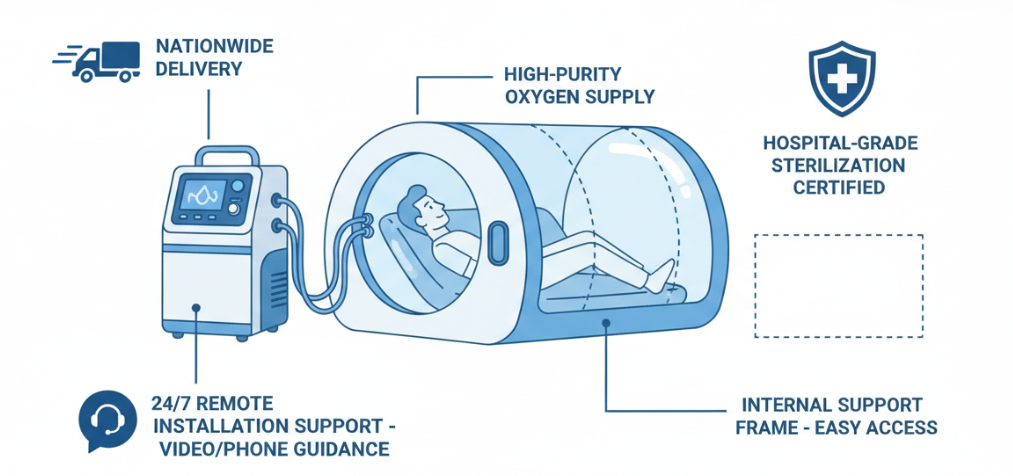
Reliable suppliers know this, so they usually offer “turnkey” solutions. Your rental fee is not just to buy a tin can, but to the entire ecosystem:
- National distribution: no matter where you live, the equipment will be directly to the door.
- Oxygen Concentrator: This is critical. It is the core component that filters the ambient air and delivers high-purity oxygen to the cabin, and is usually included in the rent.
- Sterilization certification: This is especially important for post-operative or immunocompromised patients. The supplier must certify that the equipment has been sterilized at the hospital level prior to shipment.
- Internal support frame: It allows the software compartment to maintain a bulging shape even in an unpressurized state, making it easy for patients to enter and exit.
- 24/7 remote installation support: You don’t need to blind yourself to the instructions. Now the technical team will teach you to complete the assembly and operation by video or phone.
HE5000
2.0ATA, Medical grade pressure is suitable to home health, Dimensions: 82 x 65 x 72 inch for 1-3 person using.
Get Quote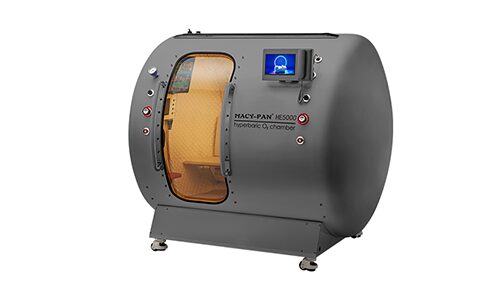
HE5000-Plus
2.0ATA, Medical grade pressure is suitable to home health, Dimensions: 102 x 65 x 72 inch for 1-4 person using.
Get Quote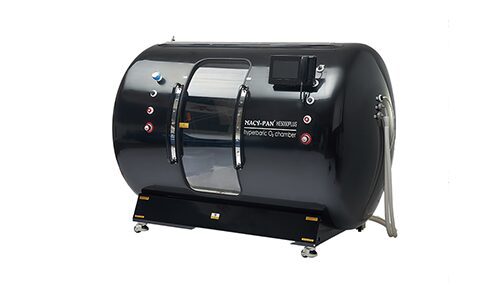
Insurance Coverage And The “Rent-To-Buy” Strategy.
In the payment process, we need to have a clear understanding of the current insurance environment.
Limitations Of Medicare And Private Insurance
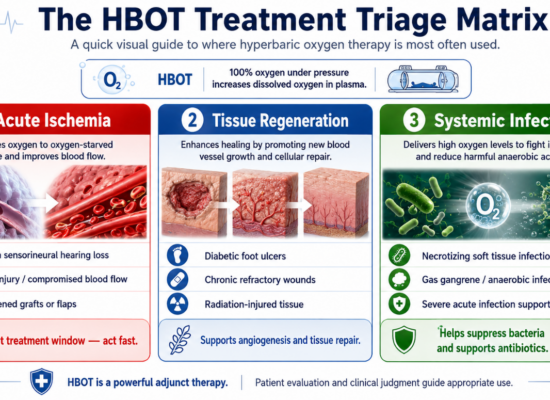
The current situation is more realistic: Medicare and most private insurance usually only reimburses a very small number of specific indications (such as gangrene or severe radiation injury) that must be carried out in a hospital. For “off-label uses” such as home rentals for general recovery, anti-aging or chronic inflammation management, insurance companies are almost non-reimbursed.
The Advantage Of “Buying On Behalf Of Rent”
In order to solve the payment problem, many suppliers have launched “rent-to-buy” projects.
This is actually a very clever mechanism: if you feel that long-term treatment is necessary after renting for a period of time, then 50% to 100 of the rent you paid before can be directly deducted from the purchase of equipment.
This amounts to giving the patient a low-risk “test drive. If the therapy is effective for your condition, your rent will not be wasted, but will become a down payment for owning a device; if the effect is not obvious, the rent can be withdrawn, and the cost of stop loss is also controllable.
Author:Sarah Miller
“I’m a rehabilitation specialist and medical equipment consultant. My passion is helping post-operative patients and caregivers navigate the complexities of home therapy. I specialize in breaking down the costs, safety standards of 1.3 ATA units, and rental agreements to ensure you find the most effective and affordable hyperbaric solutions for your recovery journey.”