


In the field of modern plastic surgery, how to make patients recover faster, safer and more perfect after surgery has always been the core issue of common concern for doctors and patients. In addition to precise surgical operations and standardized postoperative care, Hyperbaric Oxygen Therapy is gradually becoming the type of adjuvant therapy that has attracted much attention. Hyperbaric oxygen therapy provides additional oxygenation support to tissues by inhaling high concentrations of oxygen in a high-pressure environment, thereby promoting healing, reducing swelling, and reducing the risk of infection.
In recent years, more and more plastic surgeons have begun to introduce HBOT into postoperative rehabilitation programs to help patients better spend the recovery period and obtain ideal aesthetic effects. This article will systematically introduce the principle, clinical advantages and application value of hyperbaric oxygen chamber in plastic surgery recovery, and reveal the scientific power behind oxygen therapy for you.
What is Hyperbaric Oxygen Therapy?
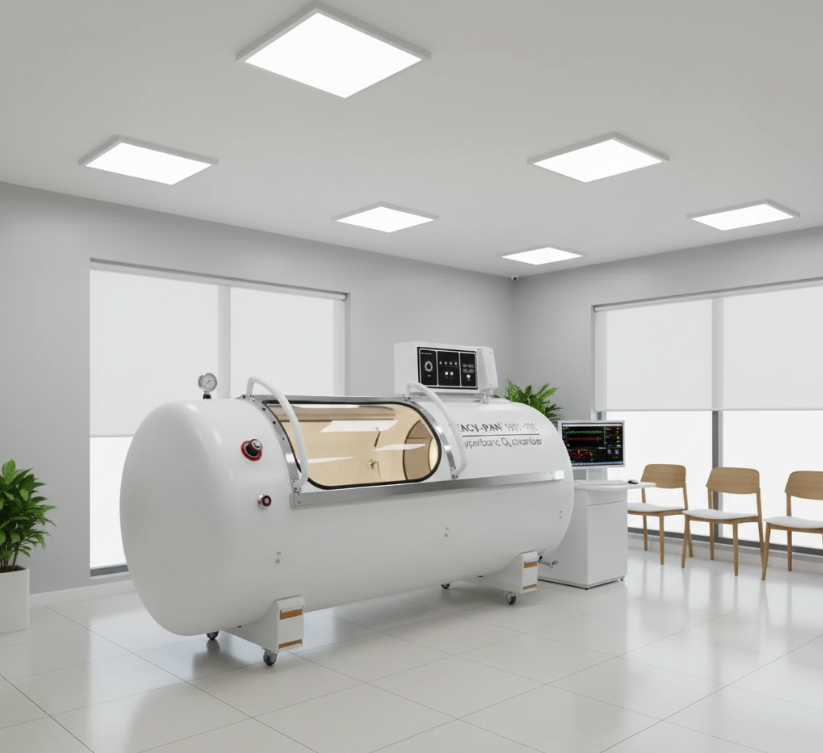
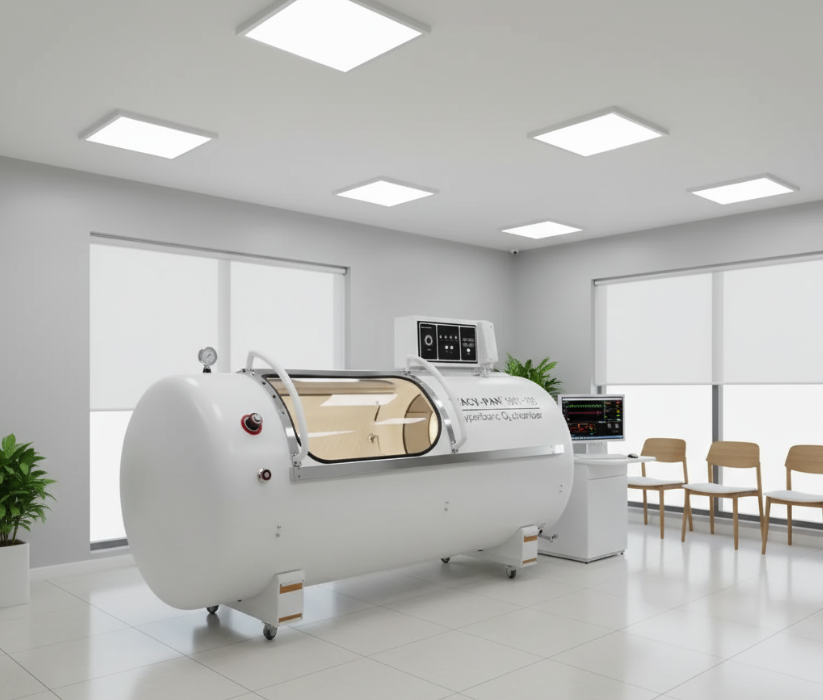
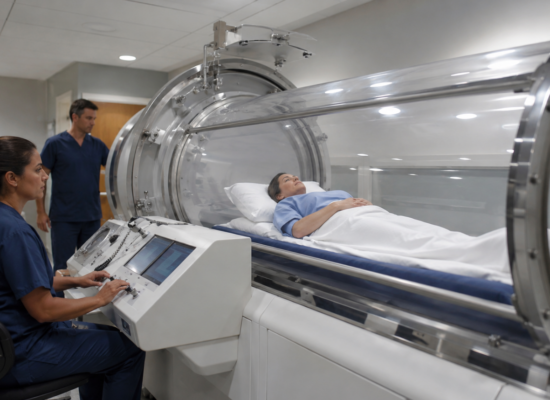
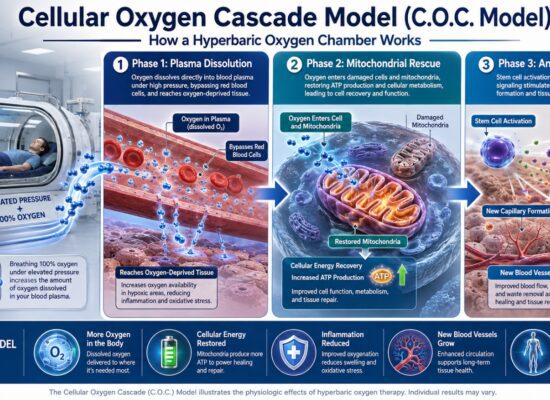
Hyperbaric Oxygen Therapy is a specially designed sealed chamber that allows you to inhale 95% pure oxygen in an environment above atmospheric pressure. This is completely different from the 21% oxygen we normally breathe at sea level. Imagine that the oxygen concentration in the air we breathe is fixed. But in the hyperbaric oxygen chamber, we not only inhale pure oxygen, but also the pressure of the environment is higher than usual. This high-pressure environment, combined with a high concentration of oxygen, brings about a series of wonderful physiological reactions.
I often give patients an analogy: just as putting a sponge under high pressure allows more water to penetrate, a high-pressure environment allows more oxygen to dissolve into our blood and tissue fluid. This physical principle is actually the embodiment of Henry’s Law. Simply put, the solubility of a gas in a liquid is proportional to the partial pressure of the gas. In HBOT, we greatly increase the amount of oxygen dissolved in the blood by increasing the ambient pressure and partial pressure of oxygen, and even allow oxygen to penetrate directly into tissues with poor blood flow. Damaged tissue is often accompanied by ischemia and hypoxia, and hyperbaric oxygen is to solve this problem.
How Hyperbaric Chamber can speed healing after plastic surgery
In my clinical practice, I am often asked how I can recover from plastic surgery faster and better. In addition to superb surgical skills and meticulous post-operative care, we are always looking for ways to further optimize the patient’s recovery process. Among them, hyperbaric oxygen therapy is an adjuvant therapy that I think has great potential.
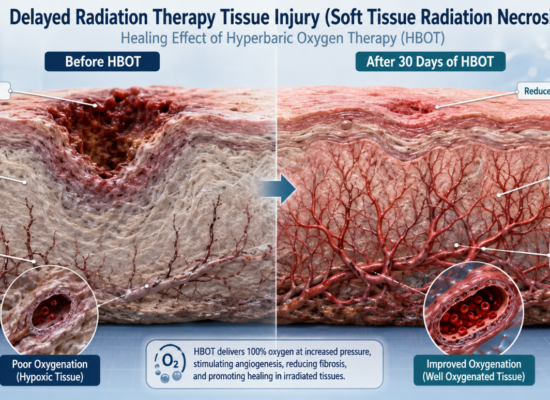
- Accelerated wound healing: My observations, as well as a large number of research data, point to a clear fact: hyperbaric oxygen can significantly accelerate wound healing. Its mechanism is not complicated-inhaling pure oxygen in a high-pressure environment can make the oxygen content in the blood far exceed normal. This extra oxygen is essential for the repair of damaged tissue, stimulating collagen production, promoting angiogenesis, and accelerating cell regeneration and tissue repair.
- Significantly reduce swelling and bruising: Postoperative swelling and bruising are difficult to avoid in all patients. High concentrations of oxygen can promote moderate vasoconstriction and reduce microvascular leakage, which directly leads to the reduction of postoperative edema. At the same time, it also helps the body to clear stagnant blood faster, thereby reducing bruising. With reduced swelling and bruising, patients not only feel more comfortable, but also see the results of the operation faster, which undoubtedly greatly improves patient satisfaction.
- Reduce the risk of infection: As doctors, the last thing we want is postoperative infection. Hyperbaric oxygen therapy can provide extra protection for your body. The hyperoxic environment itself has an inhibitory effect on some anaerobic bacteria. More importantly, it can enhance the function of white blood cells, improve the body’s own immunity, and make your body more capable of resisting potential sources of infection. This provides an important layer of safety for the patient’s recovery.
- Improve scar quality: One of the purposes of plastic surgery is to be beautiful, and the quality of the scar directly affects the final result. Hyperbaric oxygen has a positive effect on scar formation by optimizing the wound healing process. It helps collagen fibers to arrange more regularly and in a more orderly way, reducing the formation of abnormal scars, such as hypertrophic scars or keloids. In the long run, this means that your scars will be smoother, softer, and the color will be closer to normal skin, which is crucial for patients who are looking for aesthetic results.
- Shortening the recovery period: Taking all the above benefits together, the end result of hyperbaric oxygen therapy is a significant reduction in the patient’s overall recovery period. Whether it is faster wound healing, less swelling, lower risk of infection, or better scar quality, all work together to allow patients to recover faster from surgery and return to normal life. We all know that patients always want to recover as soon as possible, and the hyperbaric oxygen chamber can help us achieve this goal.
- Benefits of specific surgery: In some specific complex plastic surgery, the auxiliary role of hyperbaric oxygen is indispensable:
- Breast reconstruction: especially in complex operations involving flap transplantation, hyperbaric oxygen can significantly improve the blood supply and oxygenation of the flap, thereby increasing the survival rate of the flap and reducing the risk of complications.
- Fat transplantation: The survival rate of fat cells is a key factor affecting the effect of fat transplantation. Hyperbaric oxygen can provide more sufficient oxygen and nutrition for newly transplanted fat cells, help them better “settle down” and improve the success rate of transplantation.
- Facial lift/blepharoplasty: For areas of the face that are rich in blood supply but sensitive to swelling and bruising, hyperbaric oxygen can effectively reduce postoperative swelling, accelerate the regression of bruising, allow the patient’s face to return to its natural state more quickly, and shorten the social recovery period.
HBOT in Plastic Surgery Applicable Populations
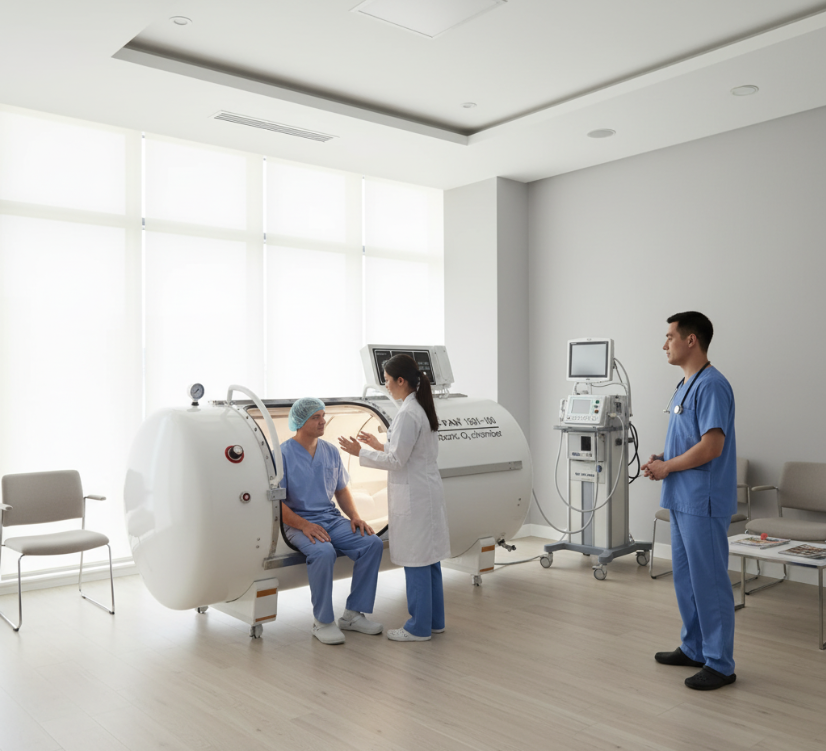
In my many years of clinical practice, patients are often asked whether hyperbaric oxygen therapy can help them recover faster and better. My answer is that this is not a generalization, but a professional evaluation based on your specific situation.
Indications:
- Complicated or major plastic surgery: For those who have undergone larger surgery, such as abdominal plastic surgery, breast reconstruction, or after extensive liposuction, tissue trauma is relatively large and requires stronger healing support. I have found that HBOT can provide additional impetus to these extensive tissue repairs and accelerate the healing process.
- Patients with scars or a history of poor healing: If you are prone to visible scarring or have experienced poor wound healing in the past, HBOT can be used as a preventive measure to improve the quality of healing by optimizing tissue oxygenation, potentially reducing scar growth.
- Patients with a history of diabetes or smoking: It is well known that diabetics and smokers usually have poor blood circulation and oxygenation, which directly affects postoperative wound healing. In this case, HBOT can significantly increase the tissue oxygen concentration, which is essential to improve the healing effect.
- Patients who need to recover quickly: Some patients have higher requirements for recovery speed due to personal or work reasons. In the absence of contraindications, HBOT can indeed accelerate the reduction of swelling and reduce pain to a certain extent, thereby shortening the overall recovery time.
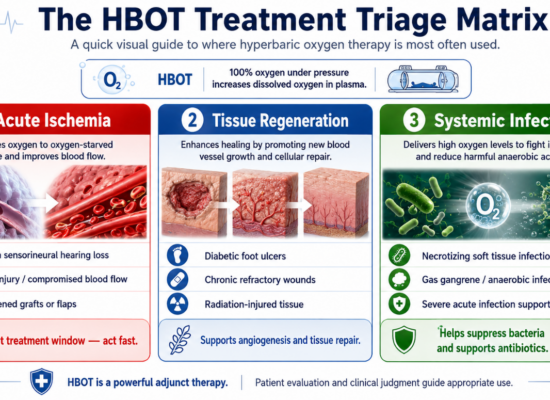
- Postoperative complications: In the case I deal with, if the patient unfortunately has postoperative complications such as skin flap necrosis and infection, hyperbaric oxygen therapy can provide a large amount of oxygen for the damaged tissue, promote angiogenesis, and fight against anaerobic bacteria., So as to help solve these thorny problems.
In recent years, hyperbaric oxygen therapy has become an important aid in postoperative recovery from plastic surgery. By raising the level of tissue oxygenation, it not only accelerates wound healing and reduces swelling and bruising, but also effectively reduces the risk of infection and improves scar quality, thus helping patients regain their nature and confidence in less time. Of course, HBOT is not suitable for everyone, and doctors need to make individualized assessments and decisions based on the specific circumstances of each patient. If you are considering plastic surgery, or want a more desirable recovery after surgery, you may wish to discuss with your plastic surgeon the suitability of hyperbaric oxygen therapy.

No Comment! Be the first one.